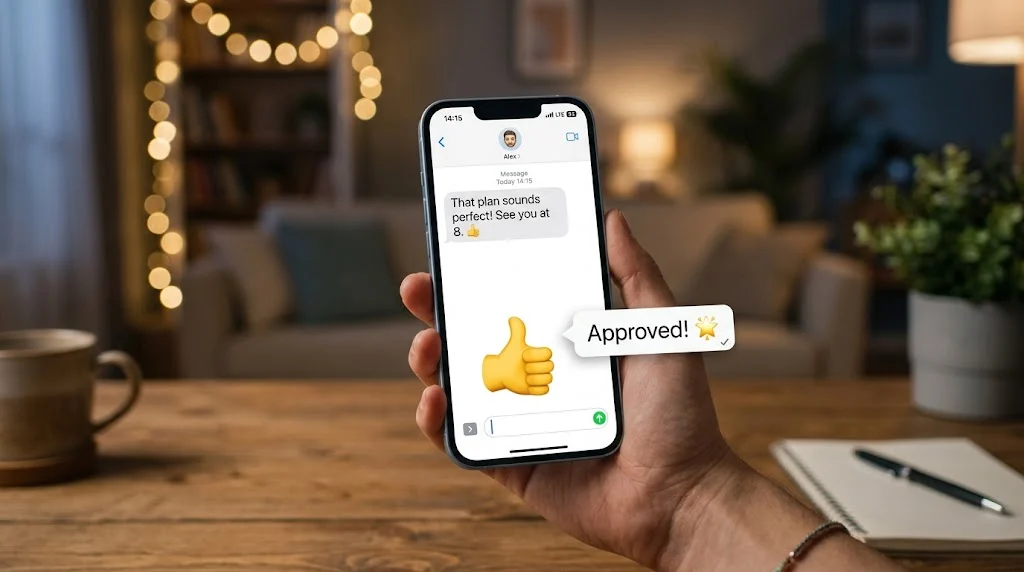
👍 usually means “yes,” “okay,” “agreed,” or “good job.” Its tone ranges from friendly approval to simple acknowledgment, but the conversation determines it feels warm or abrupt.
The thumbs up emoji 👍 usually means “okay,” “I agree,” “good job,” or “sounds good.” It is a simple way to show approval, confirm a plan, acknowledge a message, or express support without writing a full reply. In everyday American texting, it can be friendly, practical, or neutral, depending on the conversation.
For example, if someone texts, “I’ll pick you up at 6,” replying with 👍 usually means you understand and agree. If a friend shares good news, the same emoji may express approval or encouragement. However, when it appears as the only response to a long or emotional message, it can sometimes feel brief, cold, or dismissive.
The key is to consider what the sender is responding to, how they normally communicate, and a short reaction makes sense in that situation.
What Does 👍 Mean in Text Messages?
The thumbs up emoji is one of the simplest ways to respond positively to a message. Its meaning often depends on the message it follows.
1. Agreement or Confirmation
When someone uses 👍 after a question, plan, or instruction, they usually mean they agree or understand.
Example:
“Let’s meet at the coffee shop at noon.”
“👍”
Likely meaning: “Sounds good. I’ll be there.”
In this situation, the emoji works like a quick verbal “okay.”
2. Approval or Appreciation
The emoji can show that someone likes an idea, approves of a decision, or thinks something was done well.
Example:
“I finally finished the presentation.”
“👍 Great work!”
Likely meaning: “Nice job. I approve.”
A thumbs up can feel encouraging, although a personal compliment may communicate more warmth.
3. Acknowledgment Without a Long Reply
Sometimes people use 👍 simply to confirm that they have read a message.
Example:
“Don’t forget to bring the documents tomorrow.”
“👍”
Likely meaning: “Got it.”
This does not necessarily mean the sender is excited. They may just be acknowledging the reminder.
4. A Short or Dismissive Response
Although 👍 is usually positive or neutral, it can feel cold in certain situations.
Example:
“I’ve had a really difficult day, and I don’t know what to do.”
“👍”
Possible meaning: The sender has acknowledged the message but has not offered much emotional support.
That does not automatically mean they are annoyed or uncaring. They may be busy, unsure what to say, or using a communication style that favors brief replies. The broader conversation matters.
Is the Thumbs Up Emoji Rude?
The 👍 emoji is not inherently rude. Its tone depends on the situation, the relationship between the people, and the expectations of the conversation.
- Friendly: A friend confirms your plans with 👍.
- Professional: A coworker acknowledges a task or meeting time.
- Neutral: Someone reacts to a simple update without adding extra words.
- Potentially dismissive: Someone responds with only 👍 to a heartfelt message that calls for empathy.
- Sarcastic: Someone uses it after an obviously bad suggestion or a frustrating comment.
For example, “Sure, that works 👍” usually sounds like agreement. But replying only “👍” to a detailed apology might feel abrupt if the other person expects a more thoughtful response.
If you want to sound warmer, add a few words: “Sounds good, thanks!” or “Got it 😊.” This makes your intent clearer.
What Does 👍 Mean When Someone Sends It to You?
When someone sends you a thumbs up, the most likely interpretation is that they agree, understand, approve, or acknowledge what you said.
The message can help you distinguish between those meanings:
| Situation | Likely Meaning |
|---|---|
| You suggest a meeting time | They agree with the plan |
| You share good news | They approve or offer brief support |
| You send an instruction | They understand or acknowledge it |
| You apologize | They may acknowledge your apology, but their feelings remain unclear |
| You share something personal | They may be responding briefly; it does not reveal how they feel |
| You ask a yes-or-no question | They likely mean yes or okay, if the question allows that interpretation |
Does 👍 Mean Someone Is Angry?
Not by itself. Some people worry that a short thumbs up is passive-aggressive, especially when a sender usually writes longer replies. However, the emoji alone is not enough to establish anger.
Compare the response with the person’s usual style, the subject of the conversation, and any words accompanying the emoji. If the issue matters, asking a direct question is more reliable than guessing.
Does 👍 Mean Flirting?
Usually, it communicates acknowledgment or agreement rather than flirting. Someone could use it in a playful or romantic conversation, but it does not independently indicate attraction or romantic interest.
If you receive 👍 after sending a compliment, it may simply mean the person saw or acknowledged it. Look at the overall exchange rather than assigning a romantic meaning to one emoji.
👍 vs. Other Positive Hand Emojis
The thumbs up is not the only hand emoji used to show approval or support. These alternatives can help you express a more specific reaction.
| Emoji | Official Name | Common Meaning | Tone | Where or When It Is Used |
|---|---|---|---|---|
| 👍 | Thumbs Up | Agreement or approval | Positive, neutral | Confirming plans or acknowledging messages |
| 👎 | Thumbs Down | Disapproval or rejection | Negative, direct | Disagreeing with an idea or rating something poorly |
| 👌 | OK Hand | Okay, acceptable, or all good | Casual, reassuring | Confirming that something is fine |
| 🙌 | Raising Hands | Celebration or excitement | Energetic, joyful | Celebrating a win or sharing good news |
| 👏 | Clapping Hands | Praise or applause | Appreciative, enthusiastic | Congratulating someone or recognizing an achievement |
| 💪 | Flexed Biceps | Strength, effort, or determination | Motivational, confident | Encouraging someone or celebrating progress |
| 🤝 | Handshake | Agreement, cooperation, or partnership | Respectful, professional | Confirming a deal or showing mutual understanding |
| 🫶 | Heart Hands | Love, affection, or support | Warm, caring | Thanking someone or expressing appreciation |
Which Emoji Should You Choose?
Use 👍 when you want a simple acknowledgment or approval. Choose 👏 when you want to praise someone’s achievement, 🙌 when you want to celebrate, and 🫶 when you want to express warmth or affection.
The 👎 emoji communicates the opposite of approval. Meanwhile, 👌 can mean that something is acceptable or all right, but its tone may vary by context and culture.
Copy and Paste the Thumbs Up Emoji
👍
Thumbs Up Copy 👍
You can also choose a skin tone that suits your preference:
👍🏻👍🏼👍🏽👍🏾👍🏿
The skin-tone variations represent the same basic thumbs-up gesture. Choose whichever version you prefer for your message.
Official Name and Unicode Details
The emoji has a standardized identity even though people may interpret its tone differently.
- Emoji: 👍
- Official Unicode character name: THUMBS UP SIGN
- Common emoji name: Thumbs Up
- Unicode code point: U+1F44D
- Unicode version: Unicode 6.0
- Year approved: 2010
- Emoji version: Emoji 1.0, released in 2015
The Unicode Consortium maintains the standard that identifies emoji characters. Emojipedia describes 👍 as a gesture of approval and notes that it can sometimes be interpreted as sarcastic or passive-aggressive. Sources: Unicode emoji charts and Emojipedia’s Thumbs Up entry.
Does 👍 Look the Same on Every Device?
Not always. Apple, Google, Samsung, and other vendors may show slight differences in the hand’s shape, angle, shading, or color. The core character remains the same, even when its artwork varies.
FAQs
Is 👍 a positive emoji?
Yes. Its main meaning is approval, agreement, or acknowledgment. However, it can feel dismissive or sarcastic in a tense conversation.
What does a single 👍 mean?
A single thumbs up usually means “okay,” “got it,” or “I agree.” For a simple question or plan, it is often a complete response rather than a sign of disinterest.
Is 👍 passive-aggressive?
It can be interpreted that way, particularly if it follows a disagreement or an emotional message. But the emoji alone does not establish passive aggression. Consider the sender’s normal style and the conversation.
Is it okay to use 👍 at work?
Yes, in many informal workplace chats it works well for confirming tasks, acknowledging updates, and agreeing to plans. In formal or sensitive conversations, a short written response may be clearer.
What is the difference between 👍 and ❤️?
👍 usually communicates approval or acknowledgment, while ❤️ more directly expresses love, affection, or strong appreciation. Use the thumbs up for a straightforward confirmation and the red heart when you want a warmer emotional response.
Can 👍 sound cold over text?
Yes. Because it contains no words, it can feel abrupt after a long or personal message. Adding a short sentence such as “Thanks for telling me” or “I understand” can make your response feel more considerate.
Conclusion
The 👍 emoji is a practical way to say yes, okay, agreed, or well done. It works especially well for quick confirmations and simple reactions, but it may feel too brief when someone needs empathy or a thoughtful reply. When the tone matters, a few extra words can make your meaning much clearer.
Discover More Related Articles:
- Fire Heart Emoji Meaning | When Love & Passion Burn Bright In 2026
- Soap Emoji Meaning | What This Clean Little Symbol Really Says In 2026
- Box Emoji Mean | From Deliveries to Surprise Gifts In 2026

Jessica Miller is a content writer at EmojisPeace.com, where she creates fun and easy-to-follow guides about emojis, their meanings and creative ways to use them. She loves helping readers express themselves with the perfect emoji for every moment.