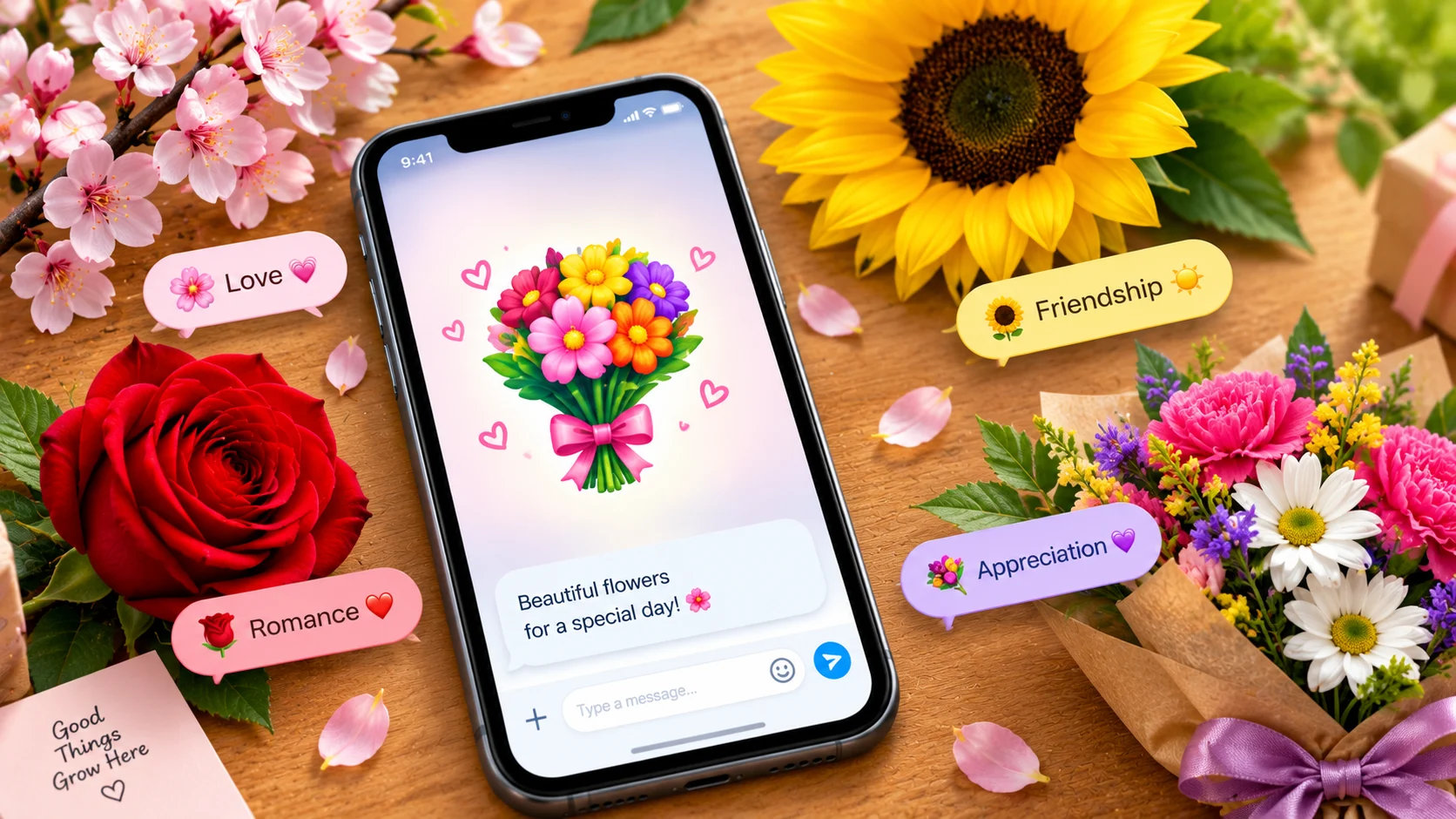
The flower emoji 🌸 often symbolizes beauty, sweetness, springtime, or appreciation. Other flower emojis can express romance, friendship, gratitude, celebration, or sadness, depending on the flower and conversation.
The flower emoji 🌸 usually represents beauty, spring, nature, happiness, and gentle affection. However, the meaning of a flower emoji depends on which flower you choose and how it appears in a message. A pink cherry blossom can suggest beauty or a fresh start, a red rose 🌹 often expresses romantic love, and a bouquet 💐 can celebrate a birthday, anniversary, or special achievement.
People use flower emojis in text messages, social media captions, greetings, and congratulations. They can make a message feel warmer without changing its words. Still, a flower emoji does not automatically mean romantic interest; the sender’s choice of flower and the surrounding message provide important clues.
What Does the Flower Emoji Mean in Text Messages?
Flower emojis can make a message feel caring, cheerful, romantic, or thoughtful. Their meaning often depends on the flower’s appearance and the words that accompany it.
Here are four common ways people use them.
1. Love and Romantic Interest
Flowers are often associated with affection, so a flower emoji can add a romantic touch to a message. The red rose 🌹 is especially associated with love and romance.
Example: “Thinking about you today 🌹❤️”
Likely meaning: A warm or romantic expression of affection.
A single 🌸, however, may simply make a message look pretty or gentle. Do not assume every flower emoji signals attraction.
2. Friendship and Appreciation
Flower emojis can express gratitude, kindness, and appreciation without a romantic message.
Example: “Thanks for always checking on me 🌼”
Likely meaning: “I appreciate you, and I’m glad you’re in my life.”
This use works well in messages to friends, family members, classmates, or coworkers.
3. Happiness, Spring, and New Beginnings
Blossoms are closely linked to spring, fresh growth, and the beauty of nature. The cherry blossom 🌸 can suggest a fresh start or a peaceful, cheerful mood.
Example: “Finally, the flowers are blooming again 🌸🌷”
Likely meaning: Happiness about spring and new growth.
4. Celebrations and Special Occasions
A bouquet 💐 is a natural choice for birthdays, anniversaries, graduations, congratulations, and other special moments.
Example: “Congratulations on your graduation! 💐”
Likely meaning: Celebration, appreciation, or a warm gesture of congratulations.
Flower Emojis and Their Meanings: Comparison Table
The word “flower emoji” can refer to several different symbols. Use this table to identify the flower and choose one that fits your message.
| Emoji | Official Name | Common Meaning | Tone | Where or When It Is Used |
|---|---|---|---|---|
| 🌸 | Cherry Blossom | Beauty, spring, gentle affection | Soft, cheerful | Spring captions, compliments, aesthetic messages |
| 🌹 | Rose | Love, romance, beauty | Romantic, affectionate | Romantic texts, anniversaries, Valentine’s Day |
| 🌷 | Tulip | Flowers, beauty, affection | Warm, fresh | Greetings, spring messages, appreciation |
| 🌻 | Sunflower | Happiness, warmth, positivity | Bright, friendly | Summer captions, cheerful greetings, encouragement |
| 🌼 | Blossom | Appreciation, happiness, beauty | Sweet, friendly | Thank-you messages, celebrations, cheerful notes |
| 🌺 | Hibiscus | Tropical beauty, warmth, affection | Colorful, relaxed | Summer posts, vacation captions, flower-themed messages |
| 🥀 | Wilted Flower | Fading beauty, sadness, loss | Melancholy, dramatic | Heartbreak captions, disappointment, sad messages |
| 💐 | Bouquet | Gifts, celebration, appreciation | Festive, caring | Birthdays, congratulations, anniversaries |
| 🪷 | Lotus | Peace, purity, calm, spiritual symbolism | Serene, reflective | Meditation, mindfulness, spiritual or cultural contexts |
These are common interpretations, not fixed definitions. Unicode identifies the emoji characters, while their conversational meanings depend on how people use them.
Which Flower Emoji Should You Choose?
- Choose 🌸 for a gentle, pretty, springlike feeling.
- Choose 🌹 when you want to express romantic affection more clearly.
- Choose 🌻 for a cheerful, sunny, encouraging message.
- Choose 🌼 for friendly appreciation or a bright decorative touch.
- Choose 💐 when congratulating someone or celebrating a special occasion.
- Choose 🥀 when the message involves fading feelings, sadness, or loss.
- Choose 🪷 when peace, calm, or spiritual symbolism is relevant.
The most important difference is the feeling you want to convey. A rose can appear romantic, while a sunflower can feel upbeat and friendly. A bouquet is more closely tied to giving flowers or celebrating someone.
What Does 🌸 Mean From Someone?
If someone sends you 🌸, they may be expressing appreciation, affection, friendliness, or simply sharing something beautiful. The emoji alone does not reveal their exact intention.
Consider these examples:
| Message | Possible Meaning |
|---|---|
| “Hope you have a lovely day 🌸” | A kind, thoughtful greeting |
| “You look beautiful 🌸” | A compliment with a gentle tone |
| “Thank you for helping me 🌸” | Appreciation or gratitude |
| “Spring is finally here 🌸” | Excitement about the season |
| “Good night 🌸” | A warm, sweet sign-off |
Does the Flower Emoji Mean Love?
It can express love, but the specific flower and the conversation matter.
A 🌹 sent with “I love you” has a clearer romantic tone than a 🌸 sent with “Have a nice day.” Even then, the relationship between the sender and recipient helps determine the intended meaning.
Flower emojis can also express platonic love, family affection, gratitude, or support. Avoid treating one as proof of romantic interest.
How to Respond to a Flower Emoji
Your reply can be simple and natural. Match the tone of the original message rather than assuming the sender has a particular intention.
🌸
For a friendly greeting
“Thank you! Hope your day is beautiful too 🌸”
Warm and friendly without implying romance.
🌻
For encouragement or appreciation
“That made me smile. Thank you! 🌻”
Shows gratitude and positive feelings.
🌹
For a romantic message
“That’s so sweet of you ❤️🌹”
Suitable when you want to return the affectionate tone.
💐
For congratulations
“Thank you so much! 💐”
A simple response for a celebration or special occasion.
Copy and Paste Flower Emojis
Use these flower emojis in your texts, social media captions, greetings, or messages.
🌸Cherry BlossomTap to copy
🌹RoseTap to copy
🌷TulipTap to copy
🌻SunflowerTap to copy
🌼BlossomTap to copy
🌺HibiscusTap to copy
🥀Wilted FlowerTap to copy
💐BouquetTap to copy
🪷LotusTap to copy
Select any flower to copy it.
Official Flower Emoji Names and Unicode Details
The Unicode Standard gives each emoji a defined character identity. The familiar names shown on emoji keyboards may be CLDR short names, which help users identify and search for emoji. Neither the character name nor its appearance sets one universal meaning for every conversation.
Here are the details for three commonly used flower emojis:
- 🌸 Cherry Blossom: U+1F338; approved in Unicode 6.0 in 2010.
- 🌹 Rose: U+1F339; approved in Unicode 6.0 in 2010.
- 🌻 Sunflower: U+1F33B; approved in Unicode 6.0 in 2010.
These emojis were added to Emoji 1.0 in 2015. Their designs can vary slightly across Apple, Google, Samsung, and other platforms, but their underlying Unicode characters remain the same.
FAQs
What is the most common flower emoji?
There is no single flower emoji with one universal meaning. 🌸 is often associated with cherry blossoms, beauty, and spring, while 🌹 commonly suggests romantic love. The best choice depends on the message.
What does 🌸 mean from a girl or a guy?
It can mean friendliness, appreciation, affection, or an interest in flowers or spring. The sender’s gender does not establish the meaning. The conversation and relationship provide better clues.
Is 🌸 a romantic emoji?
It can appear in romantic messages, but it is not exclusively romantic. Friends and family members may use it to make greetings, compliments, or thank-you messages feel warmer.
What is the difference between 🌸 and 🌼?
🌸 is the Cherry Blossom emoji, with pink petals, while 🌼 is the Blossom emoji, generally shown as a daisy-like flower with yellow or white petals. Their meanings overlap, but 🌸 often gives a softer, springlike impression, while 🌼 can feel bright and cheerful.
What does 🥀 mean in a text?
The wilted flower 🥀 can symbolize fading beauty, sadness, disappointment, or loss. It may be used in a serious message or as dramatic decoration, so the surrounding words matter.
Can I use flower emojis in professional messages?
Yes, when the tone and workplace make them appropriate. 🌼 or 💐 may suit a friendly thank-you, congratulations, or team celebration. For formal communication, keep the emoji optional and make sure the message remains clear without it.
Conclusion
Flower emojis can communicate much more than a reference to plants. From the gentle beauty of 🌸 to the romance of 🌹 and the celebratory feel of 💐, each symbol adds a slightly different tone. Choose the flower that best matches your message, and use the surrounding words to make your intention clear.
Discover more Related Articles:
- Smirk Emoji | How to Express Flirting, Confidence, Sarcasm & Playful Mischief In 2026
- TikTok Emojis | Hidden Codes, Meanings & How to Use Them In 2026
- Cross Emoji Meaning | What This Symbol Really Represents In 2026

Jessica Miller is a content writer at EmojisPeace.com, where she creates fun and easy-to-follow guides about emojis, their meanings and creative ways to use them. She loves helping readers express themselves with the perfect emoji for every moment.