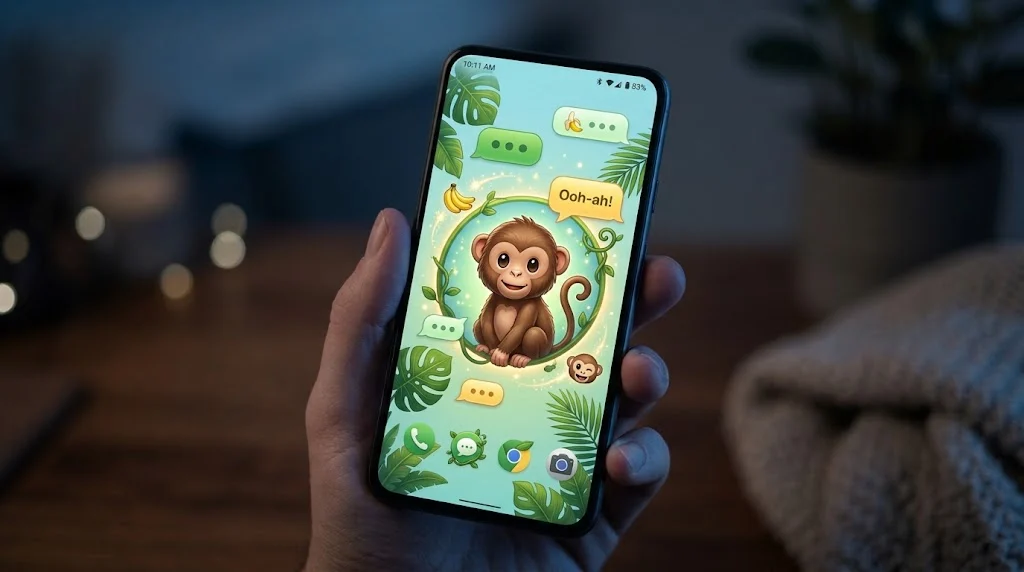
🐒 usually means a monkey or represents playful, mischievous behavior. In texting, it can suggest silliness, curiosity, joking, or a cheeky reaction, depending on the context.
The monkey emoji 🐒 usually represents a monkey, but in text messages, it can also express playfulness, mischief, curiosity, silliness, or a joking mood. People use it when talking about animals, sharing funny moments, teasing friends, or reacting to something cheeky. Its meaning depends on the conversation and the sender’s intention.
For example, someone might send 🐒 after making a silly joke or use it in a message about visiting a zoo. It can also appear in conversations about wildlife, nature, and tropical destinations. The monkey emoji is generally playful and lighthearted, but it does not always carry a hidden meaning.
One important detail: 🐒 is different from 🐵, 🙈, 🙉, and 🙊. These are separate monkey-related emojis, each with its own appearance and common conversational use.
What Does 🐒 Mean From Someone in a Text?
When someone sends you 🐒, they may be trying to make the conversation more playful or react to something funny. The exact meaning depends on the message.
Here are a few possible interpretations:
- Playful teasing: They are joking around or making fun of a silly situation.
- Mischievous behavior: They think someone is being cheeky or doing something naughty.
- Animal-related conversation: They may simply be talking about monkeys, wildlife, or a zoo visit.
- Funny reaction: They find something amusing, silly, or unexpected.
- Affectionate joking: Someone may use it with a close friend or family member as a lighthearted reaction.
For example:
“You’re acting like a little monkey today 🐒”
This is likely playful teasing rather than an insult, especially between people who already joke with each other.
Three Wise Monkeys: 🙈 🙉 🙊 Meaning Explained
The three monkey emojis have a special connection to the traditional Three Wise Monkeys proverb: see no evil, hear no evil, and speak no evil.
🙈
See-No-Evil
Covering the eyes
🙉
Hear-No-Evil
Covering the ears
🙊
Speak-No-Evil
Covering the mouth
Although they belong to the same monkey family, each has a different conversational meaning.
🙈 See-No-Evil Monkey
This emoji often expresses shyness, embarrassment, or pretending not to see something.
Example: “I can’t believe I watched that embarrassing video 🙈”
Meaning: “I don’t want to look!”
🙉 Hear-No-Evil Monkey
This emoji can suggest that someone does not want to hear something, is ignoring information, or is avoiding an uncomfortable conversation.
Example: “Please don’t tell me any more spoilers 🙉”
Meaning: “I don’t want to hear it!”
🙊 Speak-No-Evil Monkey
This emoji often represents keeping a secret, staying quiet, or reacting to something someone probably should not have said.
Example: “Oops, I wasn’t supposed to tell you that 🙊”
Meaning: “I shouldn’t have said anything!”
The three emojis can also be used together as a playful reference to the traditional proverb.
Monkey Emoji Examples in Everyday Messages
Here are some natural ways to use the different monkey emojis in conversations.
| Message | Emoji | Likely Meaning |
|---|---|---|
| “Look at that cute monkey at the zoo!” | 🐒 | Talking about an animal |
| “Stop being so silly 😂🐒” | 🐒 | Playful teasing |
| “I saw my crush and immediately looked away 🙈” | 🙈 | Shyness or embarrassment |
| “Don’t tell me how the movie ends 🙉” | 🙉 | Avoiding spoilers |
| “I have a secret, but I can’t tell you 🙊” | 🙊 | Keeping something private |
| “I accidentally told everyone the surprise 🙊” | 🙊 | Regret about revealing information |
These examples show how the surrounding words help explain the intended reaction.
Can the Monkey Emoji Be Offensive?
Yes, context matters here. Although 🐒 is normally an animal or playful emoji, monkey imagery has also been used as a racist insult against Black people and people with dark skin.
Using a monkey emoji to mock someone’s race, skin color, or identity is offensive and harmful. Even when someone claims to be joking, the context and target matter.
It is best to use 🐒 for actual animal references or clearly harmless playful situations, not to describe or ridicule someone’s appearance or identity.
Copy and Paste Monkey Emojis
Here is a collection of monkey-related emojis you can copy and use in messages, captions, and comments.
Monkey Emoji Collection
🐒Monkey
🐵Monkey Face
🙈See-No-Evil
🙉Hear-No-Evil
🙊Speak-No-Evil
🦍Gorilla
🦧Orangutan
🍌Banana
Tap any emoji to copy it.
Official Monkey Emoji Name and Unicode Details
The 🐒 emoji is officially named Monkey in the Unicode emoji standard. It depicts a full-bodied cartoon monkey, generally shown sitting with a curled tail and facing sideways.
Here are its technical details:
| Detail | Information |
|---|---|
| Emoji | 🐒 |
| Official Name | Monkey |
| Unicode Code Point | U+1F412 |
| Unicode Version | Unicode 6.0 |
| Original Approval Year | 2010 |
| Emoji 1.0 Addition | 2015 |
| Emoji Category | Animals & Nature |
| Related Emoji | 🐵 Monkey Face |
The Unicode Consortium standardized this character in Unicode 6.0 in 2010. It was later included in Emoji 1.0 in 2015. Meaning, Copy And Paste+1
Why Does the Monkey Emoji Look Different on Different Devices?
The basic character stays the same, but its artwork can vary across Apple, Google, Samsung, and other platforms.
Some versions show a slightly different body shape, facial expression, fur texture, or tail position. WhatsApp’s design has also been shown facing the opposite direction from some other versions. Meaning, Copy And Paste
FAQs
What is the difference between 🐒 and 🐵?
🐒 is the full-body Monkey emoji, while 🐵 is the Monkey Face emoji. Both can represent monkeys or playful behavior, but their visual designs are different.
What does the monkey emoji mean on Instagram?
On Instagram, 🐒 can appear in captions, comments, and messages about animals, funny situations, or playful behavior. Its meaning depends on the accompanying content rather than the platform itself.
Does 🐒 mean someone is being silly?
Yes, it can suggest silliness, cheekiness, or mischievous behavior. For example, someone might send it after a friend makes a ridiculous joke or does something funny.
What does 🐒 mean in a relationship?
In a relationship conversation, it may be used for playful teasing, joking, or affectionate silliness. It does not automatically indicate romantic attraction or a specific relationship message.
Are 🙈 🙉 and 🙊 the same emoji?
No. They are three separate emojis representing the see-no-evil, hear-no-evil, and speak-no-evil monkeys. Each has a different hand gesture and common conversational meaning.
Is the monkey emoji part of the Chinese zodiac?
Yes. The monkey is one of the 12 animals in the Chinese zodiac. The 🐒 emoji can therefore also appear in conversations about Chinese zodiac signs, birthdays, and the Year of the Monkey. Meaning, Copy And Paste
Conclusion
The 🐒 emoji is mainly a playful animal symbol that can also suggest silliness, curiosity, and mischievous behavior. Its meaning becomes clearer when you consider the conversation around it. If you want to express embarrassment, avoiding something, or keeping a secret, the three wise monkey emojis 🙈 🙉 🙊 offer more specific reactions.
Discover More related Articles:
- Thinking Emoji Meaning | Is It Curiosity, Doubt or Sarcasm In 2026
- Poop Emoji | From Funny Jokes to Sarcastic Reactions In 2026
- Sparkle Emoji Mean | From Magic to Subtle Sarcasm In 2026

Matthew Garcia is a content writer at EmojisPeace.com, where she creates fun, expressive and easy-to-use emoji collections for every mood and moment. Passionate about digital expression, she helps readers find the perfect emojis to make every message more creative and memorable.