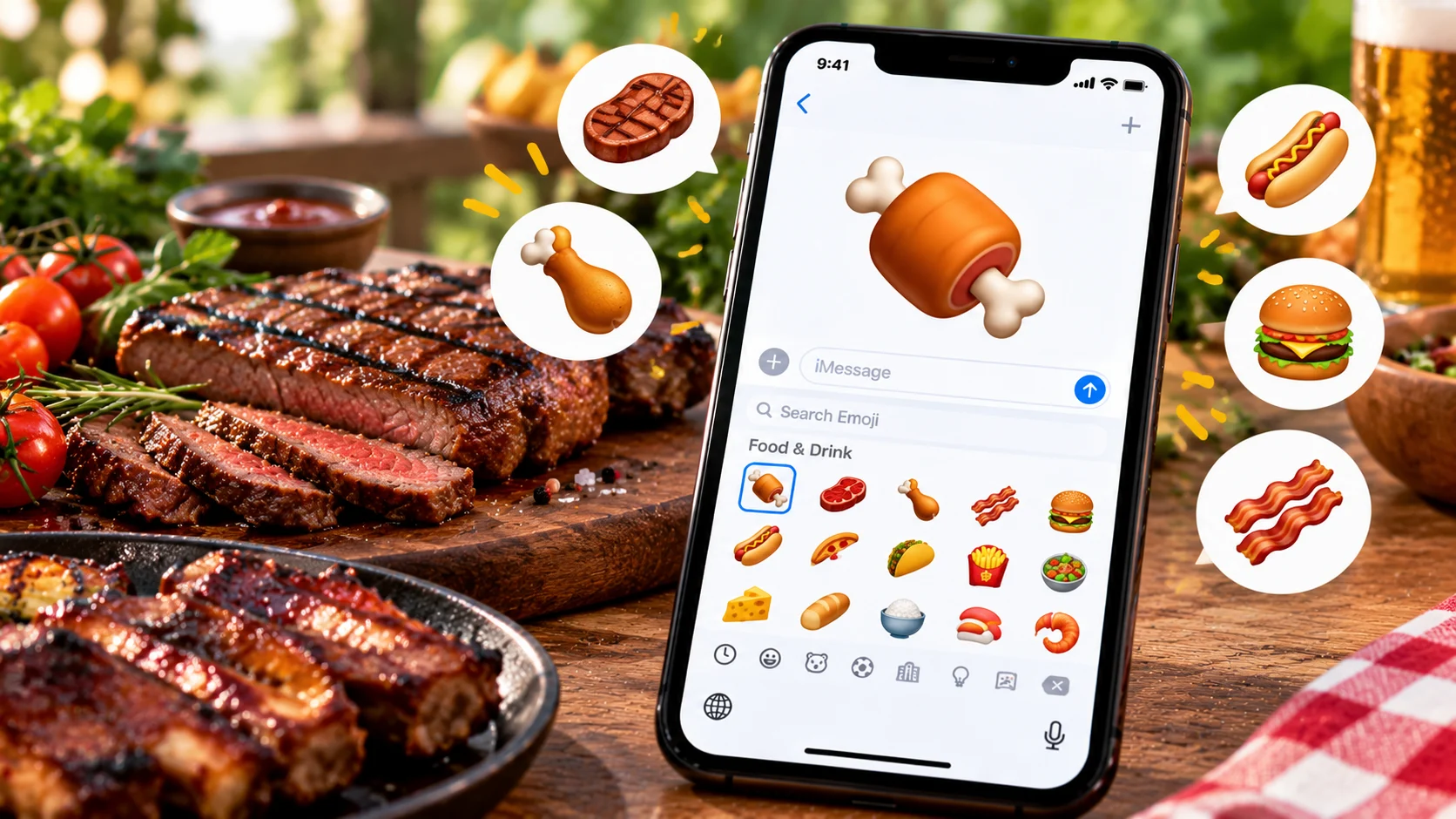
🍖 usually means meat, food, hunger, or eating. Someone might send it when talking about dinner, grilling, a barbecue, or craving a big meal. It can also be used jokingly because its cartoon-like appearance is associated with prehistoric or exaggerated food imagery.
The meat emoji 🍖 officially means Meat on Bone. It usually represents a piece of meat, a meal, hunger, cooking, barbecue, or enjoying food. In playful conversations, it can also suggest a hearty feast, caveman-style humor, or something exaggerated and cartoonish. Its meaning depends heavily on the message around it.
Unicode identifies 🍖 as MEAT ON BONE, with the code point U+1F356. It is different from 🥩, the Cut of Meat emoji, and 🍗, the Poultry Leg emoji. Unicode
In some contexts, 🍖 has an adult or sexual slang interpretation, so the surrounding conversation matters before assuming it is simply about food. Emojipedia
🍖 Meat Emoji Meaning in Text
In everyday texting, 🍖 is most often a literal food emoji.
Someone might use it to say:
- They are eating meat.
- They are hungry.
- They are cooking dinner.
- They are talking about barbecue or grilled food.
- They want a big, satisfying meal.
- They are joking about eating like a caveman.
For example:
“Dinner is finally ready 🍖”
Here, the emoji simply reinforces the idea of a hearty meal.
The emoji does not identify a particular type of meat. Unicode’s official name is Meat on Bone, rather than steak, beef, pork, or chicken. Unicode
Is 🍖 a steak emoji?
Not officially. 🍖 is Meat on Bone, while 🥩 is Cut of Meat. Unicode lists them as separate emoji characters. Unicode
A person may use 🍖 to represent steak, ribs, barbecue, or another meat dish informally, but the emoji itself does not specify the animal or cut.
The Tone of 🍖
The meat emoji usually has a playful, casual, and food-focused tone.
Its tone can change depending on the message:
- Hungry: “I need dinner 🍖”
- Excited about food: “Look at this barbecue 🍖🔥”
- Playful: “Time for a caveman feast 🍖”
- Celebratory: “We are grilling tonight 🍖”
- Humorous: “I have earned this giant meal 🍖”
- Suggestive: In some conversations, it can have an adult slang meaning.
The last use is not the default meaning. If the conversation is clearly about food, there is usually no reason to read a sexual meaning into the emoji.
What Does 🍖 Mean From Someone?
If someone sends you 🍖 by itself, the safest interpretation is usually food, meat, hunger, or eating.
The surrounding conversation gives you better clues.
For example:
“What are you having for dinner? 🍖”
This is probably a straightforward food reference.
But:
“You know what I want right now 🍖😏”
could have a more playful or suggestive tone because the wording and 😏 change the context.
One emoji rarely proves what someone feels or intends. Look at the complete message, the conversation before it, and the sender’s usual communication style.
Is 🍖 a Flirty Emoji?
It can be used flirtatiously, but 🍖 is not inherently a flirting emoji.
Its ordinary meaning is food. A suggestive interpretation becomes more plausible when the surrounding message is clearly sexual or teasing.
This is one reason not to assume that a standalone 🍖 is automatically a hidden romantic message.
If someone sends:
“That burger looks amazing 🍖”
there is no obvious flirting signal.
If the emoji appears in an already suggestive conversation, its meaning can change.
🍖 as a Joke or Playful Reaction
The unusual shape of 🍖 makes it useful for exaggerated humor.
The giant piece of meat on a bone can create a cartoon-like image of a feast, especially when paired with emojis such as 🔥, 🍗, 🥩, 🦖, or 🏕️.
For example:
“Forget the salad. Give me the feast 🍖🔥”
The emoji adds a humorous sense of excess rather than simply identifying a specific food.
Related Meat and Food Emojis
| Emoji | Official Name | Common Meaning | Tone | Where or When It Is Used |
|---|---|---|---|---|
| 🍖 | Meat on Bone | Meat, a hearty meal, hunger | Playful, casual | Food messages, meals, barbecue jokes |
| 🥩 | Cut of Meat | Steak or a cut of meat | Straightforward, food-focused | Steak, cooking, restaurants |
| 🍗 | Poultry Leg | Chicken or turkey leg | Casual, hungry | Meals, fried chicken, Thanksgiving |
| 🥓 | Bacon | Bacon or breakfast food | Casual, playful | Breakfast, cooking, food jokes |
| 🍔 | Hamburger | Burger, fast food, hunger | Casual, upbeat | Meals, restaurant plans, cravings |
| 🍕 | Pizza | Pizza, ordering food, a meal | Casual, fun | Dinner, parties, food plans |
| 🌭 | Hot Dog | Hot dog or sausage | Casual, playful | Cookouts, baseball, meals |
| 🍴 | Fork and Knife | Eating, dining, a meal | Neutral | Restaurants, dinner plans, food |
The biggest source of confusion is 🍖 versus 🥩. The first is specifically a piece of meat shown on a bone, while 🥩 represents a cut of meat and is more naturally associated with steak. 🍗 is narrower still because it officially represents a poultry leg. Unicode
If you want to show meat in a general, cartoon-like way, 🍖 works well. For steak, 🥩 is usually clearer. For chicken or turkey, 🍗 is the more specific choice.
🍖 vs. 🥩 vs. 🍗
These three emojis can all appear in conversations about meat, but they are not interchangeable.
🍖 Meat on Bone has the most cartoonish appearance. It works well for a large meal, barbecue, meat in general, or playful food-related messages.
🥩 Cut of Meat looks more like a prepared or uncooked steak or another cut of red meat. It is a better choice when the specific idea is steak.
🍗 Poultry Leg represents a chicken- or turkey-style leg. It is more specific than 🍖 and is useful when the type of food matters.
Choosing between them is mainly about what you want the reader to picture.
🍖 Message Examples
“I’m starving. Let’s eat 🍖”
The emoji reinforces hunger and the idea of a substantial meal.
“BBQ tonight 🍖🔥”
Here, 🍖 works as a general barbecue or grilled-meat reference, while 🔥 adds the cooking or grill theme.
“Look at the size of this meal 🍖”
The emoji makes the statement feel exaggerated and playful.
“Steak for dinner 🥩”
🥩 is clearer than 🍖 because the intended food is specifically steak.
“Chicken dinner 🍗”
🍗 communicates poultry more directly than the general meat emoji.
Can 🍖 Be Sarcastic?
Yes, but sarcasm comes from the message and situation, not from the emoji alone.
For example:
“Healthy dinner tonight 🍖🍔🍟”
If the person is joking about an obviously indulgent meal, the emojis can help make the sarcasm clear.
By itself, 🍖 does not have an official sarcastic meaning.
Can 🍖 Be Rude?
Usually, no. 🍖 is generally a food emoji.
It can become inappropriate if someone uses it as part of sexual slang or sends it in a clearly suggestive conversation. Emojipedia notes that the emoji can have such a use, but that is separate from its ordinary food meaning. Emojipedia
If someone sends it unexpectedly in a personal conversation, consider the surrounding words before deciding it was meant literally or suggestively.
How to Respond to 🍖
Your response can match the context.
If it is about food:
“That looks good!”
If someone is talking about dinner:
“What are you cooking?”
If it is a joke:
“Now that’s a serious meal 😂”
If the message seems suggestive and you are unsure what the sender means:
“What do you mean by that?”
A simple clarification is better than guessing when the context is unclear.
Copy and Paste the Meat Emoji
🍖
You can copy the Meat on Bone emoji directly from here:
🍖
Official Name and Unicode Details
The official Unicode name is MEAT ON BONE.
- Emoji: 🍖
- Unicode code point: U+1F356
- Unicode category: Food symbol
- Official name: MEAT ON BONE
- Unicode approval: Unicode 6.0, 2010
- Emoji 1.0: Added in 2015
Unicode’s current emoji charts list 🍖 as meat on bone, with bone and meat among its related keywords. Unicode Emojipedia also records its approval in Unicode 6.0 and inclusion in Emoji 1.0. Emojipedia
Different platforms can draw the emoji somewhat differently, but the underlying Unicode character remains the same.
FAQs
What does 🍖 mean?
🍖 is the Meat on Bone emoji. It usually represents meat, food, hunger, eating, barbecue, or a hearty meal. It can also be used humorously or, in some contexts, as sexual slang.
Is 🍖 the steak emoji?
No. 🍖 is officially Meat on Bone, while 🥩 is Cut of Meat. People can use 🍖 informally for steak or other meat, but 🥩 is the clearer choice when you specifically mean steak. Unicode
What does 🍖 mean in texting?
In texting, it usually refers to food, meat, hunger, dinner, grilling, or enjoying a big meal. Its exact meaning depends on the surrounding message.
Does 🍖 have a sexual meaning?
It can have a sexual or suggestive slang meaning in some conversations, but that is not its basic meaning. When the surrounding conversation is about dinner or cooking, the literal food meaning is usually the more natural reading. Emojipedia
What is the difference between 🍖 and 🍗?
🍖 is the general Meat on Bone emoji, while 🍗 is officially Poultry Leg. The latter more specifically suggests chicken or turkey. Unicode
What is the difference between 🍖 and 🥩?
🍖 shows meat attached to a bone and has a more cartoon-like look. 🥩 represents a cut of meat and is commonly used when the intended food is steak or a similar cut.
Conclusion
The 🍖 meat emoji officially represents Meat on Bone and is most commonly used for meat, food, hunger, meals, and barbecue. Its playful design also makes it useful for exaggerated food jokes. In a suggestive conversation, it can take on an adult meaning, but context should guide the interpretation rather than the emoji alone.
Discover More Related Articles:
- Buck Teeth Emoji | What This Funny Toothy Symbol Says About Smiles & More In 2026
- Sad Meme Emoji | The Best Emojis for Emotional Memes, Fake Tears & Relatable Moments In 2026
- Horse Emoji Meaning | What Does the Horse Emoji Mean in Text In 2026

Sophia Martinez is a content writer at EmojisPeace.com, where she creates fun, engaging, and easy-to-read emoji guides, meanings and digital communication content. She enjoys helping readers express themselves better with the perfect emojis for every mood and moment.