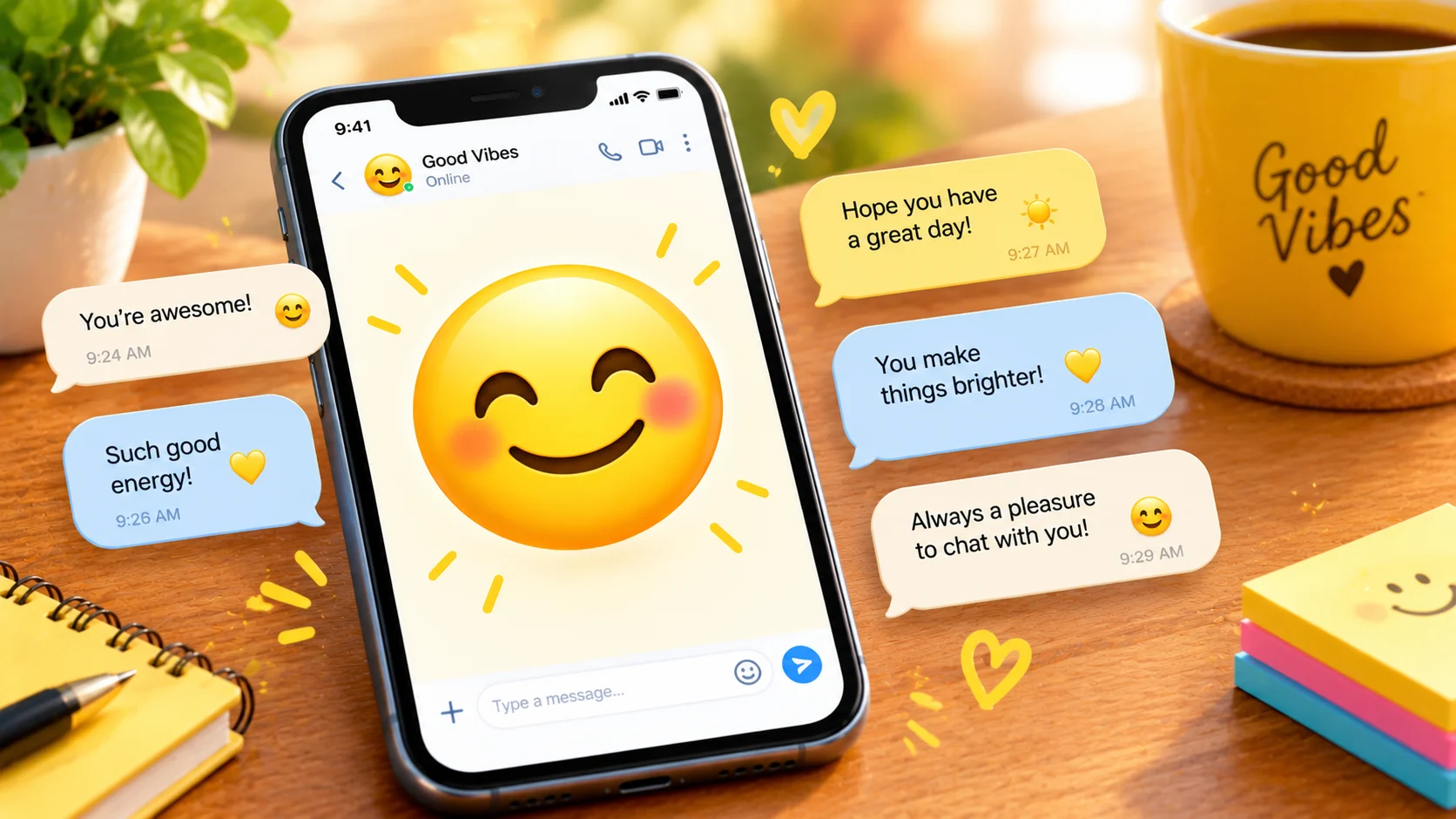
😊 usually means “I’m happy,” “That’s sweet,” or “I appreciate it.” It conveys a warm, friendly tone, but the exact meaning can range from simple politeness to affection depending on the message and relationship.
The smiling emoji 😊 usually expresses happiness, warmth, friendliness, appreciation, or gentle affection. Officially called Smiling Face with Smiling Eyes, it shows a relaxed smile with smiling eyes, making it a common way to add a kind or positive tone to a message. Depending on the conversation, it can also express gratitude, shyness, politeness, or subtle flirtation.
For example, “Thanks for helping me today 😊” sounds warm and appreciative, while “It was really nice seeing you 😊” may suggest genuine friendliness or affection. In some conversations, the same emoji can feel reserved or slightly awkward, especially when it follows a serious statement.
The smiling face is a versatile choice when you want to sound kind without using an intense expression. However, it does not automatically mean romantic interest, excitement, or agreement.
What Does 😊 Mean in Text Messages?
In texting, 😊 usually adds warmth to a message that might otherwise sound plain or formal. It can make a thank-you feel more sincere, a greeting more welcoming, or a compliment more personal.
Its meaning often depends on the words that come before it.
- Happiness: “I got the job! 😊” — Shares good news with a warm, positive tone.
- Gratitude: “Thanks for checking on me 😊” — Shows appreciation.
- Friendliness: “Hope you have a great weekend 😊” — Makes a friendly wish feel more personal.
- Shyness: “You remembered that? 😊” — May suggest being pleasantly surprised or a little bashful.
- Politeness: “Sure, that works for me 😊” — Softens a short reply.
- Affection: “I always enjoy talking to you 😊” — Adds warmth that may be friendly or romantic, depending on the relationship.
The smiling emoji does not always mean the sender feels extremely happy. Sometimes it simply makes a message sound kinder.
Is 😊 Friendly, Flirty, or Just Polite?
The smiling face with smiling eyes can fit all three situations. Its expression is warm without being as intense as a heart-eyes face or a kissing emoji.
| Situation | Example Message | Possible Meaning |
|---|---|---|
| Friendship | “That was fun! We should do it again 😊” | Genuine friendliness |
| Appreciation | “You really helped me out today 😊” | Gratitude and warmth |
| Flirting | “I was hoping you’d text me 😊” | Possible romantic interest |
| Professional conversation | “Thanks for sending the details 😊” | Politeness and a friendly tone |
| Awkward conversation | “Well, that was unexpected 😊” | Could be nervousness or restrained discomfort |
How can you tell the difference? Look at the full conversation, not just the emoji. A warm message that continues a personal conversation may suggest affection, while the same emoji after a routine thank-you may simply be polite.
One 😊 alone does not establish romantic interest, hidden feelings, or a particular intention.
😊 vs. 🙂 vs. ☺️: Which Smiling Emoji Should You Use?
These three smiling faces look similar, but their expressions are slightly different.
😊
😊 Smiling Face with Smiling Eyes
Warm, friendly, appreciative, or gently affectionate. A good choice for sincere thanks, kind messages, and positive reactions.
🙂
🙂 Slightly Smiling Face
A smaller, more restrained smile. Depending on context, it can feel polite, neutral, or even subtly ironic.
☺️
☺️ Smiling Face
A classic, simple smile that can convey gentle happiness, warmth, or gratitude. Its design differs from the more expressive 😊.
For most friendly messages, 😊 is a clear option. Use 🙂 when you prefer a more restrained expression and ☺️ when you want a classic smiley appearance.
How the Smiling Emoji Differs From Other Happy Faces
| Emoji | Official Name | Common Meaning | Tone | Where or When It Is Used |
|---|---|---|---|---|
| 😊 | Smiling Face with Smiling Eyes | Warmth, happiness, appreciation | Gentle, friendly | Thank-you messages and kind replies |
| 😃 | Grinning Face with Big Eyes | Happiness, excitement | Energetic, cheerful | Sharing exciting news |
| 😄 | Grinning Face with Smiling Eyes | Joy, amusement | Open, upbeat | Friendly jokes and happy reactions |
| 😁 | Beaming Face with Smiling Eyes | Enthusiasm, pride, satisfaction | Bright, excited | Celebrating a success |
| 😌 | Relieved Face | Calm, relief, contentment | Peaceful, relaxed | Expressing comfort after stress |
| 🥰 | Smiling Face with Hearts | Affection, feeling loved | Tender, loving | Sweet messages and affectionate reactions |
| 😍 | Smiling Face with Heart-Eyes | Admiration, strong affection | Intense, enthusiastic | Reacting to someone or something appealing |
| 😉 | Winking Face | Teasing, joking, possible flirtation | Playful, suggestive | Jokes, hints, or lighthearted messages |
| 😅 | Grinning Face with Sweat | Nervous laughter, relief, awkwardness | Uneasy, lighthearted | Recovering from a mistake or tense moment |
The biggest difference is emotional intensity. 😊 is warm but moderate; 😃 and 😁 look more excited, while 🥰 and 😍 communicate stronger affection or admiration. 😌 focuses on relief rather than happiness, and 😉 adds a wink that can make a message more teasing.
If you want to express simple friendliness without suggesting a strong romantic or excited reaction, 😊 is often a suitable choice.
Examples of 😊 in Everyday Conversations
Here are a few realistic examples showing how context changes the meaning.
Example 1: A thank-you message
“Thanks for bringing me coffee this morning 😊”
Likely meaning: The sender appreciates the thoughtful gesture and wants to sound warm.
Example 2: A friendly invitation
“Are you free to grab lunch this weekend? 😊”
Likely meaning: A friendly invitation with a welcoming tone. It could be romantic in the right context, but the emoji alone does not make it a date invitation.
Example 3: A compliment
“You did a great job on that presentation 😊”
Likely meaning: Encouragement and positive feedback.
Example 4: A slightly awkward reply
“Yeah, I saw the message. 😊”
Likely meaning: It could be a polite acknowledgment, an attempt to stay friendly, or a restrained response. If the conversation is tense, the smile may feel less warm than it would in a casual exchange.
How to Respond When Someone Sends 😊
Most of the time, you can respond naturally without analyzing the emoji too closely.
- To a friendly greeting: “Hey! Hope you’re having a good day too 😊”
- To a compliment: “Thank you! That’s really nice of you.”
- To a sweet message: “Aw, that made me smile.”
- To a casual invitation: “I’d love to! What time works for you?”
- To a message that seems unclear: Reply to the words themselves or ask a direct question if needed.
You do not have to send the same emoji back. A natural response that fits the conversation is usually better than trying to match every symbol.
Copy and Paste the Smiling Emoji
😊
Smiling Face with Smiling Eyes Copy 😊
Use it in texts, emails, captions, comments, and friendly replies. For example:
Thank you so much 😊I'm happy for you 😊That sounds great 😊It was nice meeting you 😊Hope everything goes well 😊
Official Name and Unicode Details
According to the Unicode emoji charts, the official character name is SMILING FACE WITH SMILING EYES. Its standard details are:
- Emoji: 😊
- Unicode code point: U+1F60A
- Unicode version: Unicode 6.0
- Year added to Unicode: 2010
- Emoji 1.0 release: 2015
The Unicode Consortium defines the character and its standardized identity, while the meanings people attach to it depend on how they use it in messages. Its appearance can vary slightly across Apple, Google, Samsung, and other platforms.
FAQs
Does 😊 mean happy or just friendly?
It can mean either. The emoji commonly expresses happiness, but it is also used to make a message sound kind, appreciative, or welcoming without suggesting intense excitement.
Is 😊 a good sign when texting someone you like?
It can be a positive sign of warmth or comfort, but it is not enough to determine romantic interest. Pay attention to the person’s words, they initiate conversations, and how your interactions develop over time.
Can 😊 be passive-aggressive?
Yes, in some situations. If it follows a tense statement or a reluctant agreement, the smile may seem forced or ironic. However, it is often genuinely friendly, so context matters.
What does 😊 mean at the end of a sentence?
It usually softens the message or adds a friendly emotional tone. For example, “See you tomorrow 😊” sounds warmer than “See you tomorrow” without the emoji.
Is 😊 different from 😃?
Yes. 😊 usually conveys gentle warmth or appreciation, while 😃 has a wider, more open grin that often suggests stronger excitement or happiness.
Conclusion
The smiling face with smiling eyes 😊 is a versatile way to express warmth, appreciation, friendliness, and gentle happiness. It can also add affection or soften a short reply, but its meaning is not fixed. Consider the words, the relationship, and the conversation before interpreting it as a sign of deeper feelings.
Discover More Related Articles:
- Sad Emoji Meanings | Find the Right Face for Every Feeling In 2026
- Heart Emoji Meaning | What Different Hearts Really Say In 2026
- Hello Emoji Meaning | What the Waving Hand Really Says In 2026

Matthew Garcia is a content writer at EmojisPeace.com, where she creates fun, expressive and easy-to-use emoji collections for every mood and moment. Passionate about digital expression, she helps readers find the perfect emojis to make every message more creative and memorable.