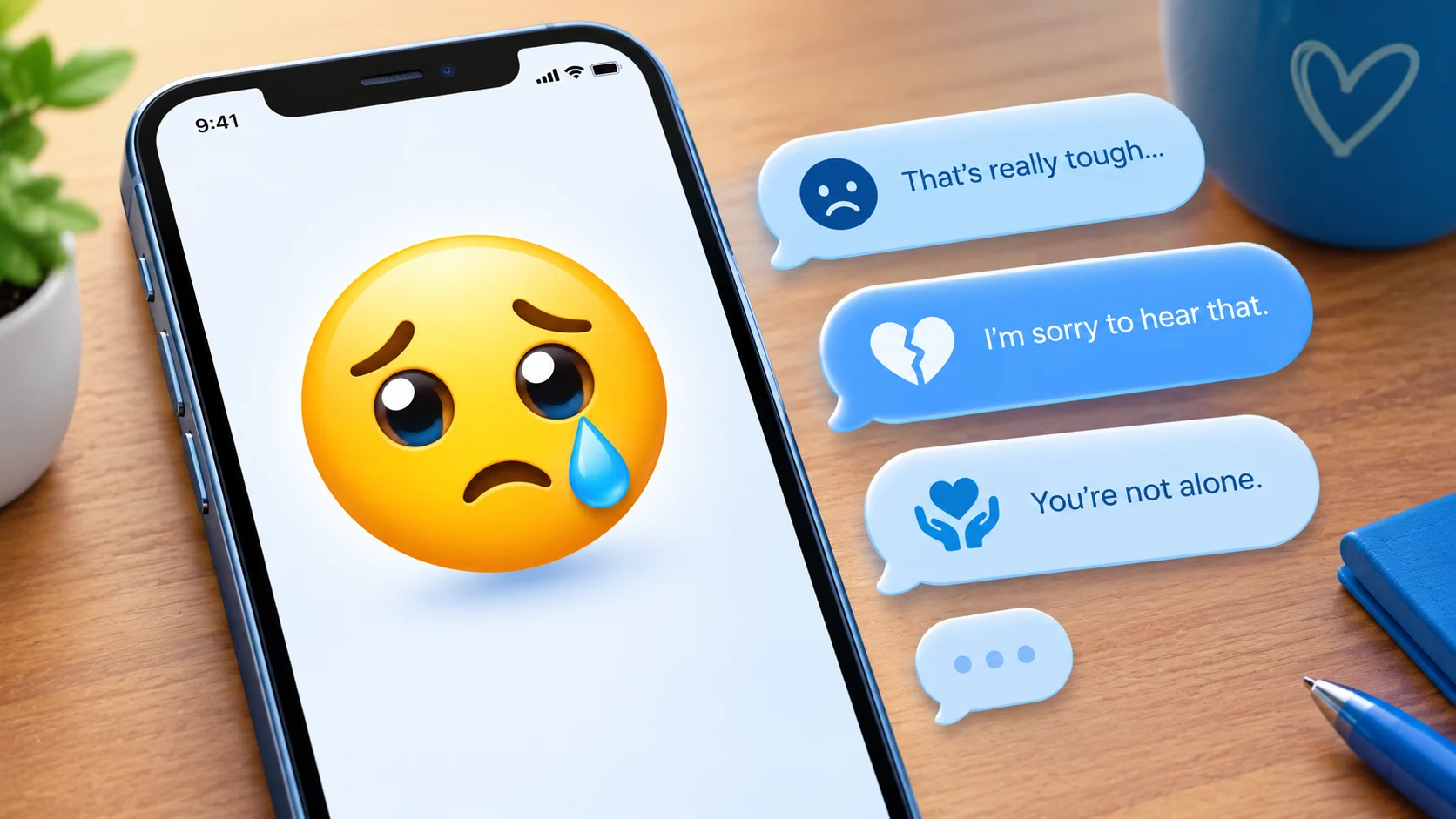
😢 usually means sadness, disappointment, hurt, or sympathy. It expresses a softer, more restrained sadness than 😭, although the exact meaning depends on the message and the situation. There is more than one sad emoji, and each communicates a slightly different feeling. Choosing the right one can help you show you are mildly disappointed, deeply upset, emotionally touched, or trying to comfort someone.
The sad emoji 😢, officially called Crying Face, usually expresses sadness, hurt feelings, disappointment, or sympathy. It shows a face with a single tear running down its cheek, making it useful when words alone do not fully express how someone feels. Depending on the conversation, it can communicate genuine sorrow, missing someone, feeling let down, or feeling touched by something emotional.
For example, “I really wanted to go, but I can’t 😢” expresses disappointment, while “I’m so sorry you’re going through this 😢” shows sympathy and care. The same emoji can also appear in lighthearted conversations when someone is pretending to be sad about a small setback.
What Does 😢 Mean in Text Messages?
The 😢 emoji is often used to add an emotional tone to a message. It can make a sentence feel more vulnerable, caring, or heartfelt without requiring a long explanation.
Here are its main meanings and how they differ.
1. Sadness or Hurt Feelings
The most direct meaning is feeling sad about something that happened.
Example: “I miss my family so much 😢”
Likely meaning: The sender feels sad, lonely, or emotionally affected by being apart from loved ones.
The single tear gives the expression a gentle, sorrowful tone rather than an exaggerated display of crying.
2. Disappointment
People also use 😢 when plans fall through, expectations are not met, or something they wanted does not happen.
Example: “The concert sold out before I could get tickets 😢”
Likely meaning: “I’m disappointed because I really wanted that.”
Here, the emoji communicates a setback rather than deep emotional pain.
3. Sympathy and Support
When someone shares bad news, 😢 can show that you feel for them or recognize their pain.
Example: “I’m so sorry about your dog 😢”
Likely meaning: “I feel for you, and I’m sorry you’re hurting.”
In sensitive conversations, pairing the emoji with caring words is usually more helpful than sending the emoji alone.
4. Feeling Touched or Emotional
Sadness is not the only possible meaning. The emoji can also appear when something is moving, meaningful, or bittersweet.
Example: “My grandparents kept every birthday card I ever gave them 😢”
Likely meaning: “That is so touching that it makes me emotional.”
The surrounding message helps distinguish happy tears, bittersweet feelings, and actual sadness.
5. Playful or Exaggerated Sadness
In casual conversations, people sometimes use 😢 to dramatize a minor disappointment.
Example: “You ate the last slice of pizza without me 😢”
Likely meaning: “I’m pretending to be heartbroken because you took my pizza.”
The topic and relationship help signal the emotion is serious or playful.
What Does It Mean When Someone Sends You 😢?
When someone sends you 😢, consider what came immediately before it.
- After disappointing news: They may be genuinely upset.
- After you share a problem: They may be expressing sympathy.
- After a heartfelt message: They may feel touched or emotional.
- After a joke or minor inconvenience: They may be exaggerating sadness for fun.
- After a personal disagreement: They may feel hurt, but the emoji alone cannot tell you why.
A useful rule is to read the message first and the emoji second. The words, conversation history, and sender’s usual style provide better clues than the facial expression alone.
Does 😢 Mean Someone Is Crying?
Not necessarily. It represents a crying face with a single tear, but a person may use it to express sadness without literally crying. It can also convey sympathy, disappointment, or an emotional reaction.
Do not assume someone is in serious distress based on the emoji alone. If their message suggests a real problem, respond to what they have shared.
Sad Emojis and Their Meanings Compared
Several emojis express sadness, but they differ in intensity and emotional tone. This comparison can help you choose the best one for your message.
| Emoji | Official Name | Common Meaning | Tone | Where or When It Is Used |
|---|---|---|---|---|
| 😢 | Crying Face | Sadness, hurt, sympathy | Gentle, sorrowful | Disappointing news or comforting messages |
| 😭 | Loudly Crying Face | Intense sadness or dramatic crying | Strong, emotional | Heartbreak, overwhelming feelings, or exaggerated reactions |
| 😞 | Disappointed Face | Regret, disappointment, discouragement | Quiet, downcast | Failed plans or unmet expectations |
| 😔 | Pensive Face | Sad reflection, regret, thoughtfulness | Solemn, subdued | Reflecting on difficult news or a mistake |
| 🙁 | Slightly Frowning Face | Mild sadness or concern | Subtle, unhappy | Small disappointments or a concerned reaction |
| ☹️ | Frowning Face | Unhappiness or disapproval | Plain, serious | Expressing displeasure or sadness |
| 🥺 | Pleading Face | Vulnerability, pleading, or seeking comfort | Tender, vulnerable | Asking for reassurance or showing an emotional reaction |
| 🥹 | Face Holding Back Tears | Being moved, gratitude, or restrained emotion | Tender, heartfelt | Heartwarming news or meaningful gestures |
| 😥 | Sad but Relieved Face | Sadness mixed with relief or worry | Tense, emotional | Difficult situations that end with some relief |
😢 vs. 😭: What’s the Difference?
The main difference is emotional intensity.
- 😢 Crying Face: A single tear often conveys sadness, hurt, or sympathy in a relatively restrained way.
- 😭 Loudly Crying Face: Multiple streams of tears suggest much more intense crying, although it can also exaggerate an emotional reaction for humor.
For example, “I miss you 😢” feels gentle and heartfelt. “I MISS YOU SO MUCH 😭” sounds more intense and dramatic.
Neither emoji proves how upset someone actually feels. People sometimes use 😭 jokingly for excitement, laughter, or everyday frustration.
😢 vs. 😞: Sadness or Disappointment?
The 😢 emoji focuses more on emotional sadness, while 😞 often suggests disappointment or discouragement.
Use 😢 when you want to show that something hurts or makes you sad. Choose 😞 when you want to express that something did not go as hoped.
😢 vs. 🥹: Crying or Holding Back Tears?
The 🥹 emoji shows a face with watery eyes that appears to be holding back tears. It often fits gratitude, tenderness, pride, or being moved by something meaningful.
By contrast, 😢 more directly conveys sadness or sympathy. If someone does something kind and you feel touched, 🥹 may communicate that feeling more clearly.
How to Respond to a Sad Emoji
Your response should match the situation instead of assuming every sad face needs the same reply.
🫂
If someone is going through a difficult time
“I’m sorry you’re dealing with this. I’m here if you want to talk.”
Offers support without pressuring them to explain.
💛
If they share disappointing news
“Aw, I’m sorry. I know you were looking forward to that 💛”
Shows that you understand why they are disappointed.
😂
If they are joking
“Not the last slice! 😂”
Keeps the conversation playful when the situation is clearly lighthearted.
💬
If you are unsure what happened
“Oh no, what happened?”
Gives them room to explain rather than guessing.
Sometimes a short, thoughtful message is more meaningful than responding with another emoji. If the situation is serious, focus on listening and offering support.
Copy and Paste the Sad Emoji
😢
Crying Face Copy 😢
You can use it in texts, captions, comments, and personal messages.
I miss you 😢That's such sad news 😢I really wanted to go 😢Thank you for being there for me 😢💛You finished the snacks without me 😢😂
The last two examples show how the same emoji can convey heartfelt emotion or playful disappointment when paired with different words and symbols.
Official Name and Unicode Details
The sad emoji most commonly represented by 😢 has the official Unicode name Crying Face.
- Emoji: 😢
- Official Unicode name: Crying Face
- Unicode code point: U+1F622
- Unicode version: Unicode 6.0
- Introduction year: 2010
The Unicode Consortium standardizes the character and its name. The meaning people communicate with it can vary by context, and different platforms may draw the face with small visual differences.
Because “sad emoji” is a broad search term rather than the name of one specific character, it can also refer to other expressions, including 😞 Disappointed Face, 😔 Pensive Face, and 😭 Loudly Crying Face. The best choice depends on the feeling you want to convey.
FAQs
What is the most common sad emoji?
😢 Crying Face is a direct choice for expressing sadness, hurt, or sympathy. Other options, such as 😭 and 😞, can be more suitable for intense crying or disappointment.
What does 😢 mean from a friend?
A friend may use it to show sadness, disappointment, sympathy, or affection in a difficult moment. If the context is unclear, ask what happened rather than assuming they are deeply upset.
Can the sad emoji mean happiness?
Yes, in some contexts. Someone may use 😢 when they feel touched, grateful, or emotionally moved by a kind gesture. However, it more directly conveys sadness, so the surrounding words matter.
Is 😢 different from a crying emoji?
😢 is itself a crying emoji. The term “crying emoji” may also refer to 😭, which shows a more dramatic expression with streams of tears.
Which sad emoji should I use to comfort someone?
😢 can show sympathy, while 💛 or 🫂 can add warmth and support. Pairing an emoji with a sincere message is often clearer than relying on symbols alone.
Conclusion
The 😢 emoji is a simple way to express sadness, disappointment, hurt feelings, or sympathy. Its single tear gives it a more restrained tone than 😭, while the words around it help show the feeling is serious, affectionate, or playful. Choose the expression that best matches your message, and avoid assuming you know exactly how someone feels from one emoji.
Discover More Related Articles:
- Hair Flip Emoji | Is It Sass, Confidence or Something Else In 2026
- Drunk Emoji | The Best Emojis for Party Vibes, Silly Reactions & Unfiltered Messages In 2026
- Thinking Face Emoji | How to Express Curiosity, Doubt & “Let Me Think” Moments In 2026

Sophia Martinez is a content writer at EmojisPeace.com, where she creates fun, engaging, and easy-to-read emoji guides, meanings and digital communication content. She enjoys helping readers express themselves better with the perfect emojis for every mood and moment.
20 thoughts on “Sad Emoji Meanings 😢 | Find the Right Face for Every Feeling In 2026”