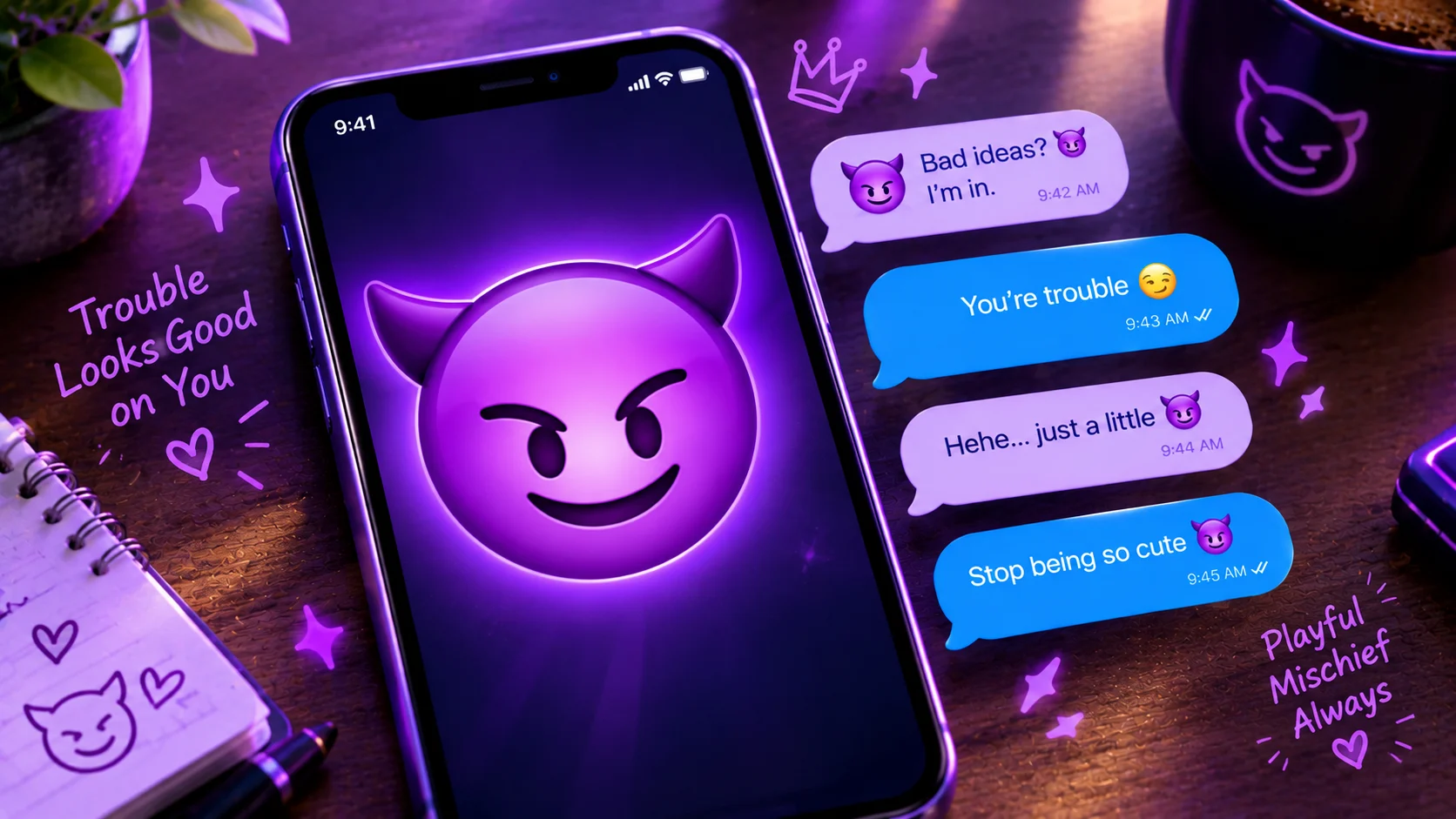
😈 usually means “I’m being naughty,” “I’ve got a mischievous idea,” or “I’m up to something.” It often feels playful or teasing, but the surrounding words can make it sound flirtatious, sarcastic, or more sinister.
The devil emoji 😈, officially called Smiling Face with Horns, usually represents mischief, playful trouble, cheekiness, or a sly sense of humor. People use it in texts when they are joking about breaking a rule, planning something mischievous, teasing someone, or hinting at a cheeky idea. Depending on the conversation, it can also suggest flirting, confidence, or a darker sense of humor.
For example, “Guess what I bought you 😈” may suggest a playful surprise, while “I have a plan 😈” can imply harmless mischief. The emoji does not automatically mean evil, sexual interest, or romantic attraction. The sender’s words, your relationship, and the conversation’s tone help determine its meaning.
What Does 😈 Mean in Text Messages?
The devil emoji is often used to add a mischievous tone to a message. Instead of describing a plan as naughty, cheeky, or slightly rebellious, the sender can add 😈 to suggest that they have something playful in mind.
Its most common meanings include the following.
1. Mischief and Playful Trouble
This is one of the clearest uses of 😈. It suggests that someone is about to do something cheeky, break a harmless rule, or surprise another person.
Example: “Let’s order dessert before dinner 😈”
Likely meaning: The sender is joking about a small act of mischief.
2. Teasing and Sarcasm
The emoji can make a comment sound sly or teasing, especially when the sender knows the other person will understand the joke.
Example: “Oh, you said you were going to bed early? 😈”
Likely meaning: The sender may be playfully suggesting that the person will stay up late or change their plans.
The same message could feel annoying rather than funny if the conversation is already tense.
3. Flirting and Cheeky Compliments
In a flirtatious conversation, 😈 can add a bold, teasing, or suggestive tone. It may hint that the sender is being playful or trying to create a little romantic tension.
Example: “You looked really good tonight 😈”
Likely meaning: The sender may be adding a cheeky or flirtatious edge to the compliment.
However, 😈 does not automatically mean sexual interest or attraction. Some people use it with friends, jokes, gaming references, or ordinary playful comments.
4. Confidence and a Sly Plan
Sometimes the emoji suggests that someone has an idea they think will be exciting, clever, or slightly rebellious.
Example: “I’ve got a surprise planned for Saturday 😈”
Likely meaning: The sender wants to build anticipation and make the surprise sound mischievous.
It does not necessarily imply that the plan is harmful or dishonest.
5. Evil or Dark Humor
The devil emoji can also refer to a villain, a wicked character, a sinister plan, or a dark joke. In this context, the meaning may be closer to the literal idea of a devil than to harmless teasing.
Example: “The villain finally revealed the plan 😈”
Likely meaning: The emoji emphasizes the character’s wicked or sinister side.
When a message involves a serious subject, consider the words carefully rather than assuming the emoji makes it a joke.
What Does 😈 Mean From Someone You Like?
When someone sends you 😈, they may be teasing you, hinting at a playful surprise, or adding a flirtatious tone to the conversation.
The surrounding message can help you distinguish between these possibilities:
- After a compliment: It may make the compliment sound bolder or more flirtatious.
- After a joke: It often adds a mischievous or teasing tone.
- Before a surprise: It can build excitement or suggest a cheeky plan.
- During playful banter: It may simply be part of the sender’s usual humor.
- During an argument: It could sound mocking or provocative, depending on the words.
Is the Devil Emoji a Sign of Flirting?
It can be, but one emoji is not enough to establish romantic interest. A person may use 😈 to flirt, joke around, or express confidence without intending anything romantic.
Pay more attention to the overall conversation, the other person shows consistent interest, and how they respond to you. Avoid treating the emoji as a hidden confession.
😈 vs. 👿: What’s the Difference Between the Two Devil Emojis?
😈
Smiling Face with Horns
Playful, cheeky, mischievous
👿
Angry Face with Horns
Angry, hostile, menacing
The main difference is the facial expression.
- 😈 Smiling Face with Horns has a smile and usually suggests mischief, cheeky humor, or playful trouble.
- 👿 Angry Face with Horns has an angry expression and is more likely to convey anger, hostility, or an evil character.
For example, “I’ve got a surprise for you 😈” sounds playful and mysterious. “I’m furious about what happened 👿” communicates anger more directly.
Both can represent devils or evil, but the smiling face generally feels less threatening than the angry face.
Related Emojis and Their Meanings
The following emojis can help you express different shades of mischief, anger, confidence, and supernatural humor.
| Emoji | Official Name | Common Meaning | Tone | Where or When It Is Used |
|---|---|---|---|---|
| 😈 | Smiling Face with Horns | Mischief, cheekiness, playful trouble | Sly, playful | Teasing, jokes, cheeky plans |
| 👿 | Angry Face with Horns | Anger, evil, hostile behavior | Aggressive, menacing | Expressing anger or portraying a villain |
| 😏 | Smirking Face | Sly confidence, teasing, suggestiveness | Smug, suggestive | Flirtatious banter or knowing jokes |
| 😜 | Winking Face with Tongue | Joking, silliness, playful teasing | Goofy, lighthearted | Funny messages and friendly banter |
| 😎 | Smiling Face with Sunglasses | Confidence, coolness, approval | Relaxed, self-assured | Celebrating an achievement or showing confidence |
| 👹 | Ogre | A monster or frightening creature | Menacing, theatrical | Folklore, fantasy, Halloween |
| 👺 | Goblin | A goblin-like creature or mischievous character | Mischievous, intimidating | Fantasy references and spooky jokes |
| 👻 | Ghost | Ghosts, spooky fun, or playful haunting | Playful, spooky | Halloween, ghost stories, jokes |
| 💀 | Skull | Death, danger, or exaggerated reactions | Dark, dramatic, humorous | Spooky content or jokes that feel extreme |
Which Emoji Should You Use Instead of 😈?
Choose the emoji that matches the tone you want to communicate.
- Use 😈 for playful trouble, cheeky teasing, or a mischievous plan.
- Use 👿 when you want to show anger or a more threatening devil-like expression.
- Use 😏 when the main point is a sly smirk or suggestive confidence rather than evil.
- Use 😜 when you want a silly, friendly joke without the devil imagery.
- Use 😎 when you want to express confidence without implying mischief.
The devil emoji is especially useful when you want a message to sound a little daring or mischievous. For a straightforward friendly joke, 😜 may be clearer. For a serious expression of anger, 👿 or an angry face may communicate your meaning better.
How to Respond When Someone Sends 😈
Your response should match the conversation instead of assuming the sender is flirting or planning something serious.
😂
If they are joking
“Uh-oh, what are you planning? 😂”
Keeps the exchange lighthearted.
😏
If the conversation is flirtatious
“Should I be curious or concerned? 😏”
Matches a teasing tone without assuming too much.
🤔
If you don’t understand the message
“What does that mean? 🤔”
Asks for clarification instead of guessing.
Copy and Paste the Devil Emoji
😈
Smiling Face with Horns Copy 😈
Here are a few ready-to-use examples:
I've got a plan 😈You're in trouble now 😈That was a little naughty 😈I have a surprise for you 😈You really thought I'd forget? 😈
These messages can sound playful, teasing, or suggestive depending on the relationship and context.
Official Name and Unicode Details
The official Unicode name for 😈 is Smiling Face with Horns. Although many people call it the devil emoji, its formal name describes the smiling face and its horns.
- Emoji: 😈
- Official name: Smiling Face with Horns
- Unicode code point: U+1F608
- Unicode version: Unicode 6.0
- Year introduced: 2010
The Unicode Consortium standardizes emoji characters, while the informal meanings people attach to them can vary by culture and context. Emojipedia also documents its use for devilish behavior, mischief, and playful or sinister ideas.
The emoji’s artwork may vary slightly across Apple, Google, Samsung, and other platforms. Its expression and color can look different, but the underlying character remains the same.
FAQs
Does 😈 mean evil?
It can represent evil, devils, or a villainous character, but in everyday messages it often has a lighter meaning, such as mischief or playful teasing. The context helps distinguish the two.
Does 😈 mean something sexual?
Sometimes it is used to add a suggestive tone to a message, but it does not have a guaranteed sexual meaning. It can just as easily accompany a joke, a surprise, or a mischievous idea.
Is 😈 a good or bad emoji?
Neither by itself. It can be friendly and playful in casual conversations, but it may sound provocative or sinister in a different context.
What does 😈 mean on social media?
It can accompany jokes, cheeky captions, playful challenges, flirtatious comments, or content about villains and mischief. The caption and surrounding conversation help explain the intended meaning.
What is the difference between a devil and an imp emoji?
The smiling devil-like face 😈 is officially named Smiling Face with Horns, while 👿 is officially named Angry Face with Horns. The latter is also associated with the term imp in Unicode history. The two are separate emoji characters with different expressions.
Conclusion
The 😈 devil emoji usually adds a mischievous, cheeky, or teasing tone to a message. It can also suggest flirting, confidence, or something more sinister, but none of these meanings is guaranteed. Read the words around it and consider the sender’s usual style before deciding what they intend.
Discover More Related Articles:
- Sad Emoji Meanings | Find the Right Face for Every Feeling In 2026
- Heart Emoji Meaning | What Different Hearts Really Say In 2026
- Hello Emoji Meaning | What the Waving Hand Really Says In 2026

Matthew Garcia is a content writer at EmojisPeace.com, where she creates fun, expressive and easy-to-use emoji collections for every mood and moment. Passionate about digital expression, she helps readers find the perfect emojis to make every message more creative and memorable.