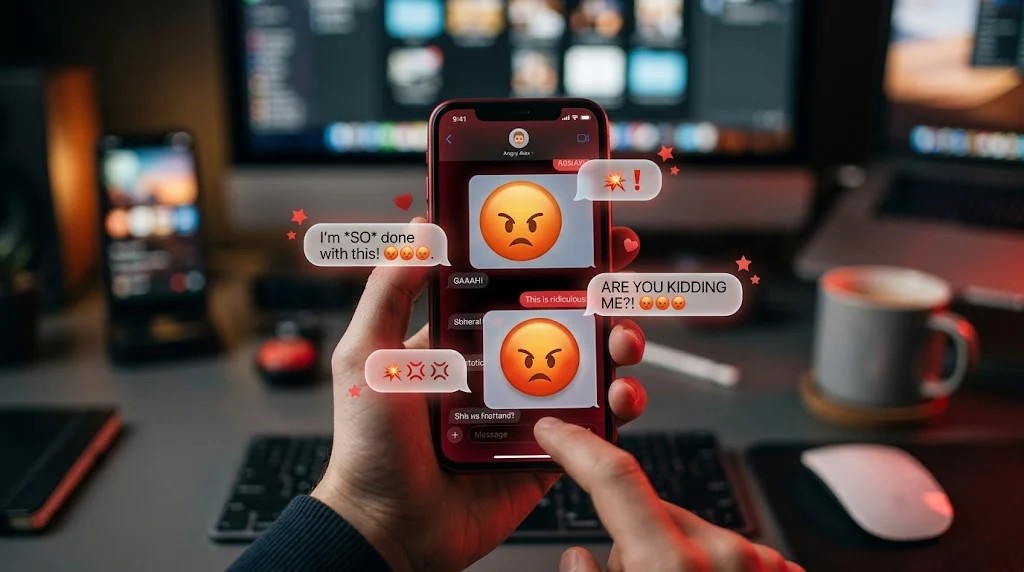
😠 usually means “I’m angry,” “I’m annoyed,” or “I’m frustrated.” 😡 often expresses stronger anger, outrage, or rage, although either emoji can be used playfully or sarcastically depending on the conversation.
Angry emojis 😠😡 express anger, irritation, frustration, or displeasure in text messages and online conversations. The two most recognizable angry faces have slightly different looks: 😠 is officially called Angry Face, while 😡 is called Enraged Face in the current Unicode emoji list and is widely known as Pouting Face in older references. Both can show that something is wrong, but 😡 often feels more intense.
The words around an angry face matter. A message about a missed deadline may express real frustration, while the same emoji after a friend’s joke may be mock anger. Before assuming someone is genuinely upset, consider the context and their usual texting style.
What Does the Angry Emoji Mean in Text?
An angry emoji lets someone show a negative reaction without writing a long explanation. Depending on the situation, it may communicate anything from mild annoyance to intense anger.
😠 Mild Anger or Frustration
The 😠 Angry Face is useful when someone is irritated, disappointed, or unhappy about something.
Example: “The delivery is two hours late 😠”
Likely meaning: “I’m frustrated that this is taking so long.”
It can express a firm complaint without necessarily suggesting extreme rage.
😡 Strong Anger or Outrage
The 😡 face has a red appearance on many platforms and often feels more intense than 😠.
Example: “They canceled my appointment without telling me 😡”
Likely meaning: “I’m really angry about this.”
It can communicate outrage, indignation, or a strong reaction to something unfair. However, the emoji alone cannot tell you how angry someone actually feels.
😤 Anger, Determination, or Frustration
The 😤 Face with Steam from Nose can express frustration, defiance, or determination. Despite its appearance, it can also communicate triumph or pride.
Example: “I finally finished the project after working all night 😤”
Likely meaning: “I pushed through and got it done.”
This emoji is not simply another angry face. It can sound more determined or triumphant than 😠 or 😡.
😒 Irritation or Disapproval
The 😒 Unamused Face is useful when someone feels unimpressed, annoyed, or disappointed.
Example: “He made the same excuse again 😒”
Likely meaning: “I’m tired of hearing this.”
It usually looks less intense than 😡 and often communicates dissatisfaction rather than outright rage.
What Does It Mean When Someone Sends You an Angry Emoji?
If someone sends you 😠 or 😡, they may be upset about something you said, reacting to an event, or exaggerating their feelings for humor. The message before the emoji is often the best clue.
- After a disagreement: They may be expressing genuine frustration.
- After a canceled plan: They may be disappointed or annoyed about the change.
- After a teasing comment: They may be pretending to be angry.
- After an unfair situation: They may be showing outrage or solidarity.
- With laughing emojis: The anger may be exaggerated for comic effect.
For example, “You ate the last slice of pizza 😡😂” may be playful, while “You ignored my messages all day 😡” could indicate a serious concern.
Do not assume that an angry emoji always means the sender is angry at you. They might be upset about something else entirely.
Is the Angry Emoji Rude?
An angry emoji can come across as rude, confrontational, or aggressive, especially when it appears alone in a serious conversation.
Consider the difference:
- “I’m disappointed that the plans changed 😠” communicates frustration while explaining the reason.
- “😡😡😡” may feel intense because it provides no explanation and repeats the angry expression.
- “You’re impossible 😡” can sound accusatory because the words and emoji reinforce each other.
If you want to express frustration without escalating an argument, explain what bothered you rather than relying on angry faces alone.
Angry Emoji Examples in Everyday Messages
These hypothetical messages show how the same family of emojis can communicate different levels of frustration.
| Message | Likely Meaning | Why the Context Matters |
|---|---|---|
| “My computer crashed again 😠” | Irritation | The emoji reacts to a frustrating problem. |
| “That was completely unfair 😡” | Strong anger | The wording reinforces the intensity. |
| “You finished the cookies without me? 😠😂” | Playful anger | The laughing emoji suggests teasing. |
| “I studied all week and the exam got canceled 😡” | Disappointment and outrage | The situation explains the negative reaction. |
| “I’m not giving up 😤” | Determination | The face suggests resolve rather than simple anger. |
| “Another meeting that could’ve been an email 😒” | Annoyance or disapproval | The reaction is dry and unimpressed. |
These examples illustrate possible meanings, not fixed rules. People use emojis differently, so the surrounding conversation remains important.
Angry Emojis Compared: 😠 vs. 😡 vs. 😤
These expressions can look similar, but choosing the right one helps communicate the kind of reaction you intend.
| Emoji | Official Name | Common Meaning | Tone | Where or When It Is Used |
|---|---|---|---|---|
| 😠 | Angry Face | Anger, irritation, frustration | Firm, displeased | Complaints or everyday frustration |
| 😡 | Enraged Face | Intense anger, outrage | Strong, heated | Reacting to something unfair or upsetting |
| 😤 | Face with Steam from Nose | Frustration, determination, triumph | Defiant, forceful | Showing resolve or a strong reaction |
| 😒 | Unamused Face | Annoyance, dissatisfaction | Dry, unimpressed | Responding to excuses or irritating behavior |
| 😣 | Persevering Face | Strain, distress, difficulty | Struggling, tense | Describing a difficult task or situation |
| 🤬 | Face with Symbols on Mouth | Cursing, intense anger | Furious, aggressive | Expressing extreme frustration |
| 🙄 | Face with Rolling Eyes | Exasperation, impatience | Dismissive, sarcastic | Reacting to something irritating or repetitive |
| 😾 | Pouting Cat | Anger, displeasure | Grumpy, playful | Expressing annoyance with a cat-like reaction |
Which Angry Face Should You Use?
- Choose 😠 for ordinary anger or frustration when you want a clear, direct expression.
- Choose 😡 when you want to convey stronger anger or outrage.
- Choose 😤 when you feel determined, defiant, or frustrated but ready to push through.
- Choose 😒 when you are unimpressed or annoyed rather than furious.
- Choose 🤬 when you want to express intense anger or the feeling of swearing.
The distinction between 😠 and 😡 is especially useful. The first generally looks more restrained, while the second often appears more heated. Still, these are common interpretations, not strict emotional levels. Different devices may display the faces differently.
How to Respond to an Angry Emoji
If someone sends you an angry face, respond to the situation instead of immediately matching their emotion.
😠
If they seem frustrated
“That sounds frustrating. What happened?”
Shows that you are listening without making assumptions.
😡
If they are upset with you
“I can see you’re upset. Can we talk about what happened?”
Opens the door to a calmer conversation.
😂
If they are joking
“Okay, okay! I get it 😂”
Keeps the exchange playful when their intent is clear.
🙏
If you made a mistake
“I’m sorry. I should have handled that differently.”
A direct apology is more useful than replying with another angry emoji.
If you cannot tell the person is joking or serious, ask a simple question before deciding how to respond.
Copy and Paste Angry Emojis
Use these angry emojis in messages, captions, comments, or social media posts.
😠
Angry Face
Copy
😡
Enraged Face
Copy
😤
Face with Steam from Nose
Copy
🤬
Face with Symbols on Mouth
Copy
Some ready-to-use combinations:
I'm so annoyed right now 😠That is completely unfair 😡I've had enough of this 😤Are you serious right now? 😠I'm trying to stay calm 🤬
Use the stronger expressions carefully in serious conversations because they may make your message sound more aggressive than you intend.
Official Names and Unicode Details
The Unicode Consortium maintains the standard character identities used for emojis. The two main angry faces have separate code points and official names.
| Detail | 😠 Angry Face | 😡 Enraged Face |
|---|---|---|
| Unicode code point | U+1F620 | U+1F621 |
| Unicode introduction | Unicode 6.0 (2010) | Unicode 6.0 (2010) |
| Official name in the current Unicode emoji list | Angry Face | Enraged Face |
| Common alternative name | Angry emoji | Pouting Face (older Unicode naming) |
The 😡 character has historically appeared under the name “Pouting Face” in older Unicode references. Its current CLDR short name is “enraged face,” reflecting its stronger angry expression. The 😠 character is listed as “angry face.”
Why Do Angry Emojis Look Different on Different Devices?
Apple, Google, Samsung, and other vendors create their own artwork for emoji characters. The color, eyebrows, mouth shape, and overall expression may vary slightly between devices.
These visual differences can affect how intense an emoji feels, but they do not change its underlying Unicode character.
FAQs
What is the difference between 😠 and 😡?
😠 typically conveys anger or irritation, while 😡 often expresses stronger anger or outrage. Both can be used seriously or playfully, depending on the message.
Does an angry emoji mean someone is mad at me?
Not necessarily. The sender may be angry about an event, a frustrating task, or something unrelated to you. Read the message and conversation before assuming you are the target.
Which emoji shows the strongest anger?
🤬 often conveys intense anger because its symbols represent swearing or cursing. 😡 can also express strong rage. The best choice depends on how intense you want the message to sound.
Can angry emojis be used jokingly?
Yes. Friends may use 😠 or 😡 to exaggerate annoyance over small things, such as losing a game or having someone eat the last cookie. Words and laughing emojis can help show that the reaction is playful.
Is 😤 an angry emoji or a determined emoji?
It can be either. The Face with Steam from Nose may express frustration, defiance, determination, or triumph. For example, “I finally finished the race 😤” may convey pride rather than anger.
Are angry emojis appropriate for work messages?
They may be fine in a casual conversation with coworkers, but they can seem confrontational in formal communication. When discussing a serious issue, explain the problem clearly instead of relying on an angry face.
Conclusion
Angry emojis help express irritation, frustration, outrage, and determination when words alone do not capture the intended tone. 😠 is a useful choice for everyday anger, 😡 often communicates stronger rage, and 😤 can express determination as well as frustration. Choose the face that matches your message, and remember that context matters more than the emoji alone.
Discover More Related Articles:
- Sad Emoji Meanings | Find the Right Face for Every Feeling In 2026
- Heart Emoji Meaning | What Different Hearts Really Say In 2026
- Hello Emoji Meaning | What the Waving Hand Really Says In 2026

Sophia Martinez is a content writer at EmojisPeace.com, where she creates fun, engaging, and easy-to-read emoji guides, meanings and digital communication content. She enjoys helping readers express themselves better with the perfect emojis for every mood and moment.