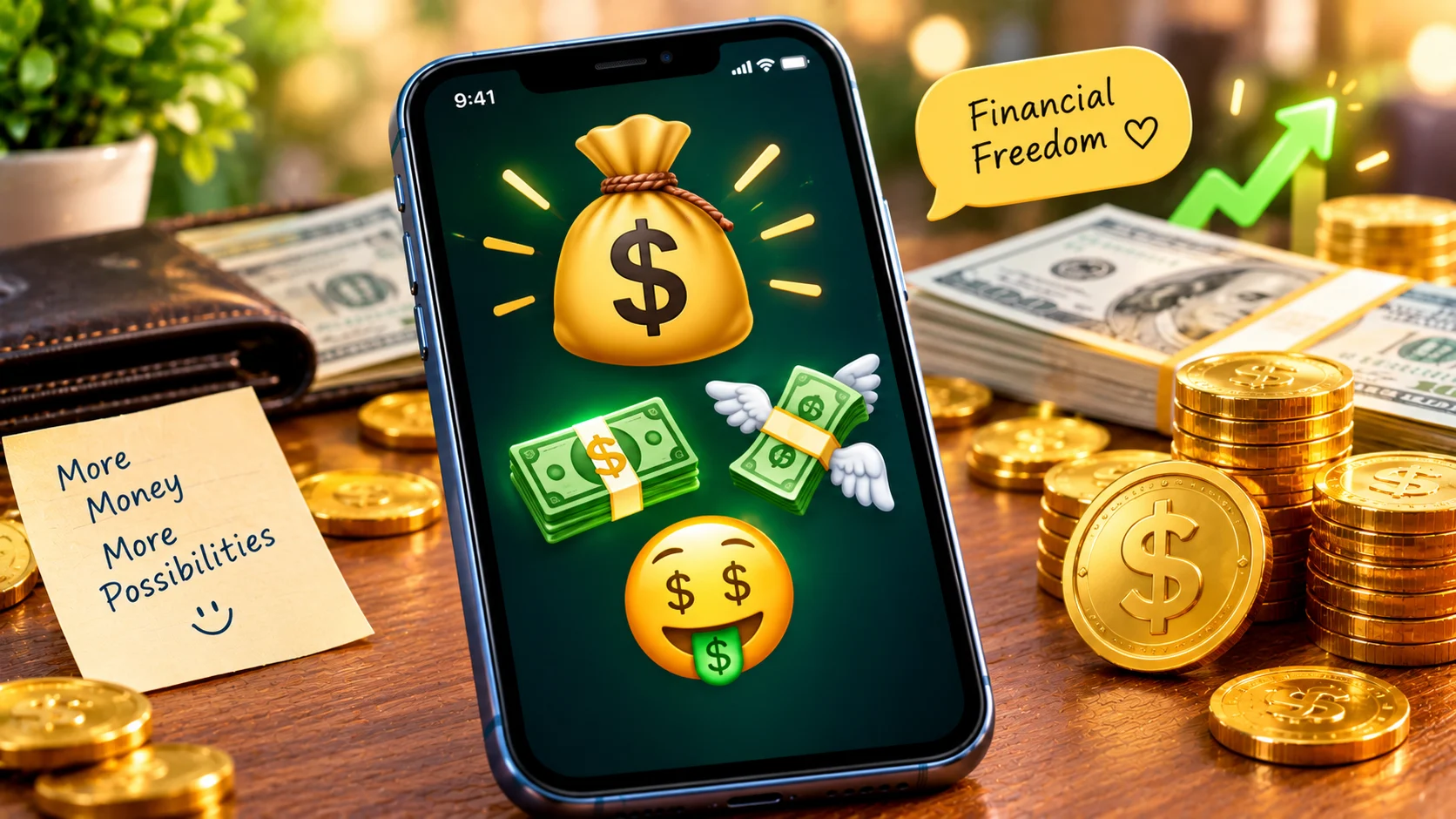
💰 usually means money, wealth, or financial success. Other money emojis can express getting paid, spending cash, saving, shopping, or excitement about a good deal.
The money emoji 💰 usually represents cash, wealth, savings, financial success, or having a lot of money. Officially called Money Bag, it shows a bag filled with money and is often used in texts about getting paid, making a profit, reaching a financial goal, or celebrating a big purchase. However, the meaning of a money emoji depends on which symbol you choose and the message around it.
For example, 💰 can suggest wealth or a financial reward, while 💵 more directly represents dollar bills. The flying money emoji 💸 often suggests spending money, losing cash, or paying for something expensive. Meanwhile, 🤑 can express excitement about money, a profitable opportunity, or a desire to make money.
you’re texting a friend about payday, posting a business achievement, or joking about an expensive bill, choosing the right symbol helps make your message clearer.
What Does 💰 Mean in Text Messages?
The 💰 emoji is a flexible way to talk about money without spelling everything out. Its tone can be serious, celebratory, ambitious, or playful.
Here are its most common uses.
1. Wealth and Financial Success
The money bag often represents having money, building wealth, or reaching a financial goal.
Example: “Finally paid off my student loans! 💰”
Likely meaning: A financial milestone or a sense of financial progress.
It can also accompany business achievements, sales milestones, or a successful investment, although the emoji alone does not tell you how much money someone has earned.
2. Getting Paid or Earning Money
People may use 💰 when discussing a paycheck, a new job, a side hustle, or money they expect to receive.
Example: “First paycheck from my new job comes Friday 💰”
Likely meaning: Excitement about earning money or getting paid.
For a more direct reference to cash, 💵 may be a better fit.
3. A Profitable Opportunity
The money bag can suggest that a deal, business idea, or opportunity could bring in money.
Example: “The client approved the proposal. 💰”
Likely meaning: The project may lead to revenue or a financial reward.
In professional messages, make sure the surrounding words explain the actual result. The emoji is a visual accent, not proof of profit.
4. Expensive Purchases and Spending
Although 💰 can represent wealth, it can also refer to the money needed to buy something.
Example: “That concert ticket is $350 💰”
Likely meaning: The ticket is expensive or involves a significant amount of money.
If you want to emphasize money leaving your wallet, 💸 usually communicates that idea more clearly.
5. Money Jokes and Ambition
In casual conversations, 💰 can add humor to statements about earning more, saving for something, or wanting to become wealthy.
Example: “My weekend plans: work, save, repeat 💰”
Likely meaning: A playful focus on earning or building savings.
The emoji can also make a caption sound ambitious, but it does not automatically imply greed or materialism.
Money Emojis and Their Meanings: Which One Should You Use?
There is more than one way to represent money. This comparison table helps distinguish the main money-related emojis by their official names, typical meanings, tone, and common use.
| Emoji | Official Name | Common Meaning | Tone | Where or When It Is Used |
|---|---|---|---|---|
| 💰 | Money Bag | Wealth, money, financial reward | Ambitious, celebratory | Earnings, business success, financial goals |
| 💵 | Dollar Banknote | Paper cash, U.S. dollars | Direct, practical | Paychecks, cash payments, prices |
| 💸 | Money with Wings | Spending, money flying away | Playful, regretful | Shopping, bills, expensive purchases |
| 🤑 | Money-Mouth Face | Money excitement, profit, greed | Humorous, enthusiastic | Lucrative opportunities, payday jokes |
| 🪙 | Coin | Coins, savings, monetary value | Neutral, practical | Small change, collecting, currency |
| 💳 | Credit Card | Card payments, shopping, credit | Practical, casual | Purchases, online orders, payment reminders |
| 💲 | Heavy Dollar Sign | Dollar amounts or money | Direct, businesslike | Prices, costs, financial captions |
| 💱 | Currency Exchange | Currency conversion or exchange | Informative, financial | Exchange rates, travel money, currency transactions |
| 🧾 | Receipt | Proof of purchase, expenses | Practical, sometimes humorous | Bills, budgeting, shopping receipts |
The official emoji names in this table follow Unicode’s emoji reference. Common conversational meanings are informal interpretations and may vary with context.
💰 vs. 💵: What’s the Difference?
The money bag 💰 represents money or wealth in a broad sense. The dollar banknote 💵 specifically depicts paper currency associated with the U.S. dollar.
- Use 💰 for financial success, wealth, or a reward.
- Use 💵 when you mean cash, dollar bills, or getting paid.
Example: “I finally reached my savings goal 💰” focuses on financial progress, while “I need cash for the yard sale 💵” refers more directly to money in physical form.
💰 vs. 💸: Making Money or Spending It?
These two emojis can communicate opposite sides of a financial situation.
- 💰 often suggests money accumulated, earned, or available.
- 💸 often suggests money being spent, lost, or paid out.
For example, “Bonus deposited 💰” celebrates money coming in. “Car repairs again 💸” suggests money going out, perhaps with a hint of frustration.
💰 vs. 🤑: Wealth or Excitement About Money?
The money bag represents money itself, while the money-mouth face adds a facial expression that suggests excitement about money, profit, or a desire to earn more.
Use 💰 when discussing a financial result. Choose 🤑 when you want a more expressive, exaggerated, or humorous reaction.
For instance, “The invoice was paid 💰” sounds straightforward, while “A surprise bonus? 🤑” communicates excitement.
What Does 💰 Mean From Someone?
When someone sends you 💰, they may be talking about money they earned, a financial opportunity, an expensive item, or a goal they want to reach. The message around the emoji usually provides the best clue.
Consider these examples:
- “We got the contract! 💰” — They may be celebrating a business opportunity or expected earnings.
- “You owe me lunch 💰” — They may be joking about repayment or sharing expenses.
- “Saving up for a new car 💰” — They are highlighting a financial goal.
- “That rent increase is wild 💰” — They may be commenting on rising costs.
Does 💰 mean someone is rich? Not necessarily. It can represent a goal, a joke, an expected payment, or a general discussion about money. Avoid assuming someone’s financial situation from a single emoji.
How to Use Money Emojis Naturally
Choose the emoji that matches the point you want to make.
💰
Celebrating a financial goal
“Finally reached my savings target! 💰”
Best for wealth, financial progress, or a reward.
💵
Talking about cash
“I’ll bring cash for the tickets 💵”
Best when you mean physical money or dollar bills.
💸
Showing money going out
“Car insurance is due again 💸”
Best for expenses, bills, and costly purchases.
🤑
Expressing excitement about money
“Found an amazing deal! 🤑”
Best for playful excitement about bargains or profit.
For formal business emails, invoices, or financial instructions, use clear wording and actual numbers. Emojis work better as optional accents than as replacements for important details.
Copy and Paste Money Emojis
Use these symbols in messages, captions, comments, or notes.
💰
Money BagCopy
💵
Dollar BillCopy
💸
Flying MoneyCopy
🤑
Money FaceCopy
Copy a combination for your next message:
💰💵🤑💸Copy all
Official Name and Unicode Details
The focus emoji 💰 has the official Unicode name Money Bag. It depicts a bag of money, generally shown with a dollar sign, although the artwork can vary across platforms.
- Emoji: 💰
- Official name: Money Bag
- Unicode code point: U+1F4B0
- Unicode version: Unicode 6.0
- Approval year: 2010
The emoji was standardized in Unicode 6.0 in 2010 and added to the Unicode emoji set. Its meaning in everyday messages extends beyond the official name to include wealth, earnings, financial goals, and money-related jokes.
The Unicode Consortium maintains the standard for emoji characters and their names. Individual platforms create their own artwork, so the money bag’s color, shape, and dollar-sign details may differ slightly across devices.
FAQs
What is the most common money emoji?
💰, officially called Money Bag, is a general symbol for money, wealth, and financial success. 💵 is more specific to dollar bills, while 💸 often suggests spending or losing money.
What does 💰 mean on Instagram or TikTok?
In a caption or comment, 💰 can refer to earnings, business success, expensive purchases, financial goals, or money-related humor. Its meaning depends on the post and accompanying words rather than a fixed platform-specific definition.
Does 💰 mean rich or wealthy?
It can suggest wealth, but it does not necessarily mean the sender is rich. Someone may use it to discuss a savings goal, celebrate a paycheck, or joke about the cost of something.
What does 💸 mean compared with 💰?
💸 often represents money leaving someone’s wallet through spending, bills, or losses. 💰 more broadly represents money, wealth, or a financial reward. Both can appear in the same message to describe earning and spending.
Which money emoji should I use for payday?
💵 is a clear choice when referring to a paycheck or cash. 💰 works well for celebrating the payment, while 🤑 adds an excited or humorous tone.
Can money emojis be sarcastic?
Yes. For example, “Another unexpected bill 💸” can express frustration about spending. The money bag can also be used ironically when someone jokes about being rich after a small payment. The surrounding message makes the intended tone clearer.
Conclusion
The money emoji 💰 is a versatile symbol for cash, wealth, earnings, and financial goals. For clearer messages, use 💵 for dollar bills, 💸 for money going out, and 🤑 for exaggerated excitement about money. A small difference in the symbol can change the tone of your message.
Discover More Related Articles:
- Pray Emoji Mean | Prayer, Gratitude & More In 2026
- Purple Heart Emoji | What It Says About Love, Loyalty & Friendship In 2026
- Celebrate Emoji | The Perfect Way to Share Excitement & Joy In 2026

Matthew Garcia is a content writer at EmojisPeace.com, where she creates fun, expressive and easy-to-use emoji collections for every mood and moment. Passionate about digital expression, she helps readers find the perfect emojis to make every message more creative and memorable.