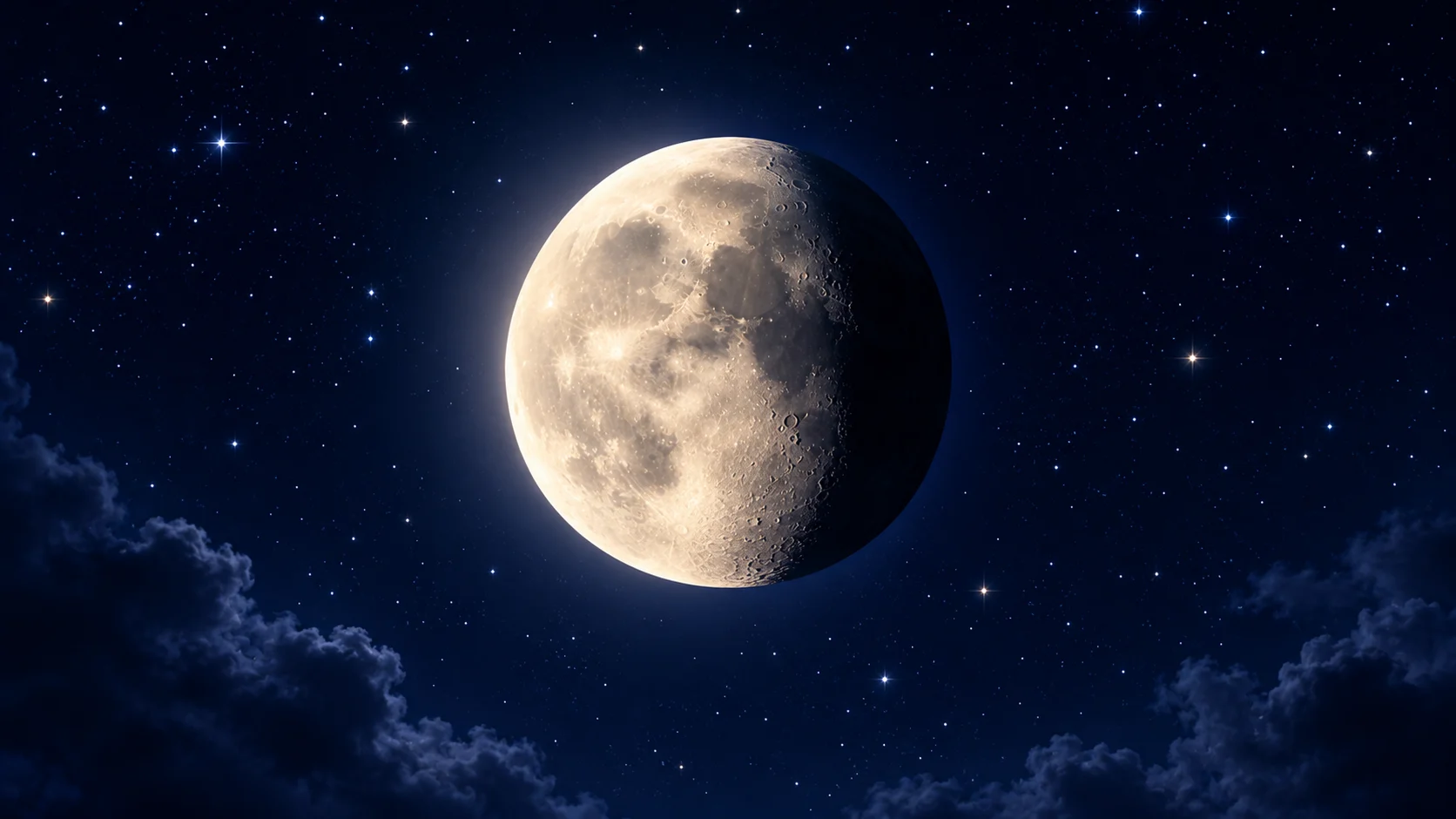
🌖 is the waning gibbous moon emoji, representing the lunar phase just after the full moon. In messages, it can refer to moon watching, nighttime, lunar cycles, or a reflective atmosphere.
The waning gibbous emoji 🌖 shows a mostly illuminated Moon with a dark shadow covering part of its right side. It represents the waning gibbous phase, which occurs after the full moon as the visible illuminated portion gradually decreases. In texts and social media posts, it can refer to moon phases, nighttime, astronomy, or a calm, reflective mood.
Unlike facial emojis, 🌖 does not have one widely understood emotional meaning. Some people may use it to suggest winding down, reflection, change, or the gradual passing of time, but these are contextual interpretations rather than official definitions. Its meaning depends on the accompanying words and the reason it was shared.
If you are choosing between moon emojis, the direction of the shadow is an important clue. The waning gibbous 🌖 is different from the waxing gibbous 🌔, which appears illuminated on the opposite side in standard emoji artwork.
What Does 🌖 Mean in Text Messages?
In a text, 🌖 usually refers to the Moon, nighttime, or the atmosphere of a particular moment. Unlike a face emoji, it does not clearly express one emotion, so the surrounding words are especially important.
Here are a few ways someone might use it:
- Nighttime: “Finally home, just watching the moon 🌖” — a quiet evening or moon-viewing moment.
- Astronomy: “The Moon is moving past its full phase 🌖” — a reference to the lunar cycle.
- A peaceful mood: “Taking a break from everything tonight 🌖✨” — a calm, reflective atmosphere.
- Mystery or fantasy: “Something magical is coming tonight 🌖🌌” — a dreamy or mysterious mood.
- Change over time: “One phase ends, another begins 🌖” — a personal or creative metaphor for change.
The last two examples are symbolic uses, not official meanings. The emoji alone does not establish that someone feels sad, is ending a relationship, or is sending a secret message.
What Is the Waning Gibbous Moon Phase?
NASA SVS | Moon Phase and Libration, 2022
The waning gibbous is the lunar phase immediately after the full moon and before the last quarter moon.
- Waning means the visible illuminated portion of the Moon is decreasing.
- Gibbous describes a Moon that appears more than half illuminated but is not completely full.
- After the full moon: The Moon gradually appears less illuminated as the lunar cycle continues.
The Moon does not physically shrink during this phase. Its appearance changes because we see different portions of its sunlit half as it orbits Earth.
The 🌖 emoji is a simplified symbol of this phase, not an exact astronomical photograph. Its illustrated shadow and orientation may not match the Moon’s appearance at every location or time. Meaning, Copy And Paste+1
🌖 Compared With Other Moon Emojis
The easiest way to choose the right moon emoji is to compare the phase shown in its artwork.
| Emoji | Official Name | Common Meaning | Tone | Where or When It Is Used |
|---|---|---|---|---|
| 🌑 | New Moon | A new lunar cycle or darkness | Minimal, mysterious | Astronomy, dark-night themes |
| 🌒 | Waxing Crescent Moon | Early growth toward a full moon | Hopeful, gentle | Lunar updates and new beginnings |
| 🌓 | First Quarter Moon | A quarter-phase Moon | Neutral, astronomical | Moon-phase discussions |
| 🌔 | Waxing Gibbous Moon | A growing, mostly illuminated Moon | Bright, anticipatory | Astronomy and lunar calendars |
| 🌕 | Full Moon | A fully illuminated Moon | Bright, striking | Moon watching and night-sky posts |
| 🌖 | Waning Gibbous Moon | The Moon after the full moon | Reflective, atmospheric | Lunar updates and nighttime captions |
| 🌗 | Last Quarter Moon | The Moon halfway through its waning phase | Neutral, transitional | Astronomy and moon-phase tracking |
| 🌘 | Waning Crescent Moon | The final thin crescent before a new moon | Quiet, mysterious | Nighttime imagery and lunar updates |
| 🌙 | Crescent Moon | A crescent-shaped Moon or nighttime | Calm, dreamy | Goodnight messages and night-themed posts |
The official names follow the Unicode emoji reference. The tone and use descriptions are common contextual interpretations, not fixed definitions. Unicode+1
🌖 vs. 🌔: What Is the Difference?
These two emojis look similar because both show a mostly illuminated Moon.
- 🌖 Waning Gibbous Moon: Represents the phase after the full moon, when the visible illuminated portion is decreasing.
- 🌔 Waxing Gibbous Moon: Represents the phase before the full moon, when the visible illuminated portion is increasing.
In their standard emoji artwork, 🌖 has its dark area on the right, while 🌔 has its dark area on the left. This visual distinction helps identify which phase each symbol represents.
🌖 vs. 🌕: Waning Gibbous or Full Moon?
The 🌕 full moon emoji depicts a fully illuminated lunar disk. The 🌖 waning gibbous emoji shows a Moon that is still mostly illuminated but has begun to appear less full.
Choose 🌕 when you mean a full moon specifically. Use 🌖 when the waning phase matters or when it better fits your lunar-themed message.
🌖 vs. 🌘: Which Moon Is More Illuminated?
The waning gibbous 🌖 is mostly illuminated, while the waning crescent 🌘 shows only a thin illuminated crescent.
Both represent waning phases, but they occur at different points in the lunar cycle. 🌘 comes later, closer to the new moon.
How to Copy and Paste the Waning Gibbous Emoji
🌖
Waning Gibbous Moon Copy 🌖
You can add it to a message, caption, journal entry, or astronomy post. These combinations can help express different ideas:
Goodnight 🌖✨— a peaceful nighttime message.Moon phase update 🌖🔭— an astronomy-related post.A quiet night under the stars 🌖🌌— a dreamy atmosphere.The full moon has passed 🌖— a lunar-cycle reference.Another phase, another beginning 🌖✨— a symbolic message about change.
FAQs
Is 🌖 a full moon emoji?
No. 🌖 represents the waning gibbous phase, which occurs after the full moon. The full moon emoji is 🌕.
Does 🌖 have a spiritual meaning?
Some people may use the waning gibbous Moon symbolically to represent reflection, release, gratitude, or letting go. These are personal or spiritual interpretations, not meanings officially assigned by Unicode.
Does 🌖 mean goodnight?
It can be used in a goodnight message because it depicts the Moon. However, 🌙 is another common choice for nighttime greetings, and neither emoji guarantees a specific message beyond the context.
When was the waning gibbous emoji introduced?
The waning gibbous moon symbol was included in Unicode 6.0 in 2010 and added to the Unicode emoji set in 2015. Its Unicode code point is U+1F316. Meaning, Copy And Paste+1
Does 🌖 look the same on every device?
No. Apple, Google, Samsung, and other vendors may render the Moon with different colors, shading, and surface details. The character’s official identity remains the same even when the artwork varies.
Conclusion
The 🌖 waning gibbous emoji represents a specific stage of the lunar cycle, just after the full moon. It works well for astronomy discussions, moon-phase updates, nighttime captions, and symbolic messages about change or reflection. If you want to communicate a precise lunar phase, its difference from 🌔, 🌕, and 🌘 is more useful than assigning it an emotional meaning it does not inherently have.
Discover More Related Articles:
- Pray Emoji Mean | Prayer, Gratitude & More In 2026
- Purple Heart Emoji | What It Says About Love, Loyalty & Friendship In 2026
- Celebrate Emoji | The Perfect Way to Share Excitement & Joy In 2026

Jessica Miller is a content writer at EmojisPeace.com, where she creates fun and easy-to-follow guides about emojis, their meanings and creative ways to use them. She loves helping readers express themselves with the perfect emoji for every moment.