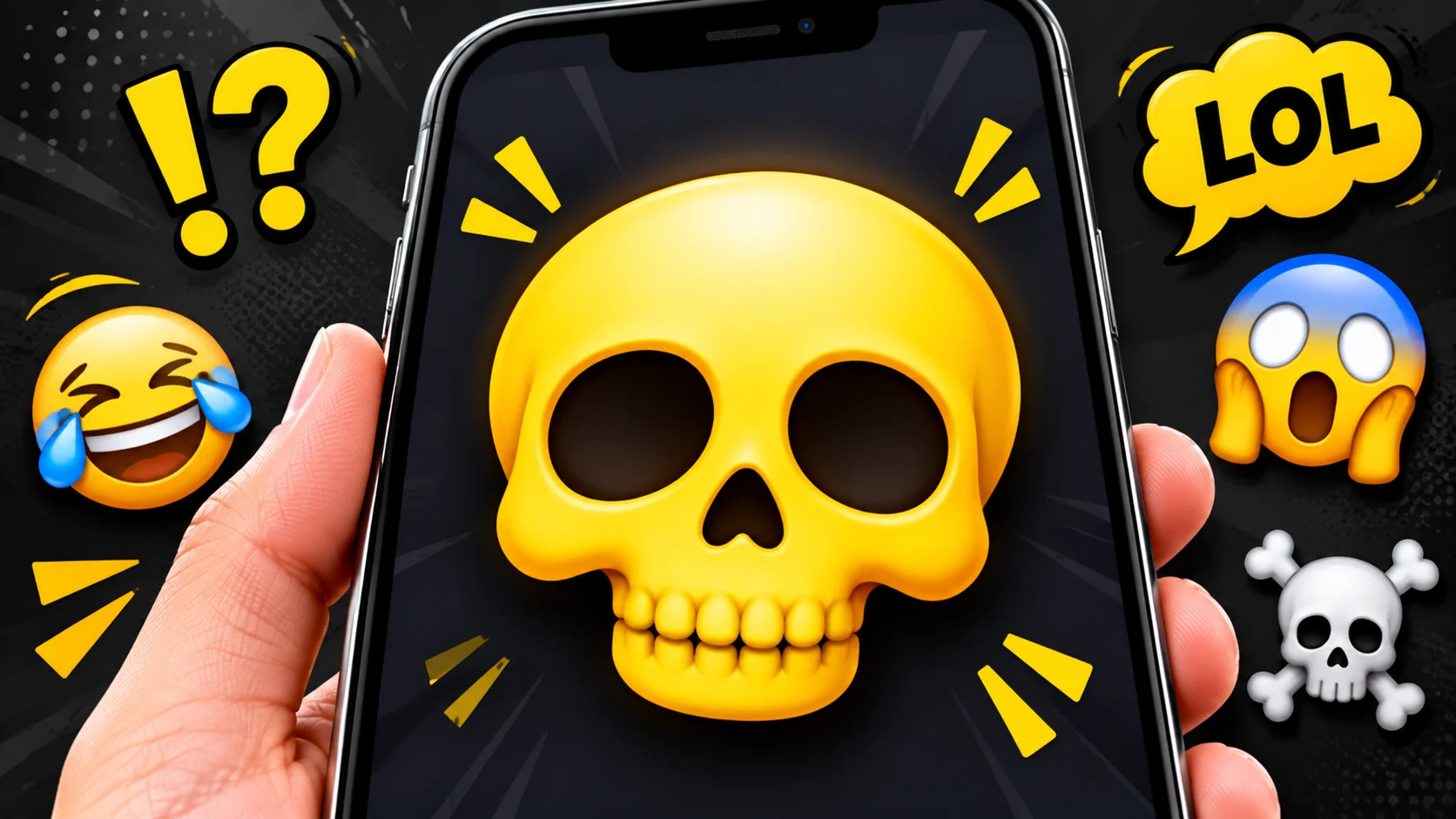
The 💀 skull emoji commonly means “I’m dead” from laughing, extreme amusement, shock, or disbelief in casual messages. Literally, it represents a human skull and can also refer to death, danger, or spooky subjects. Its meaning depends on the conversation.
The dead emoji 💀 usually represents a skull, death, or something frightening, but its meaning in text messages is often much more playful. People commonly use the skull emoji to say “I’m dead” when something is extremely funny, surprising, embarrassing, or unbelievable. It can also express shock, disbelief, awkwardness, or a dramatic reaction to a situation. If someone sends you 💀, it does not automatically mean something serious or negative. The surrounding message makes a big difference.
For example, 💀😂 often communicates uncontrollable laughter, while 💀 after shocking news may express disbelief. Understanding the dead emoji meaning helps you recognize someone is joking, reacting dramatically, or referring to something related to death. Let’s look at its different meanings, texting examples, and the emojis people often confuse with it.
What Does the 💀 Dead Emoji Mean in Text?
The 💀 emoji is officially called Skull. Although its design shows a human skull, people often use it as a humorous reaction rather than a literal reference to death.
Here are its most common interpretations:
1. Laughing So Hard That You Are Dead
One of the most recognizable informal meanings is extreme laughter. People use 💀 when something is so funny that ordinary laughing emojis do not feel expressive enough.
For example:
- “I can’t believe you actually said that 💀”
- “That video took me out 💀”
- “Your reaction was hilarious 💀😂”
In these messages, the sender is not talking about actual death. They are exaggerating how funny they find something.
2. Shock or Disbelief
The skull emoji can also express surprise when someone hears unexpected, unbelievable, or shocking news.
For example:
- “You spent $500 on those shoes? 💀”
- “Wait, that actually happened? 💀”
Here, the emoji adds a dramatic reaction. It may communicate disbelief, amazement, or playful judgment.
3. Embarrassment or Awkwardness
Sometimes people send 💀 after making a mistake, remembering an embarrassing moment, or witnessing an uncomfortable situation.
For example:
- “I waved back at someone who wasn’t waving at me 💀”
- “I called my teacher Mom in class 💀”
It makes the situation feel less serious by turning embarrassment into humor.
4. Sarcasm or Dramatic Humor
The dead emoji can make a sarcastic comment sound more dramatic or playful.
For example:
- “Amazing timing. Just perfect 💀”
- “My phone died right before the meeting 💀”
Depending on the conversation, it can communicate frustration, irony, or a joking complaint.
5. Literal Death or Spooky Themes
Not every use is humorous. The skull emoji can also represent actual death, skeletons, horror, Halloween, or frightening subjects.
For example:
- “That haunted house was terrifying 💀”
- “The skeleton decoration looks amazing 💀”
In these situations, its visual meaning is closer to its official name.
What Does 💀 Mean When Someone Sends It to You?
When someone sends you 💀, they are usually reacting to something you said, shared, or did.
The meaning depends on the conversation:
| Message | Possible meaning |
|---|---|
| “You’re too funny 💀” | They find you hilarious. |
| “No way 💀” | They are shocked or surprised. |
| “I can’t believe this 💀” | They are reacting dramatically. |
| “That was embarrassing 💀” | They find the situation awkward or funny. |
| “I’m done 💀” | They are overwhelmed, amused, or frustrated. |
| “That’s crazy 💀” | They find something unbelievable. |
Is it friendly or flirty?
The 💀 emoji is generally a humorous reaction, not a direct romantic signal. Someone might use it during playful flirting, but the emoji alone does not prove attraction.
Look at the surrounding words, the relationship, and the person’s usual texting style before deciding what they mean.
💀 Meaning in Different Emoji Combinations
Combining the skull with other emojis can make its intended tone easier to understand.
| Emoji Combination | Possible Meaning |
|---|---|
| 💀😂 | Laughing extremely hard |
| 💀😭 | Overwhelmed with laughter or emotion |
| 💀💀 | Stronger dramatic reaction |
| 💀🤣 | Something is incredibly funny |
| 💀☠️ | Death, danger, or exaggerated dark humor |
| 💀👻 | Spooky or Halloween-related humor |
| 💀🤦 | Embarrassment or disbelief |
| 💀🫠 | Feeling overwhelmed or unable to handle a situation |
These combinations do not have fixed definitions. The original message still matters.
Dead Emoji vs. Other Similar Emojis: What’s the Difference?
The skull emoji is often confused with other symbols related to death, horror, laughter, and dramatic reactions. However, each has a different official name and visual meaning.
Here is a comparison to help you choose the right one.
| Emoji | Official Name | Common Meaning | Tone | Where or When It Is Used |
|---|---|---|---|---|
| 💀 | Skull | Dead from laughter, shock, death | Dramatic, humorous | Funny messages and reactions |
| ☠️ | Skull and Crossbones | Danger, poison, death | Warning, serious | Safety symbols and spooky themes |
| 👻 | Ghost | Ghosts, Halloween, playful spookiness | Playful, spooky | Halloween and jokes |
| 🪦 | Headstone | Grave, memorial, remembrance | Serious, sad | Death-related discussions |
| ⚰️ | Coffin | Funeral, burial, death | Dark, serious | Funeral and horror topics |
| 😂 | Face with Tears of Joy | Laughing hard | Happy, playful | Funny conversations |
| 🤣 | Rolling on the Floor Laughing | Extreme laughter | Highly amused | Hilarious jokes and reactions |
| 😭 | Loudly Crying Face | Intense sadness or exaggerated emotion | Emotional, dramatic | Sad messages and humorous exaggeration |
Which Emoji Should You Choose?
The biggest difference is between 💀 and ☠️. Both show skull imagery, but 💀 is widely used for informal reactions, while ☠️ has a stronger association with danger, poison, and warning symbols.
Similarly, 😂 and 🤣 communicate laughter more directly. The 💀 emoji adds a darker, more exaggerated sense of humor.
If you want to express sadness or remember someone who has passed away, 🪦 may be more appropriate than 💀. For Halloween decorations or friendly spooky messages, 👻 is a better choice.
Realistic Text Message Examples Using 💀
Here are some everyday examples showing how the dead emoji can change meaning depending on the message.
Example 1: Reacting to a funny joke
Friend10:32 AM
“My dog just stole my sandwich and ran away 💀”
Likely meaning: The situation is hilarious.
Why: The emoji adds an exaggerated laughing reaction.
Example 2: Reacting to unexpected news
Friend2:15 PM
“He finished the entire project in one night 💀”
Likely meaning: Surprise or disbelief.
Why: The sender finds the situation difficult to believe.
Example 3: Sharing an embarrassing moment
Friend4:40 PM
“I walked into the wrong classroom and sat down 💀”
Likely meaning: Awkwardness mixed with humor.
Why: The sender is laughing at an embarrassing experience.
Example 4: Expressing frustration
Friend8:05 AM
“My alarm didn’t go off again 💀”
Likely meaning: Frustration or a dramatic complaint.
Why: The skull makes an annoying situation sound exaggerated.
How to Respond When Someone Sends 💀
Your response should match the conversation rather than treating the skull as a serious message.
Here are a few natural replies:
| Situation | Possible Response |
|---|---|
| They are laughing at your joke | “I knew you’d find that funny 😂” |
| They are shocked | “I know, I couldn’t believe it either!” |
| They are embarrassed | “Don’t worry, it happens to everyone 😂” |
| They are joking around | “You’re too much 💀” |
| They are frustrated | “That’s rough. Hope it gets better!” |
If you are unsure what someone means, a simple “Wait, what happened?” can help clarify their reaction.
Dead Emoji Copy and Paste
Want to use the skull emoji in your messages, captions, or social media comments?
💀
Skull Emoji
Copy and paste the dead emoji wherever you want. Copy 💀
Other combinations you can copy:
💀😂
Copy
💀😭
Copy
💀👻
Copy
Official Dead Emoji Name and Unicode Details
Although people commonly call 💀 the dead emoji, its official Unicode name is Skull.
Here are its identification details:
| Detail | Information |
|---|---|
| Emoji | 💀 |
| Official Name | Skull |
| Unicode | U+1F480 |
| Category | Smileys & Emotion |
| Subcategory | Face Costume |
| Unicode Version | Unicode 6.0 |
| Approval Year | 2010 |
| Emoji Version | Emoji 1.0 (2015) |
The Unicode Consortium maintains the official emoji character standards. The Skull emoji was included in Unicode 6.0 in 2010 and later added to Emoji 1.0 in 2015.
Its appearance can vary slightly across Apple, Google, Samsung, and other platforms. Some designs show a visible jawbone, while others use a simpler skull shape. These visual differences do not change its underlying Unicode identity.
Source: Unicode Full Emoji List and Emojipedia – Skull Emoji.
FAQs
1. Does 💀 mean laughing or dying?
In casual texting, 💀 often means someone is laughing extremely hard. It represents the expression “I’m dead” as an exaggeration, not actual death. However, it can also refer to literal death in the right context.
2. What does 💀 mean on social media?
On social media, 💀 can be used as a reaction to a funny video, surprising comment, embarrassing moment, or unexpected situation. It often communicates that something is too funny or unbelievable to handle.
3. Is the dead emoji rude?
Not usually. It is commonly used as a playful or dramatic reaction. However, sending it in response to someone’s serious loss, illness, or personal tragedy may seem insensitive.
4. What is the difference between 💀 and ☠️?
💀 is officially called Skull, while ☠️ is called Skull and Crossbones. The first is commonly used for humor and exaggerated reactions, while the second is more closely associated with danger, poison, and warning symbols.
5. Does 💀 mean someone is angry?
Not necessarily. It can express frustration or disbelief, but it does not automatically indicate anger. Read the accompanying words and conversation before interpreting it as a negative reaction.
6. What does 💀 mean from a crush?
When a crush sends 💀, they may be laughing at your joke, reacting to something surprising, or playfully responding to your message. It can appear in flirty conversations, but it is not proof of romantic interest.
7. Can I use 💀 in professional messages?
It is generally better to avoid it in formal emails, business discussions, and serious workplace conversations. Its informal humor may not fit every professional setting.
Conclusion
The 💀 dead emoji has a meaning that goes beyond its skull-shaped appearance. While its official name is Skull, its informal use often expresses extreme laughter, shock, embarrassment, or dramatic disbelief. It can also represent literal death or spooky themes.
The best way to understand it is to consider the surrounding message and the situation. A skull after a funny joke usually means laughter, while the same symbol in a serious conversation may have a very different meaning.
Discover More Related Articles:
- Pray Emoji Mean | Prayer, Gratitude & More In 2026
- Purple Heart Emoji | What It Says About Love, Loyalty & Friendship In 2026
- Celebrate Emoji | The Perfect Way to Share Excitement & Joy In 2026

Jessica Miller is a content writer at EmojisPeace.com, where she creates fun and easy-to-follow guides about emojis, their meanings and creative ways to use them. She loves helping readers express themselves with the perfect emoji for every moment.