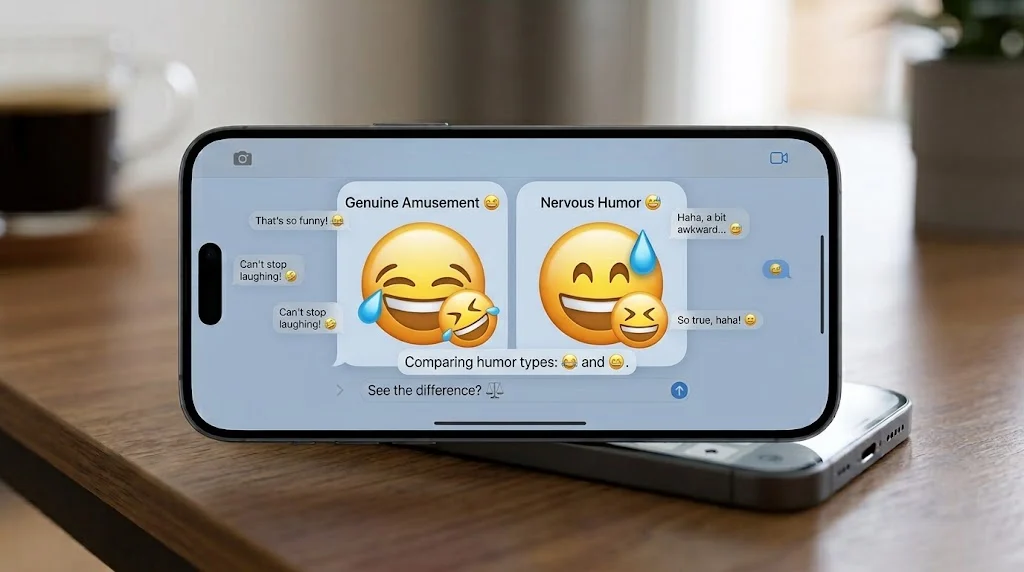
The laugh emoji 😂 usually means “That’s funny” or “I’m laughing.” The 🤣 emoji often suggests more intense laughter, while 😅 can express nervous laughter or relief. The right interpretation depends on the message and context.
The laugh emoji 😂 is commonly used to show that something is funny, amusing, or so ridiculous that it makes you laugh. However, the term “laugh emoji” can refer to several different faces, including 🤣, 😆, 😹, and 😅. Each has a slightly different expression and can communicate a different level or type of amusement.
In text messages, laughing emojis can make a joke feel friendlier, show that you enjoyed someone’s story, or signal that a comment was not meant seriously. They can also express nervous laughter, embarrassment, or sarcasm, depending on the conversation.
Understanding the differences helps you choose the right laughing face and avoid sending the wrong tone in a conversation.
What Does the Laugh Emoji Mean in Text?
Laughing emojis help show that a message is funny, playful, or not meant to be taken too seriously. The exact meaning depends on the face you choose and what you are responding to.
Here are four common ways people use them.
1. Showing That Something Is Funny
The 😂 emoji often means that a joke, story, or comment made you laugh.
Example: “My dog stole my sandwich and ran straight into a wall 😂”
Likely meaning: “That is hilarious!”
It can also soften a teasing comment so it feels less serious.
2. Reacting to Something Extremely Funny
The 🤣 emoji often expresses stronger or more exaggerated laughter than 😂.
Example: “He practiced his speech for an hour, then forgot his own name 🤣”
Likely meaning: “I’m laughing so hard at this.”
The intensity is informal, not a fixed measurement of how funny something actually is.
3. Nervous Laughter or Relief
The 😅 emoji combines a smile with a bead of sweat. It can show that someone feels awkward, relieved, embarrassed, or nervous.
Example: “I submitted the assignment one minute before the deadline 😅”
Likely meaning: “That was close!”
This emoji is especially useful when a situation is funny but also stressful.
4. Friendly Teasing or Sarcasm
A laughing emoji can signal that a comment is playful rather than hostile. It can also accompany sarcasm, especially when the words themselves sound exaggerated.
Example: “Yeah, I’m definitely ready for another Monday 😂”
Likely meaning: “Not really, but I’m joking about it.”
However, adding a laughing emoji does not automatically make a harsh or hurtful comment harmless.
Can the Laugh Emoji Be Sarcastic or Rude?
Yes. Although laughing faces often express amusement, they can also communicate mockery, disbelief, or dismissal.
Consider these examples:
- “You forgot your keys again 😂” — friendly teasing, depending on your relationship.
- “That’s your excuse? 😂” — may sound dismissive or mocking.
- “I can’t believe that actually worked 😂” — surprise mixed with amusement.
- “Sure, that sounds completely believable 😂” — likely sarcasm if the context suggests disbelief.
If you are unsure how a message will sound, consider the other person might feel that you are laughing with them or at them. For sensitive topics, a clear sentence is often safer than relying on a laughing face.
What Does It Mean When Someone Sends You a Laughing Emoji?
A laughing emoji usually indicates that the sender found something amusing, but the message around it matters.
- After a joke: They probably found it funny.
- After a personal story: They may be sharing your amusement or reacting to an unexpected detail.
- After an awkward confession: They might be nervous, trying to lighten the mood, or unsure how to respond.
- After an argument: They may be sarcastic or dismissive, especially if the message sounds mocking.
- After a compliment: They might be keeping the conversation playful, but the emoji alone does not establish romantic interest.
Do not assume someone is making fun of you just because they send 😂 or 🤣. If the conversation feels uncomfortable, asking what they meant is more reliable than guessing.
How to Choose the Right Laughing Emoji
The main difference between laughing emojis is the expression and tone they suggest.
| Emoji | Official Name | Common Meaning | Tone | Where or When It Is Used |
|---|---|---|---|---|
| 😂 | Face with Tears of Joy | Something is funny or amusing | Cheerful, playful | Jokes, funny stories, casual replies |
| 🤣 | Rolling on the Floor Laughing | Intense or exaggerated laughter | Highly amused, dramatic | Very funny moments or over-the-top reactions |
| 😆 | Grinning Squinting Face | Strong amusement or a big laugh | Energetic, cheerful | Funny surprises and playful conversations |
| 😄 | Grinning Face with Smiling Eyes | Happiness, laughter, friendly excitement | Warm, upbeat | Light jokes, happy messages, friendly greetings |
| 😅 | Grinning Face with Sweat | Nervous laughter, relief, awkwardness | Uneasy, relieved | Close calls, mistakes, stressful situations |
| 😹 | Cat Face with Tears of Joy | Cat-themed laughter or amusement | Cute, playful | Funny pet content or lighthearted reactions |
| 😁 | Beaming Face with Smiling Eyes | A big grin, excitement, or satisfaction | Bright, enthusiastic | Good news, proud moments, cheerful replies |
| 🤭 | Face with Hand Over Mouth | Suppressed laughter, surprise, or embarrassment | Coy, playful | Reacting to gossip, a slip-up, or a cheeky joke |
😂 vs. 🤣: Which One Means More Laughter?
Both emojis can express strong amusement. The 😂 face has tears of joy while smiling, whereas 🤣 depicts a face tilted sideways as if rolling on the floor laughing.
Use 😂 for a general funny reaction. Choose 🤣 when you want to exaggerate how hilarious something seems.
😂 vs. 😆: What’s the Difference?
The 😆 emoji has tightly closed eyes and a wide grin, giving it an energetic, laughing expression. The 😂 emoji adds tears, which make the laughter more explicit.
Both work for jokes, but 😂 is often a more direct way to show that something made you laugh.
😂 vs. 😅: Funny or Awkward?
The key difference is the sweat.
- 😂 generally emphasizes amusement.
- 😅 often adds nervousness, relief, or embarrassment.
For a genuinely funny story, 😂 is a natural choice. For a mistake you narrowly recovered from, 😅 may communicate the situation more clearly.
😂 vs. 😹: Human or Cat Laughter?
The 😹 emoji is the cat version of a laughing face with tears of joy. It conveys similar amusement but adds a playful cat expression.
Use 😹 when the cat-like appearance suits your message, especially when reacting to funny animal content. It does not have a completely separate or guaranteed meaning.
Natural Text Message Examples
These examples show how the same general emotion can take on a different tone.
| Message | Likely Meaning |
|---|---|
| “That was the funniest thing I’ve seen all week 😂” | Genuine amusement |
| “I just walked into the wrong classroom 🤣” | Exaggerated laughter about an embarrassing moment |
| “I thought today was Friday 😆” | Amusement at a silly mistake |
| “I accidentally replied to everyone 😅” | Nervousness or embarrassment |
| “The cat knocked the entire plant over 😹” | Playful reaction to an animal’s antics |
| “Oh yeah, because that plan worked perfectly 😂” | Possible sarcasm or irony |
The words surrounding the emoji are often more important than the face itself. A laughing emoji can soften a message, but it can also make criticism sound sharper.
Copy and Paste Laughing Emojis
Use these laughing emojis in texts, captions, comments, and social media posts.
😂Funny
🤣Big laugh
😆Laughing
😄Happy
😅Nervous laugh
😹Cat laugh
😁Big grin
🤭Giggle
Select any emoji to copy it.
Official Names and Unicode Details
“Laugh emoji” is a general search term rather than the official name of one specific emoji. Several Unicode characters represent laughter or smiling expressions.
For the two most common laughing-face choices:
- 😂 Face with Tears of Joy: Unicode code point U+1F602; approved in Unicode 6.0 in 2010 and added to Emoji 1.0 in 2015.
- 🤣 Rolling on the Floor Laughing: Unicode code point U+1F923; approved in Unicode 9.0 and added to Emoji 3.0 in 2016.
 Meaning, Copy And Paste+1
Emoji designs can vary across Apple, Google, Samsung, and other platforms. The artwork may look slightly different, even though the underlying Unicode character is the same. Unicode standardizes the characters, but it does not assign one universal meaning to every message.
FAQs
What is the most common laugh emoji?
😂, officially called Face with Tears of Joy, is a widely recognized symbol for laughter and amusement. However, the best emoji depends on the message and the tone you want to convey.
What does 😂 mean from a friend?
It usually means your friend found something funny or is keeping the conversation light. If it follows a serious statement, it may instead suggest nervousness, sarcasm, or an attempt to ease tension.
Does 🤣 mean laughing harder than 😂?
It often suggests more intense or exaggerated laughter because its design depicts a face rolling sideways with tears. This is a common interpretation, not a strict rule.
Is 😂 passive-aggressive?
It can be, especially when it follows a critical remark or an obviously sarcastic statement. But in an ordinary funny conversation, it usually signals amusement. Read the whole message before deciding.
What is the difference between a laughing emoji and a smiley?
A smiley such as 😊 generally communicates warmth, friendliness, or happiness. A laughing face such as 😂 more clearly signals amusement or a humorous reaction, often with greater intensity.
Can I use laughing emojis in professional messages?
Yes, when the workplace conversation is casual and the humor is appropriate. For formal emails, sensitive feedback, or serious discussions, use clear language first and add an emoji only if it fits the relationship and setting.
Conclusion
Laughing emojis help communicate humor, friendliness, and reactions that can be difficult to express through plain text. 😂 is a flexible choice for everyday laughter, 🤣 adds exaggerated amusement, and 😅 is useful when laughter comes with nerves or relief. Choose the face that matches the situation, and use the surrounding words to make your intended tone clear.
Discover More related Articles:
- Thinking Emoji Meaning | Is It Curiosity, Doubt or Sarcasm In 2026
- Poop Emoji | From Funny Jokes to Sarcastic Reactions In 2026
- Sparkle Emoji Mean | From Magic to Subtle Sarcasm In 2026

Matthew Garcia is a content writer at EmojisPeace.com, where she creates fun, expressive and easy-to-use emoji collections for every mood and moment. Passionate about digital expression, she helps readers find the perfect emojis to make every message more creative and memorable.