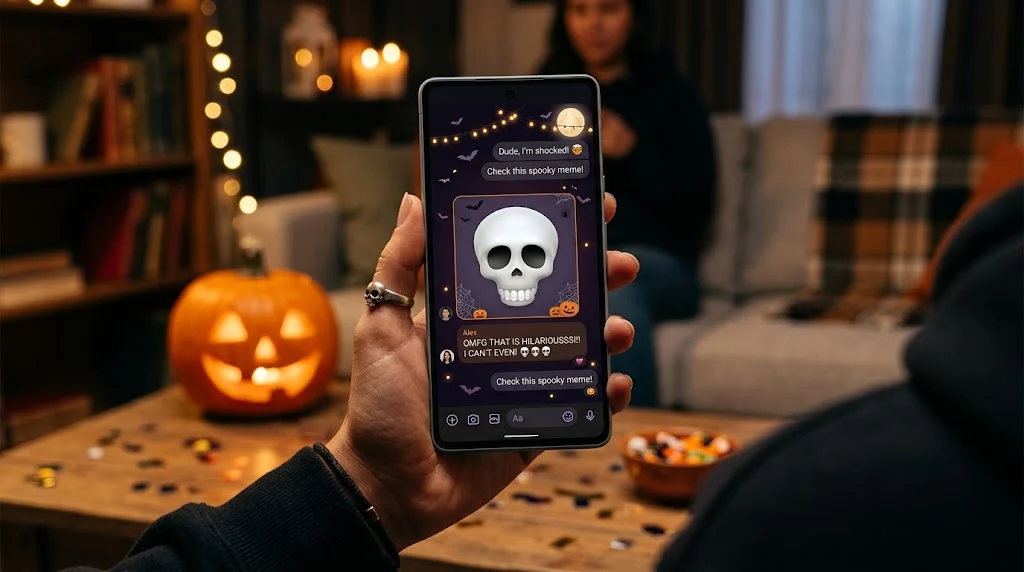
💀 often means “I’m dead” from laughing, shock, or embarrassment. It can also represent literal death, danger, skeletons, or Halloween, depending on the context. The key is to read the surrounding words. A skull after a funny story usually feels playful, while one in a conversation about a real loss may carry a much more serious meaning.
The skull emoji 💀 can represent death, danger, spooky themes, or a reaction so funny or shocking that someone jokingly says, “I’m dead.” In everyday texting, it often expresses uncontrollable laughter, disbelief, embarrassment, or a dramatic reaction rather than literal death. Its meaning depends on the message and the situation.
For example, if a friend sends a hilarious joke, replying with 💀 can mean “That absolutely killed me.” In a Halloween post, the same emoji may simply represent skeletons, horror, or spooky decorations. It can also express disbelief when someone says something outrageous.
What Does 💀 Mean in Text Messages?
The skull emoji has two broad types of meaning: literal symbolism related to death and figurative reactions to everyday experiences. In casual messages, the figurative meaning is often the one people intend.
Here are the most common interpretations.
1. “I’m Dead” From Laughing
One of the most recognizable uses of 💀 is to show that something is extremely funny.
Example:
“Your dog just stole the entire pizza and ran upstairs 💀”
Likely meaning: “That is so funny, I can’t stop laughing.”
The sender is not talking about actual death. The skull exaggerates their reaction, similar to saying “I’m dying laughing” or “That killed me.”
2. Shock or Disbelief
The skull can also express astonishment when someone hears something unbelievable, embarrassing, or unexpected.
Example:
“You accidentally sent that private message to the whole group chat? 💀”
Likely meaning: “That is unbelievably awkward.”
Here, the humor may come from the seriousness of the mistake or the sender’s surprise.
3. Embarrassment and Cringe
People sometimes use 💀 when a situation is so awkward that they jokingly want to disappear.
Example:
“I called my boss by the wrong name during the presentation 💀”
Likely meaning: “I’m never going to stop thinking about that embarrassing moment.”
Compared with a nervous emoji such as 😬, the skull often makes the reaction more dramatic or humorous.
4. Sarcasm and Dark Humor
The skull emoji can add a dry, dramatic tone to a comment about something frustrating, ridiculous, or unfortunate.
Example:
“Monday morning, three hours of sleep, and a two-hour commute 💀”
Likely meaning: “This is going to be rough.”
It can make a complaint sound funny rather than entirely serious. However, when the topic involves a real tragedy, the same joke may feel insensitive.
5. Literal Death, Danger, or Spooky Themes
The skull still has its traditional associations with mortality, skeletons, pirates, horror, and Halloween.
Examples:
- “We’re watching horror movies all night 💀🎃” — spooky entertainment.
- “The warning label has a skull symbol 💀” — possible danger or toxicity, depending on the label.
- “Remembering someone we lost 💀” — potentially serious, depending on the surrounding message.
For real-world safety warnings, always read the actual warning and accompanying text rather than relying on an emoji alone.
What Does the Skull Emoji Mean From Someone?
If someone sends you 💀, the best interpretation depends on what came before it.
- After a joke: They may be laughing hard or saying your message was hilarious.
- After an embarrassing story: They may be reacting with shock or secondhand embarrassment.
- After an unexpected confession: They may be surprised or unsure how to respond.
- In a spooky conversation: They may be referring to death, horror, or Halloween.
- After a serious personal message: The meaning is less clear, and it is worth considering the sender is being supportive, awkward, or insensitive.
Does 💀 Mean Flirting?
Not necessarily. The skull emoji can appear in flirtatious conversations when someone feels overwhelmed by a compliment or finds another person’s message unexpectedly attractive.
For example:
“You look way too good in that picture 💀”
This could express playful excitement, embarrassment, or attraction. In another conversation, it could simply be an exaggerated reaction. The emoji alone does not establish romantic interest.
💀 vs. ☠️: What’s the Difference?
These two emojis look similar, but their designs and typical uses differ.
💀
Skull
A standalone human skull, often used for laughter, shock, embarrassment, or spooky themes.
☠️
Skull and Crossbones
A skull above crossed bones, commonly associated with poison, danger, pirates, and death.
For example, “That joke was wild 💀” usually signals a dramatic reaction to humor. A skull-and-crossbones symbol on a chemical container, by contrast, can indicate a serious hazard.
The meanings can overlap, especially in Halloween posts and dark humor, but 💀 is often the more natural choice for casual reactions in text messages.
Related Emojis and Their Meanings
The skull emoji is not the only way to react to something hilarious, shocking, or spooky. These alternatives communicate different levels of humor and different kinds of reactions.
| Emoji | Official Name | Common Meaning | Tone | Where or When It Is Used |
|---|---|---|---|---|
| 💀 | Skull | “I’m dead” from laughter or shock; death | Dramatic, darkly humorous | Funny messages, shocking stories, spooky posts |
| ☠️ | Skull and Crossbones | Danger, poison, death, pirate imagery | Ominous, cautionary | Hazard symbols, pirate themes, dark humor |
| 😂 | Face with Tears of Joy | Laughing hard | Cheerful, amused | Jokes, funny stories, playful reactions |
| 🤣 | Rolling on the Floor Laughing | Intense laughter | Exaggerated, energetic | Extremely funny moments |
| 😭 | Loudly Crying Face | Intense crying or exaggerated emotion | Dramatic, emotional | Sadness, laughter, or overwhelming reactions |
| 😬 | Grimacing Face | Awkwardness, tension, discomfort | Nervous, uneasy | Embarrassing mistakes or uncomfortable news |
| 👻 | Ghost | Ghosts, spooky fun, playful haunting | Playful, spooky | Halloween, horror themes, ghost jokes |
| 🪦 | Headstone | Grave, burial, remembrance | Somber, reflective | Memorials, cemetery imagery, dark humor |
Which Emoji Should You Choose?
- Use 💀 for exaggerated reactions to something funny, shocking, or painfully awkward.
- Use ☠️ when you want a more direct connection to danger, poison, pirates, or death.
- Choose 😂 or 🤣 when you want laughter to be unmistakable.
- Use 😬 for nervous discomfort without the darker imagery.
- Choose 👻 for a playful spooky mood and 🪦 for a grave or memorial theme.
The biggest distinction is that 💀 often combines humor with dramatic imagery. The laughing emojis communicate amusement more directly, while ☠️ and 🪦 are more closely tied to death-related symbolism.
How to Use the Skull Emoji in Texts
Here are realistic examples showing how the meaning changes with context.
| Message | Likely Meaning |
|---|---|
| “That plot twist was insane 💀” | Shock or disbelief |
| “I laughed so hard I couldn’t breathe 💀” | Extreme laughter |
| “I just tripped walking onto the stage 💀” | Embarrassment |
| “My alarm didn’t go off and my exam starts in 10 minutes 💀” | Panic or dread expressed humorously |
| “Skeleton decorations are ready 💀🎃” | Halloween excitement |
| “That comment was unnecessarily harsh 💀” | Shock, disapproval, or a dramatic reaction |
These examples illustrate possible interpretations, not fixed definitions. The same emoji can sound funny in one conversation and inappropriate in another.
How to Respond When Someone Sends 💀
Your reply can match the sender’s tone.
😂
If they are laughing
“I knew you’d find that funny 😂”
Keeps the joke going naturally.
😬
If they are reacting to an awkward moment
“Please don’t remind me 😭”
Acknowledges the embarrassment with humor.
🤔
If their meaning is unclear
“Wait, what do you mean? 😂”
Lets them explain instead of guessing.
🫶
If the conversation involves a real loss
“I’m sorry you’re going through this. I’m here if you need me.”
Responds with care when the situation is serious.
Copy and Paste the Skull Emoji
💀
Skull Copy 💀
You can also copy these combinations for different situations:
I'm dead 💀— Exaggerated laughter or shockThat was so embarrassing 💀— An awkward momentNo way 💀😂— Disbelief mixed with humorSpooky season 💀🎃— HalloweenI can't believe that happened 💀— Surprise or disbelief
Official Name and Unicode Details
The official Unicode name of 💀 is Skull. It depicts a human skull with large, dark eye sockets. Depending on the platform, the design may include a visible jawbone or differ slightly in shape and shading.
- Emoji: 💀
- Official name: Skull
- Unicode code point: U+1F480
- Unicode version: Unicode 6.0
- Year approved: 2010
- Added to Emoji 1.0: 2015
The character appeared in some Japanese mobile emoji sets before its inclusion in Unicode. The Unicode Consortium standardizes the character, while its informal meanings develop through everyday communication.
FAQs
Does 💀 mean laughing or dying?
In casual texting, it often means that something is so funny that the sender is jokingly “dead” from laughter. It can also express shock, embarrassment, or a literal reference to death. The surrounding message determines which meaning fits.
Is the skull emoji rude or offensive?
Not inherently. It is often used as a playful reaction, but it can seem insensitive when a conversation involves a real death, grief, or serious danger. Consider the subject before using it.
What does 💀 mean on social media?
It can signal laughter, shock, disbelief, embarrassment, dark humor, or a reaction to an outrageous post. It may also appear in horror, gaming, pirate, and Halloween-related content. There is no single meaning that applies to every post.
Is 💀 different from the skull-and-crossbones emoji?
Yes. 💀 shows a standalone skull, while ☠️ shows a skull above crossed bones. Their meanings overlap, but skull-and-crossbones imagery has a stronger association with poison, hazards, and pirate symbols.
Can the skull emoji mean love?
Not directly. Someone might use 💀 as an exaggerated reaction to a compliment or a romantic message, but it does not have a standard meaning of love. Look at the actual words and the wider conversation for clues.
Conclusion
The skull emoji 💀 can represent anything from uncontrollable laughter to shock, embarrassment, spooky themes, or literal death. In casual messages, it often works as a dramatic reaction rather than a serious symbol. Pay attention to the conversation before interpreting it, especially when the topic is sensitive.
Discover More Related Articles:
- Hair Flip Emoji | Is It Sass, Confidence or Something Else In 2026
- Drunk Emoji | The Best Emojis for Party Vibes, Silly Reactions & Unfiltered Messages In 2026
- Thinking Face Emoji | How to Express Curiosity, Doubt & “Let Me Think” Moments In 2026

Matthew Garcia is a content writer at EmojisPeace.com, where she creates fun, expressive and easy-to-use emoji collections for every mood and moment. Passionate about digital expression, she helps readers find the perfect emojis to make every message more creative and memorable.