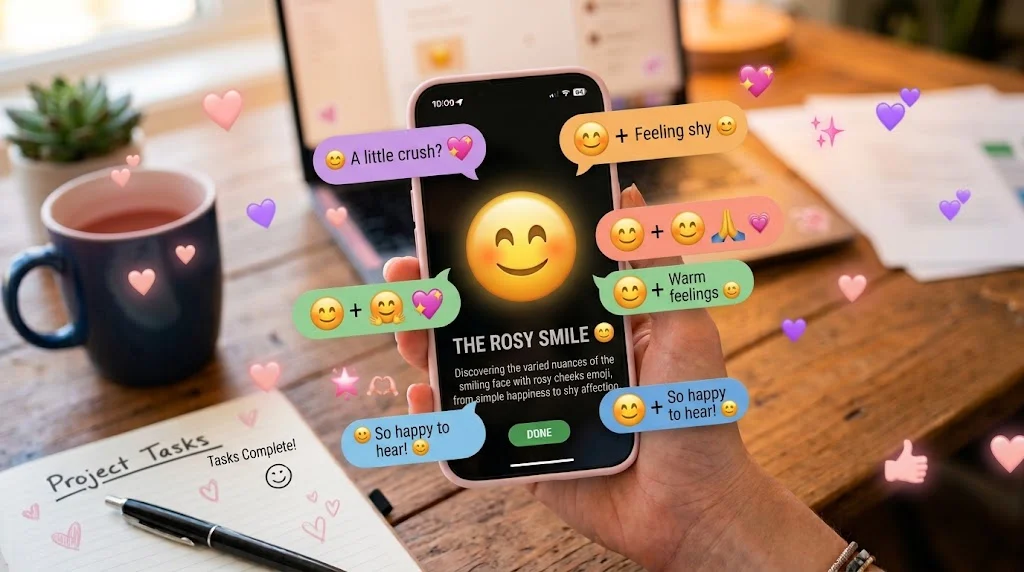
😊 usually means “I’m happy,” “That’s sweet,” or “I appreciate that.” It conveys warmth and friendliness, but in a personal conversation, it can also suggest shyness or gentle flirting. The key is to consider the words, the relationship, and the sender’s usual texting style rather than interpreting the emoji on its own.
The blushing emoji 😊 usually expresses happiness, warmth, friendliness, or gentle affection. Its smiling eyes and rosy cheeks give it a softer, more heartfelt tone than a simple smile. In text messages, it can show appreciation, shyness, gratitude, or quiet excitement. Depending on the conversation, it may also add a flirty touch to a compliment or personal message.
For example, someone might reply “That’s so sweet of you 😊” to show genuine appreciation. If someone sends “You looked really nice today 😊,” the emoji can make the compliment feel warm or slightly flirtatious. However, it does not automatically mean romantic interest.
What Does 😊 Mean in Text Messages?
The 😊 emoji is often used to make a message feel kind, positive, or personal. It can soften a short reply, show that someone appreciates a gesture, or communicate happiness without using an enthusiastic expression.
Here are its main meanings.
1. Happiness and Genuine Warmth
Someone may use 😊 when they feel pleased, comfortable, or happy about something.
Example: “I had such a good time hanging out with you 😊”
Likely meaning: “I enjoyed that, and I’m happy about it.”
Compared with a big grin like 😁, this emoji tends to feel softer and more relaxed.
2. Shyness or Feeling Bashful
The rosy cheeks can make the emoji look shy or slightly embarrassed, especially when someone receives praise or attention.
Example: “You really didn’t have to get me a gift 😊”
Likely meaning: “That was thoughtful, and I’m a little bashful about it.”
This does not necessarily mean the person feels uncomfortable. The blush may simply add warmth to an appreciative response.
3. Gratitude and Appreciation
The blushing smile is a natural choice when someone wants to acknowledge a kind gesture.
Example: “Thanks for checking in on me 😊”
Likely meaning: “I appreciate you thinking of me.”
It can make a simple thank-you feel more personal without becoming overly emotional.
4. Friendly Affection
In conversations with friends, family, or someone close, 😊 can express care and closeness.
Example: “Hope you get home safely 😊”
Likely meaning: “I care about you and hope you’re okay.”
The affectionate tone does not have to be romantic. It can communicate ordinary kindness or concern.
5. Politeness or a Gentle Reply
Sometimes the emoji simply makes a message feel less formal or abrupt.
Example: “Sure, that works for me 😊”
Likely meaning: “I’m happy to agree, and I’m responding in a friendly way.”
However, tone depends on context. If the surrounding message expresses frustration, a smile can occasionally feel forced or passive-aggressive.
Does the Blushing Emoji 😊 Mean Flirting?
It can, but it is not automatically a flirting emoji.
In a conversation with someone you like, 😊 may add a shy, affectionate, or slightly romantic tone to a compliment. In other situations, it is simply friendly.
Consider these examples:
| Message | Possible Meaning |
|---|---|
| “You’re really sweet 😊” | Appreciation or gentle affection |
| “I loved talking to you tonight 😊” | Warmth and interest; possibly romantic depending on context |
| “Thanks for helping me out 😊” | Friendly gratitude |
| “You remembered my favorite song? 😊” | Pleasant surprise and appreciation |
| “Good morning 😊” | A warm greeting that may be friendly or affectionate |
How can you tell if it is romantic? Look at the overall conversation. Repeated personal compliments, mutual interest, and efforts to spend time together offer more context than one emoji. Neither the emoji nor the sender’s gender proves romantic attraction.
😊 vs. 😳: Which One Is the Real Blushing Emoji?
Both can be described as blushing emojis, but they represent different expressions.
- 😊 Smiling Face with Smiling Eyes: A gentle smile with rosy cheeks. It usually conveys warmth, happiness, gratitude, or friendly affection.
- 😳 Flushed Face: Wide eyes, raised eyebrows, a small mouth, and flushed cheeks. It often expresses embarrassment, surprise, disbelief, or feeling flustered.
If you want to say thank you warmly, 😊 is usually a good choice. If someone catches you off guard or says something embarrassing, 😳 may communicate that reaction more clearly.
Related Emojis and Their Meanings
The best alternative depends on you want to express warmth, shyness, embarrassment, affection, or romantic interest.
| Emoji | Official Name | Common Meaning | Tone | Where or When It Is Used |
|---|---|---|---|---|
| 😊 | Smiling Face with Smiling Eyes | Warmth, happiness, gratitude | Gentle, friendly | Thank-you messages and everyday conversations |
| ☺️ | Smiling Face | Warmth, contentment, affection | Soft, calm | Kind replies and heartfelt messages |
| 😳 | Flushed Face | Embarrassment, surprise, feeling flustered | Bashful, startled | Unexpected compliments or awkward moments |
| 😅 | Grinning Face with Sweat | Nervous laughter, relief | Awkward, lighthearted | Mistakes and uncomfortable situations |
| 🥰 | Smiling Face with Hearts | Affection, love, feeling cared for | Loving, tender | Sweet messages and close relationships |
| 😌 | Relieved Face | Peace, relief, contentment | Calm, satisfied | Reassuring replies or a sense of relief |
| ☺ | White Smiling Face | Gentle happiness or warmth | Soft, friendly | Simple smiles; its presentation can vary by app |
| 😁 | Beaming Face with Smiling Eyes | Excitement, strong happiness | Cheerful, enthusiastic | Good news and joyful reactions |
| 😉 | Winking Face | Playfulness, teasing, possible flirtation | Cheeky, suggestive | Jokes, hints, or playful conversation |
😊 vs. 🥰: Friendly or More Affectionate?
The 😊 emoji usually communicates warmth without making a strong statement about love. The 🥰 emoji includes hearts and more directly emphasizes affection or feeling loved.
Use 😊 for a kind thank-you or friendly greeting. Choose 🥰 when you want to express stronger affection, although the exact meaning still depends on your relationship.
😊 vs. 😳: Happy or Embarrassed?
The smiling face with smiling eyes usually feels positive and welcoming. The flushed face looks more startled or visibly flustered.
For example, “That means so much to me 😊” communicates appreciation, while “You said that in front of everyone? 😳” suggests surprise or embarrassment.
😊 vs. ☺️: What’s the Difference?
These two are both gentle smiling faces. 😊 has smiling eyes and rosy cheeks, while ☺️ has a simpler, classic smile with a softer expression.
They can communicate similar feelings, so the choice often comes down to personal style and the tone you want to convey.
How to Respond When Someone Sends 😊
You can usually respond naturally without reading too much into the emoji.
😊
If they are being friendly
“Thanks! Hope you’re having a great day too 😊”
Matches their warm, casual tone.
🫶
If they show appreciation
“Of course! Happy to help 🫶”
Adds a little extra warmth.
😉
If the conversation is already flirty
“You’re making me smile too 😉”
Keeps the playful tone without assuming the emoji alone signals attraction.
If you are unsure what the sender means, you do not need to ask about the emoji itself. Simply respond to the message they wrote.
Copy and Paste the Blushing Emoji
😊
Smiling Face with Smiling Eyes Copy 😊
You can use it in texts, social media captions, comments, and greetings:
Thank you so much 😊That made my day 😊It was lovely seeing you 😊You're too kind 😊Good morning! 😊
Official Name and Unicode Details
The emoji commonly called the blushing emoji in everyday conversation is often 😊 Smiling Face with Smiling Eyes. Its official Unicode name describes the smiling expression rather than defining every emotion it may convey.
- Emoji: 😊
- Official Unicode name: Smiling Face with Smiling Eyes
- Code point: U+1F60A
- Unicode version: Unicode 6.0
- Year introduced: 2010
The Unicode Consortium standardizes emoji characters and their names. It does not assign one fixed interpretation to every message containing an emoji. The informal meanings of 😊 come from its expression and how people use it in context. Unicode+2
Does the Emoji Look the Same on Every Device?
Not exactly. Apple, Google, Samsung, and other vendors can display slightly different artwork. The shape of the eyes, the smile, and the rosy cheeks may vary, but the underlying character remains the same.
FAQs
What is the blushing emoji called?
The emoji 😊 is officially called Smiling Face with Smiling Eyes. People often call it the blushing emoji because its cheeks appear rosy.
The emoji 😳, officially called Flushed Face, is another common choice when someone means blushing from embarrassment or surprise.
Does 😊 mean shy?
It can suggest shyness or bashfulness, especially after a compliment. However, it can also express ordinary happiness, friendliness, or appreciation.
Does 😊 mean love?
Not necessarily. It can show affection, but it does not automatically mean love or romantic interest. The surrounding message and relationship provide important clues.
Is 😊 more positive than 🙂?
😊 generally feels warmer because of its smiling eyes and rosy cheeks. 🙂 is a simpler, slight smile that may feel neutral, polite, or warm depending on the context. Neither emoji has a guaranteed emotional meaning.
Is 😊 appropriate for professional messages?
Usually, it can work in a friendly workplace chat or a casual thank-you. For formal emails, serious discussions, or unfamiliar professional contacts, consider an emoji fits the tone before using it.
Conclusion
The blushing emoji 😊 is a gentle way to express happiness, kindness, appreciation, and affection. It may suggest shyness or flirtation in a personal conversation, but it can just as easily be a friendly smile. Read the words and context before deciding what someone means.
Discover More Related Articles:
- Pray Emoji Mean | Prayer, Gratitude & More In 2026
- Purple Heart Emoji | What It Says About Love, Loyalty & Friendship In 2026
- Celebrate Emoji | The Perfect Way to Share Excitement & Joy In 2026

Matthew Garcia is a content writer at EmojisPeace.com, where she creates fun, expressive and easy-to-use emoji collections for every mood and moment. Passionate about digital expression, she helps readers find the perfect emojis to make every message more creative and memorable.