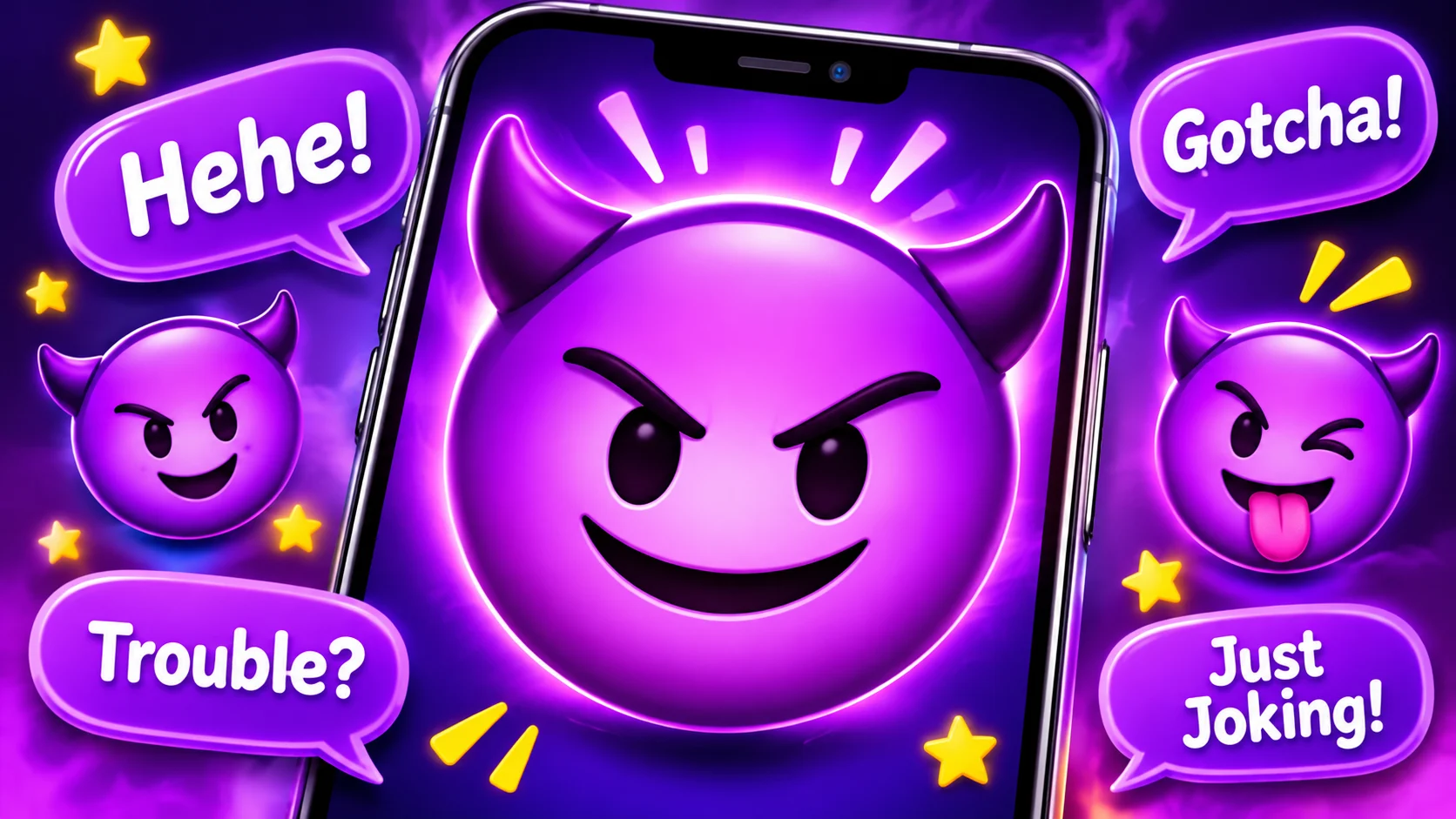
😈 usually means mischief, playful trouble, or a cheeky devilish attitude. It can also imply flirting, naughty humor, or excitement about doing something daring, depending on the message.
The demon emoji 😈, officially called Smiling Face with Horns, usually represents mischief, playful trouble, a cheeky attitude, or a devilish sense of humor. In text messages, it can suggest teasing, naughty jokes, sarcasm, or flirtation. Its meaning changes depending on the conversation, the sender’s tone, and the relationship between the people messaging.
For example, “I have a little surprise for you 😈” may sound mischievous or playful. “Let’s break the rules tonight 😈” can suggest excitement about doing something daring. In a flirty conversation, the emoji may add a suggestive tone, but it does not automatically indicate romantic interest.
The smiling devil is generally more playful than threatening. It is often used to make a message sound bold, teasing, or intentionally mischievous rather than genuinely mean.
What Does the Demon Emoji Mean in Text Messages?
The 😈 emoji is often used to make a message sound mischievous, cheeky, or intentionally bold. It can turn a simple sentence into a playful suggestion.
Here are common ways people use it:
1. Mischief and Playful Trouble
The smiling devil can suggest that someone is planning a harmless prank or wants to stir up a little trouble.
Example: “I hid your favorite snacks 😈”
Likely meaning: “I’m being mischievous, and I know it.”
2. Naughty or Suggestive Humor
In some conversations, 😈 adds a suggestive or cheeky tone to a joke. It can hint at something slightly inappropriate without spelling it out.
Example: “I have a few ideas for tonight 😈”
Likely meaning: A playful, possibly suggestive hint. The exact meaning depends on the conversation.
3. Flirting and Teasing
The emoji may make a compliment, playful challenge, or teasing comment feel more daring.
Example: “You look way too good today 😈”
Likely meaning: A cheeky compliment that could be flirtatious.
4. Excitement About Something Daring
Sometimes the emoji expresses excitement about an adventure, challenge, or plan that feels a little rebellious.
Example: “Road trip with no itinerary? 😈”
Likely meaning: “Let’s do something spontaneous and fun.”
5. Sarcasm or a Wicked Sense of Humor
The emoji can also accompany a sarcastic remark or a joke with a mischievous edge.
Example: “I told him the meeting was at 7 instead of 8 😈”
Likely meaning: “I did something cheeky, and I’m amused by it.”
These interpretations are informal. The emoji does not automatically mean the sender has bad intentions.
😈 vs. 👿: What’s the Difference?
The two devil emojis look similar, but their expressions create different tones.
- 😈 Smiling Face with Horns: Usually suggests playful mischief, cheeky humor, or suggestiveness.
- 👿 Angry Face with Horns: Usually conveys anger, frustration, or a more hostile devilish expression.
For example, “Let’s prank our friend 😈” sounds playful, while “I’m furious about what happened 👿” sounds angry.
The Unicode Standard describes 👿 as an angry or frowning counterpart to 😈. Unicode+1
Demon Emoji Compared With Similar Emojis
The 😈 emoji belongs to a group of expressive faces and fantasy characters that can communicate mischief, humor, attitude, or an evil-looking reaction.
| Emoji | Official Name | Common Meaning | Tone | Where or When It Is Used |
|---|---|---|---|---|
| 😈 | Smiling Face with Horns | Mischief, naughty humor, playful devilishness | Cheeky, playful | Teasing, jokes, daring plans |
| 👿 | Angry Face with Horns | Anger, frustration, devilish attitude | Intense, angry | Complaints or exaggerated anger |
| 😇 | Smiling Face with Halo | Innocence, goodness, angelic behavior | Sweet, innocent, sometimes ironic | Showing innocence or pretending to be good |
| 😏 | Smirking Face | Sly humor, confidence, suggestiveness | Smug, cheeky | Teasing, playful flirting |
| 😉 | Winking Face | Humor, teasing, a playful hint | Friendly, suggestive | Jokes or lighthearted comments |
| 🤭 | Face with Hand Over Mouth | Surprise, giggling, keeping a secret | Playful, embarrassed | Reacting to gossip or a funny secret |
| 🤡 | Clown Face | Foolishness, ridiculous behavior, self-mockery | Humorous, sarcastic | Jokes about mistakes or silly behavior |
| 👹 | Ogre | A frightening or monstrous character | Intense, dramatic | Fantasy references, scary jokes |
| 👺 | Goblin | A mischievous or intimidating fantasy character | Strange, dramatic | Halloween, fantasy, or playful threats |
😈 vs. 😇: Devilish or Angelic?
These emojis often work as opposites.
- 😈 suggests mischief, cheekiness, or a naughty attitude.
- 😇 suggests innocence, kindness, or good behavior.
Example: “I didn’t touch the cookies 😇” may jokingly imply innocence. “I ate all the cookies 😈” can suggest playful guilt.
😈 vs. 😏: Devilish Mischief or a Smirk?
The smirking face 😏 often conveys sly confidence or suggestiveness without the fantasy imagery of a devil.
Choose 😈 when the message has a mischievous or naughty quality. Use 😏 when you want a more subtle, knowing expression.
😈 vs. 😉: A Cheeky Hint or a Wink?
The winking face 😉 is often used to show that a message is playful or not entirely serious.
The demon emoji adds a stronger sense of mischief. For example:
- “Just kidding 😉” suggests a lighthearted joke.
- “I have a plan 😈” suggests a mischievous idea.
How to Respond When Someone Sends 😈
Your response should match the sender’s tone instead of assuming the emoji has a romantic or suggestive meaning.
😂
If they are joking
“What are you planning now? 😂”
A natural reply to playful mischief.
😏
If they are teasing you
“I see what you’re doing 😏”
Keeps the exchange cheeky and playful.
🤔
If their message is unclear
“Should I be worried? 🤔”
A lighthearted way to ask what they mean.
🙃
If they suggest a daring plan
“This sounds like trouble 🙃”
Shows playful hesitation or ironic acceptance.
If the emoji appears in a serious conversation, it is better to respond to the message itself rather than treating the devil face as a joke.
Demon Emoji Copy and Paste
😈
Smiling Face with Horns Copy 😈
You can use the demon emoji in texts, captions, comments, and playful messages.
I have a secret 😈Ready for some trouble? 😈You can't handle my jokes 😈😂Let's make tonight interesting 😈I'm innocent, I swear 😇😈
Official Name and Unicode Details
The demon emoji is officially named Smiling Face with Horns. Although people commonly call it the demon emoji or devil emoji, its Unicode name describes its facial expression and horns.
| Technical Detail | Information |
|---|---|
| Emoji | 😈 |
| Official Unicode Name | Smiling Face with Horns |
| Unicode Code Point | U+1F608 |
| Unicode Version | Unicode 6.0 |
| Original Introduction | 2010 |
| Emoji Category | Smileys & Emotion |
| Related Emoji | 👿 Angry Face with Horns |
The Unicode Consortium standardized the character in Unicode 6.0 in 2010. It was later included in Emoji 1.0 in 2015. Meaning, Copy And Paste+1
Does 😈 Look the Same on Every Platform?
No. Apple, Google, Samsung, and other vendors may display the emoji with different horn shapes, colors, eye expressions, or facial details.
These visual differences do not change the emoji’s Unicode identity. However, a slightly different expression may affect how playful or intense it appears to a reader.
FAQs
What does 😈 mean from someone?
It usually suggests that the sender is being mischievous, playful, cheeky, or teasing. Depending on the conversation, it can also carry a suggestive meaning. The emoji alone does not reveal the sender’s exact intention.
Does the demon emoji mean flirting?
It can be used in flirtatious messages, especially when paired with teasing compliments or suggestive wording. However, 😈 is also common in jokes, playful conversations, and mischievous comments. It does not prove romantic interest.
Is 😈 a bad or evil emoji?
Not necessarily. Although it depicts a devil-like face, its everyday use is often playful or humorous. The emoji can represent fictional devils, Halloween themes, mischievous behavior, or a cheeky attitude without suggesting anything genuinely evil.
What is the difference between the demon emoji and the devil emoji?
People often use the terms demon emoji and devil emoji to refer to 😈. Its official Unicode name is Smiling Face with Horns. The related 👿 emoji is officially called Angry Face with Horns.
Can 😈 be used sarcastically?
Yes. It can add a sarcastic or wickedly humorous tone to a message. For example, “I definitely didn’t eat the last slice 😈” may suggest that the sender is joking about being guilty.
Is the demon emoji appropriate for professional messages?
It depends on the setting. 😈 may fit a casual conversation between coworkers about a harmless prank or playful challenge. It is less suitable for formal emails, serious workplace issues, or messages where the recipient may misunderstand its tone.
Conclusion
The 😈 demon emoji is a playful way to express mischief, cheeky humor, teasing, and a devilish attitude. It can also add a suggestive or sarcastic tone when the context supports it. The best way to understand its meaning is to read the surrounding words and consider the sender’s communication style rather than assuming a single interpretation.
Discover More Related Articles:
- Dog Emoji Mean | From Puppy Love to Everyday Texts In 2026
- Waxing Gibbous Emoji Meaning | What This Moon Really Represents In 2026
- Pumpkin Emoji Mean | Halloween, Fall & Everyday Uses In 2026

Matthew Garcia is a content writer at EmojisPeace.com, where she creates fun, expressive and easy-to-use emoji collections for every mood and moment. Passionate about digital expression, she helps readers find the perfect emojis to make every message more creative and memorable.