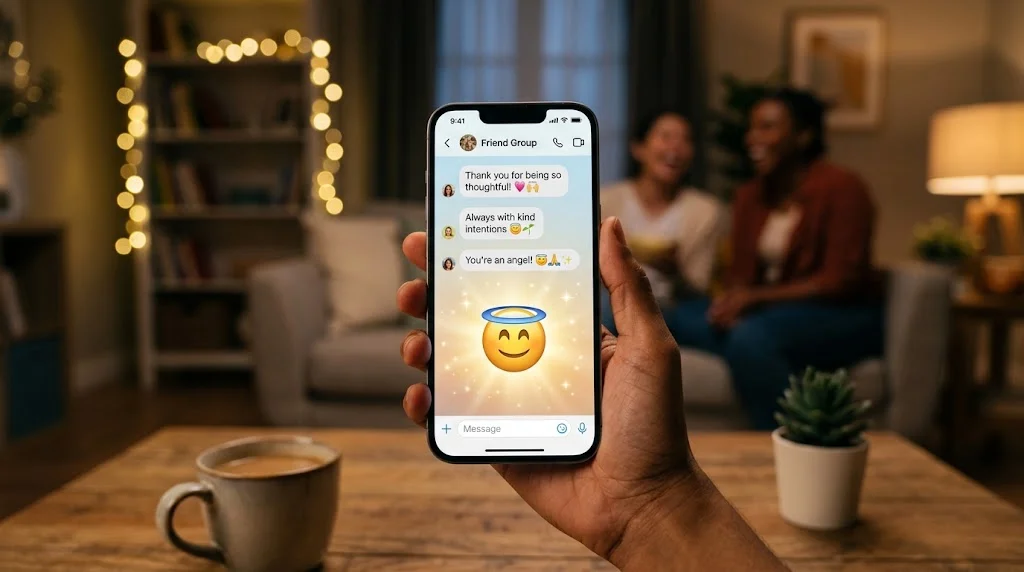
😇 usually means “I’m being good,” “I’m innocent,” or “I have good intentions.” It can express genuine kindness or playful innocence when someone is joking about their behavior. The context, relationship, and sender’s usual texting style help determine which meaning fits best.
The halo emoji 😇, officially called Smiling Face with Halo, usually represents kindness, innocence, goodness, or angel-like behavior. People often use it when they want to show that they are being helpful, have good intentions, or feel proud of doing something nice. In casual texts, however, it can also be playful or sarcastic, especially when someone pretends to be innocent after doing something mischievous.
For example, “I saved you the last slice of cake 😇” suggests a sweet, thoughtful gesture. But “I definitely didn’t eat your leftovers 😇” might be a joking attempt to look innocent. The same emoji can feel sincere, cute, teasing, or even slightly smug depending on the words around it.
What Does 😇 Mean in Text Messages?
In texting, 😇 often adds a sense of sweetness, innocence, or good intentions to a message. It can make a statement feel more friendly, soften a request, or turn a questionable action into a joke.
Here are a few common uses:
- Showing kindness: “I picked up your favorite snack 😇” suggests a thoughtful gesture.
- Acting innocent: “Who, me? I would never do that 😇” playfully denies wrongdoing.
- Expressing gratitude or blessing: “You helped me so much today 😇” can communicate warmth and appreciation.
- Joking about mischief: “I only took one cookie… maybe three 😇” uses the halo to make the confession more humorous.
The emoji is usually positive, but it can sound teasing or sarcastic when the words suggest the opposite of innocence.
Is the Halo Emoji Flirty?
It can be, but 😇 is not automatically a flirting emoji. In a conversation with someone you like, it may make a compliment or playful message sound sweet and innocent.
For example:
- “I was thinking about you today 😇” can feel affectionate or gently flirty.
- “I’m always an angel, obviously 😇” may be playful teasing.
- “You’re such a good person 😇” is more likely to express admiration or appreciation.
To understand the intent, consider the conversation already includes flirting, personal compliments, or mutual teasing. The halo alone does not establish romantic interest.
When Can 😇 Sound Sarcastic?
The halo emoji can create irony when someone claims to be innocent after doing something questionable.
Example: “I definitely didn’t finish the last piece of pizza 😇”
If the sender clearly did eat it, the emoji makes the denial feel like a joke rather than a serious claim.
It can also be used after a mischievous suggestion:
“Let’s tell them we got lost and accidentally ended up at the beach 😇”
Here, the emoji suggests playful troublemaking. In a serious conversation, however, using it to dismiss responsibility could come across as insincere.
Halo Emoji vs. Other Angel and Mischief Emojis
| Emoji | Official Name | Common Meaning | Tone | Where or When It Is Used |
|---|---|---|---|---|
| 😇 | Smiling Face with Halo | Innocence, kindness, good intentions | Sweet, playful | Good deeds or pretending to be innocent |
| 👼 | Baby Angel | Angelic innocence, a baby angel | Gentle, spiritual | Religious references, babies, or angel themes |
| 😈 | Smiling Face with Horns | Mischief, naughtiness, devilish humor | Cheeky, mischievous | Jokes about breaking rules or playful trouble |
| 😌 | Relieved Face | Peace, contentment, relief | Calm, satisfied | Feeling at ease or pleased with an outcome |
| 😊 | Smiling Face with Smiling Eyes | Warmth, happiness, friendliness | Friendly, sincere | Appreciation, pleasant conversations, and greetings |
| 🥰 | Smiling Face with Hearts | Affection, love, being touched | Loving, affectionate | Sweet messages and expressions of fondness |
| 😏 | Smirking Face | Sly humor, confidence, suggestiveness | Teasing, knowing | Flirtatious hints or cheeky comments |
| 😇✨ | Smiling Face with Halo + Sparkles | Angelic sweetness or a heavenly feeling | Whimsical, positive | Compliments, good deeds, or spiritual themes |
😇 vs. 👼: What’s the Difference?
The 😇 emoji shows a smiling face wearing a halo, while 👼 represents a baby angel. Use 😇 when describing someone’s behavior or pretending to be innocent. Choose 👼 when referring more directly to an angelic figure, a baby angel, or an angel-themed idea.
😇 vs. 😈: Good or Mischievous?
These two emojis can work as opposites in a joke.
- 😇 suggests goodness, innocence, or angel-like behavior.
- 😈 suggests mischief, naughtiness, or devilish intentions.
For example, “I finished all my chores 😇” presents a positive action, while “I have a little plan 😈” hints at trouble or cheeky fun. Both can be playful rather than literal.
😇 vs. 😊: Angelic or Simply Happy?
The smiling face with smiling eyes 😊 expresses warmth or happiness without the halo’s suggestion of innocence or goodness. If you want to thank someone or sound friendly, 😊 is often the more neutral choice. Use 😇 when the idea of being kind, innocent, or angelic adds meaning.
How to Copy and Paste the Halo Emoji
You can copy 😇 and use it in messages, social media captions, comments, or other text fields.
😇
Smiling Face with Halo Copy 😇
Some ready-to-use examples:
Just trying to be helpful 😇Who, me? Never! 😇I brought you coffee 😇I'm definitely the innocent one here 😇Sending you good thoughts 😇✨
Choose the wording carefully if you are messaging someone who may take sarcasm literally.
Official Name and Unicode Details
The halo emoji has an official identity in the Unicode emoji standard.
- Emoji: 😇
- Official Unicode name: Smiling Face with Halo
- Unicode code point: U+1F607
- Unicode version: Unicode 6.0
- Emoji version: Emoji 1.0
- Initial approval: 2010
The Unicode Consortium defines the character’s identity, while the informal meanings develop through everyday communication. Emojipedia describes 😇 as a symbol associated with angels, prayers, blessings, and angelic behavior.
Does 😇 Look the Same on Every Device?
Not exactly. Apple, Google, Samsung, and other vendors may display the halo, facial expression, and colors differently. Some designs resemble a smiling face with closed eyes, while others look closer to a friendly smile.
These differences do not change the underlying Unicode character, although the visual style may affect how a message feels to the reader.
FAQs
Does 😇 mean someone is a good person?
It can suggest kindness or good intentions, but it does not prove anything about someone’s character. In casual messages, it may simply be a playful way to present oneself as innocent.
Does the halo emoji mean an angel or a dead person?
Its direct visual reference is an angel-like face with a halo. It can appear in religious or memorial contexts, but it does not automatically refer to death. The accompanying words determine the message is spiritual, comforting, playful, or something else.
Is 😇 a sarcastic emoji?
It can be sarcastic when someone uses it to pretend to be innocent after doing something mischievous. In a sincere message about helping someone, it may instead convey kindness or good intentions.
Can I use 😇 in a work message?
Yes, when the conversation is casual and friendly. It can accompany a helpful gesture or a lighthearted comment. For formal communication or sensitive matters, plain language may be clearer.
What is the difference between 😇 and 👼?
😇 is a smiling face with a halo and often describes someone’s behavior or intentions. 👼 depicts a baby angel and more directly represents an angelic figure or an angel-related theme.
Conclusion
The halo emoji 😇 can express kindness, innocence, blessings, or playful mischief. Its meaning ranges from sincere and wholesome to cheeky and sarcastic, depending on the message. Read the words around it before deciding the sender is being genuinely sweet or simply pretending to be an angel.
Discover More Related Articles:
- Hair Flip Emoji | Is It Sass, Confidence or Something Else In 2026
- Drunk Emoji | The Best Emojis for Party Vibes, Silly Reactions & Unfiltered Messages In 2026
- Thinking Face Emoji | How to Express Curiosity, Doubt & “Let Me Think” Moments In 2026

Sophia Martinez is a content writer at EmojisPeace.com, where she creates fun, engaging, and easy-to-read emoji guides, meanings and digital communication content. She enjoys helping readers express themselves better with the perfect emojis for every mood and moment.