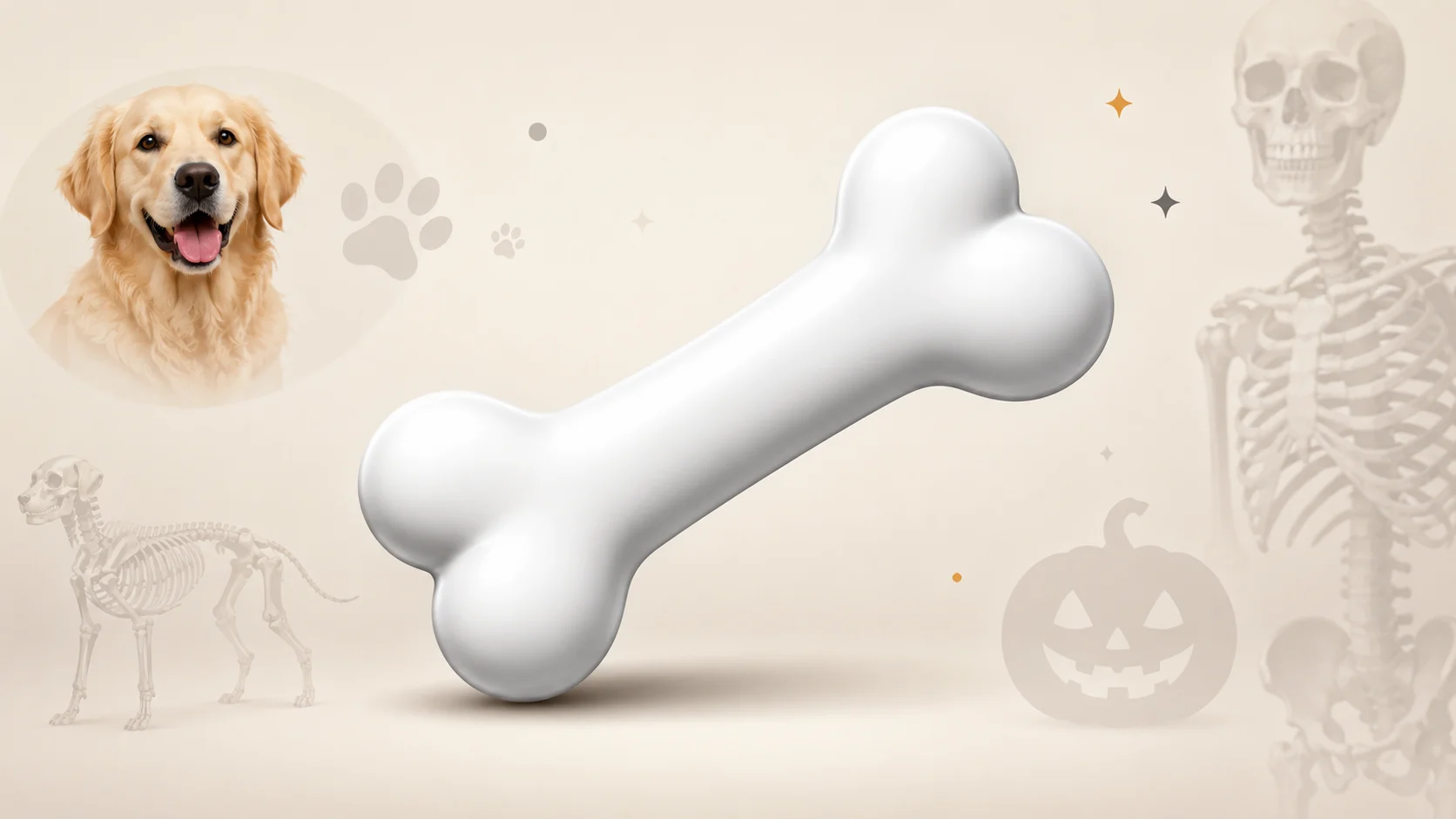
The bone emoji 🦴 usually represents a bone, either as part of the human body or as something a dog might chew. It can appear in conversations about anatomy, injuries, skeletons, pets, food or Halloween. Depending on the surrounding message, it can also be used humorously or as a reference to the slang phrase “to bone,” so context matters.
The 🦴 Bone emoji is a simple illustration of a bone. Its official Unicode name is Bone, and Unicode lists it under the body-parts category. Its code point is U+1F9B4. The emoji was approved in Unicode 11.0 and added to Emoji 11.0 in 2018.
In everyday messages, the most straightforward meaning is simply a bone. Someone might use it when talking about a broken bone, anatomy, a skeleton, a dog chewing a bone, or something related to Halloween.
For example:
“I think I fractured a bone 🦴”
Here, the emoji reinforces the literal meaning.
It can also have a playful connection with dogs:
“Look what I got for the puppy 🦴🐶”
In this case, 🦴 represents a dog treat or chew toy rather than a human body part.
The emoji itself does not specify what type of bone it represents. It can therefore work as a general bone symbol rather than referring to one particular anatomical bone.
Bone Emoji Meaning in Texts
In texting, 🦴 is usually understood from the words around it. Common interpretations include:
- Literal bone: talking about anatomy, injuries, bones, or the skeleton.
- Dog treat: referring to a dog, puppy, chew toy, or pet.
- Skeleton or Halloween: used with 💀, ☠️, 🎃, or other spooky imagery.
- Medical context: discussing an X-ray, fracture, orthopedic issue, or bone health.
- Food-related context: sometimes paired with food emojis when discussing meat served on a bone.
- Humor: used as a deliberately unusual or silly reaction.
- Sexual slang: in some contexts, it can represent the phrase “to bone,” which is an adult sexual expression. This interpretation depends heavily on the surrounding conversation.
Because of that last meaning, 🦴 can occasionally be more suggestive than its literal appearance might imply. However, the emoji does not automatically have a sexual meaning.
Is 🦴 a Sad, Funny, or Positive Emoji?
The bone emoji does not have one fixed emotional tone.
By itself, it is mostly neutral. The feeling comes from the situation in which it is used.
A message such as:
“My dog destroyed another bone 😂🦴”
feels playful.
A message such as:
“The X-ray showed a small fracture 🦴”
is serious and medical.
A message such as:
“Halloween decorations are ready ☠️🦴🎃”
has a spooky or festive tone.
This makes 🦴 different from expressive face emojis, which often communicate a clear emotion. The Bone emoji mainly identifies an object or concept, while the surrounding text supplies the emotional tone.
What Does 🦴 Mean From Someone?
If someone sends you 🦴, do not assume there is a hidden message without looking at the conversation.
For example:
“My dog finally learned to fetch 🦴🐕”
probably refers to a dog or a chew toy.
“I broke my wrist and now I have to get an X-ray 🦴”
clearly points toward bones or an injury.
But:
“You know what I want 😏🦴”
could have a suggestive meaning because the surrounding wording changes the interpretation.
The sender’s usual communication style also matters. A person who frequently uses random objects as jokes may simply be using 🦴 humorously.
Is the Bone Emoji Flirty?
🦴 can be used flirtatiously or sexually in some conversations, but it is not inherently a flirting emoji.
Its literal meaning is simply a bone. Emojipedia notes that it can also be used to represent the adult slang expression “to bone.”
The difference is important. A message about a dog, skeleton, injury, or anatomy is unlikely to carry that interpretation. A suggestive message containing 🦴 may have a sexual double meaning.
So, if someone sends you 🦴 in a potentially flirty conversation, look at the complete message rather than treating the emoji alone as proof of attraction.
🦴 Emojis Similar to the Bone Emoji
| Emoji | Official Name | Common Meaning | Tone | Where or When It Is Used |
|---|---|---|---|---|
| 🦴 | Bone | Bone, skeleton, dog chew | Neutral, playful, or suggestive | Anatomy, pets, Halloween, jokes, or slang |
| 💀 | Skull and Crossbones | Death, dark humor, being overwhelmed | Dark, dramatic, humorous | Reactions, spooky topics, jokes |
| ☠️ | Skull and Crossbones | Danger, poison, death, pirate imagery | Dark or warning-like | Halloween, danger, pirate themes |
| 🦷 | Tooth | Tooth, dentist, dental care | Neutral | Dental appointments, teeth, jokes |
| 🦵 | Leg | Leg or lower-limb reference | Neutral | Injuries, exercise, anatomy |
| 🦶 | Foot | Foot or feet | Neutral, casual | Anatomy, injuries, footwear-related jokes |
| 🍖 | Meat on Bone | Meat or food with a bone | Playful, food-focused | Meals, cooking, barbecue, food jokes |
| 🐶 | Dog Face | Dog or dog-related affection | Friendly, playful | Pets, dogs, animal conversations |
The closest visual and conceptual match is 💀, but the two emojis are not interchangeable. 🦴 focuses on the bone itself, while 💀 represents a skull and is much more strongly associated with death or dark humor.
🍖 Meat on Bone can also cause confusion because it visibly contains a bone, but its main meaning is food rather than anatomy. Unicode and Emojipedia distinguish these as separate emoji concepts.
🦴 Bone vs. 💀 Skull | What’s the Difference?
The easiest way to remember the distinction is:
- 🦴 Bone = the bone itself, anatomy, dogs, skeletons, or bone-related jokes.
- 💀 Skull and Crossbones = skull imagery, death, dark humor, danger, or an exaggerated reaction.
- ☠️ Skull and Crossbones = skull-and-crossbones symbolism, often associated with danger, poison, pirates, or spooky themes.
If you are talking about a broken arm, 🦴 makes more sense. If you are reacting to something that is extremely funny or shocking in a dark-humor context, 💀 may fit better.
Bone Emoji Examples in Text Messages
“My dog needs a new chew toy 🦴🐶”
Likely meaning: A literal dog bone or chew toy.
Why context matters: The dog emoji makes the pet-related meaning clear.
“I can’t believe I survived that workout 🦴😂”
Likely meaning: A humorous exaggeration about feeling physically worn out.
Why context matters: The laughing emoji signals that the bone reference is not necessarily literal.
“Doctor said I have a small fracture 🦴”
Likely meaning: A literal reference to a bone injury.
Why context matters: The medical wording removes most ambiguity.
“You better behave 😏🦴”
Likely meaning: Potentially suggestive or flirtatious.
Why context matters: The suggestive wording and 😏 can make the slang interpretation more likely.
When Can 🦴 Be Misunderstood?
The main source of confusion is that the emoji has both a literal meaning and a possible adult slang meaning.
If you are discussing pets, anatomy, injuries, Halloween, or food, 🦴 is generally easy to understand.
If the conversation already contains sexual jokes or suggestive language, however, the same emoji may be interpreted differently.
This is why it is better not to judge the meaning from 🦴 alone. Read the words around it, consider the relationship between the people involved, and look at the overall tone of the conversation.
How to Respond to the Bone Emoji
Your response can simply follow the context.
If it is about a pet:
“Your dog is going to love that 😂🐶”
If it is about an injury:
“Ouch. I hope it heals quickly.”
If it is a joke:
“Okay, that was definitely a random choice 😂”
If it seems suggestive and you are unsure:
“What do you mean by the bone emoji? 😅”
That last option is useful when you do not want to guess what the sender intended.
Bone Emoji Copy and Paste
You can copy the bone emoji here:
🦴
The emoji is Unicode character U+1F9B4 and is officially named Bone.
Official Bone Emoji Details
The official Unicode name is Bone.
- Emoji: 🦴
- Unicode code point: U+1F9B4
- Unicode category: Body parts
- Unicode version: 11.0
- Emoji version: Emoji 11.0
- Introduced: 2018
Unicode’s emoji charts identify U+1F9B4 as “bone,” while the Unicode names list places it among body-part characters.
Different operating systems and apps may draw the bone with slightly different shapes, angles, shading, or proportions. The underlying Unicode character remains the same.
FAQs
What does the 🦴 bone emoji mean?
The 🦴 emoji usually represents a bone, such as a human bone or a bone for a dog to chew. Its meaning can become playful, spooky, medical, or suggestive depending on the surrounding message.
Is the 🦴 emoji a dog emoji?
No. Its official name is Bone, not dog bone, but it can naturally represent a chew bone when used with a dog or pet-related message.
Does 🦴 have a sexual meaning?
Sometimes. Emojipedia notes that it can be used as a reference to the adult slang expression “to bone,” but that is only one contextual interpretation.
Is 🦴 a Halloween emoji?
It can be. A bone may be used in Halloween or spooky messages, especially alongside emojis such as 💀, ☠️, and 🎃, but Halloween is not its official meaning.
What is the difference between 🦴 and 💀?
🦴 represents a bone, while 💀 represents a skull and is more closely associated with death, dark humor, or dramatic reactions. They can appear together in spooky or skeleton-themed messages.
What does 🦴 mean from a crush?
There is no universal romantic meaning. In a normal conversation it may simply refer to a bone, pet, joke, or skeleton, while suggestive wording around it can give the emoji a sexual or flirtatious interpretation.
Conclusion
The bone emoji 🦴 is mainly a literal symbol for a bone, but its meaning can stretch from pets and anatomy to Halloween humor and adult slang. The safest interpretation comes from the full message: the words, other emojis, and the relationship between the people communicating.
Discover More Related Articles:
- Hammer & Sickle Emoji ☭ | The Surprising Digital Meanings Behind This Icon In 2026
- Sob Emoji Copy Paste | Meaning & How to Use It In 2026
- German Flag Emoji | What the Black, Red & Gold Flag Really Represents Online In 2026

Matthew Garcia is a content writer at EmojisPeace.com, where she creates fun, expressive and easy-to-use emoji collections for every mood and moment. Passionate about digital expression, she helps readers find the perfect emojis to make every message more creative and memorable.