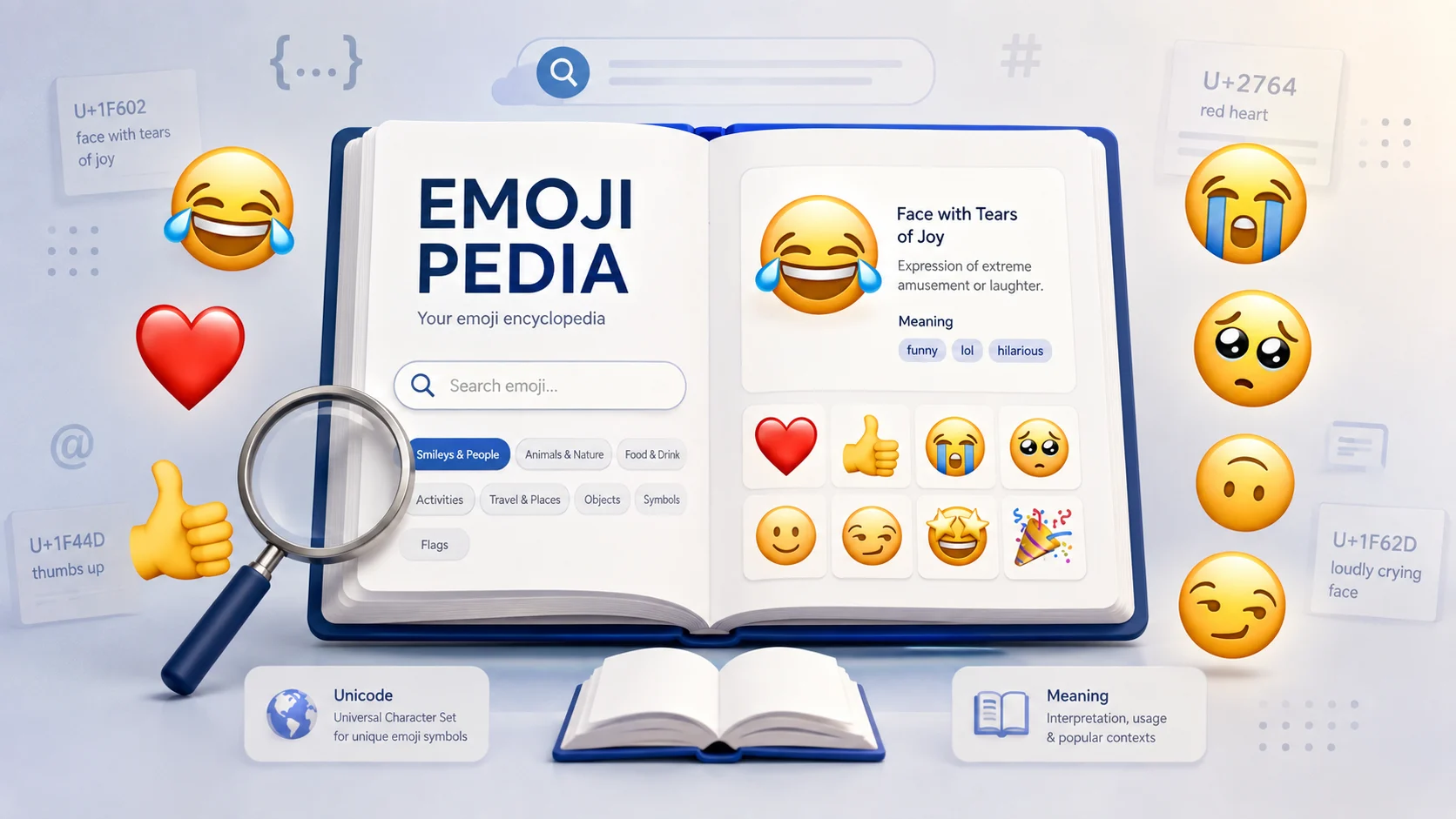
Emoji pedia usually means Emojipedia, a reference site for looking up emoji meanings, official names, designs and related information. It can help explain what an emoji represents, but context still matters because the same emoji can feel friendly, sarcastic, emotional or playful in different messages.
“Emoji pedia” usually refers to Emojipedia, an online reference for emoji meanings, names, designs, and usage. It is not the name of a specific emoji.
If you are trying to understand what an emoji means in a text, comment, or social post, an emoji reference such as Emojipedia can help identify the official emoji name and explain common interpretations. The exact meaning can still depend on the words around it, the relationship between the people chatting, and the platform’s visual design.
What Is Emoji Pedia?
The phrase emoji pedia is commonly used as a spaced-out version of Emojipedia, the name of a dedicated emoji reference website. Emojipedia was founded in 2013 by Jeremy Burge and provides researched information about emoji meanings and their development.
Emojipedia is different from the organization that standardizes emoji characters. The Unicode Consortium maintains the Unicode Standard and publishes emoji charts containing characters, sequences, official CLDR names, code points, keywords, and related technical information.
In simple terms:
- Unicode helps define and standardize emoji characters.
- Emojipedia helps people understand and research those characters.
- Your phone or app displays the emoji using its own design.
That distinction matters because an emoji’s official name is not always the same as the way people casually describe it.
What Does Emojipedia Tell You?
An emoji reference page can provide several kinds of information in one place.
You may find the emoji’s official name, its appearance on different platforms, its Unicode information, common meanings, related emojis, and examples of how it can be interpreted.
Emojipedia says its definitions consider factors such as an emoji’s historical origins, intended meaning when proposed, real-world use, alternative meanings, and differences in cross-platform design. Its definitions are researched and written by emoji specialists rather than being simple crowd-sourced entries.
This makes an emoji pedia useful when a symbol looks obvious but its actual use is less straightforward.
Official Meaning vs. Everyday Meaning
An emoji can have an official Unicode or CLDR name without having one fixed conversational meaning.
For example, 😂 is officially Face with Tears of Joy. People may use it to show genuine laughter, react to something ridiculous, or emphasize that a message is extremely funny. The official name identifies the character, while the surrounding conversation helps explain what the sender intended.
That is why an emoji dictionary should be treated as a guide rather than a rulebook for every conversation.
Why Emoji Meanings Can Be Confusing
Emojis do not always work like ordinary words with one dictionary definition.
A sender might use an emoji literally, emotionally, jokingly, or ironically. Someone might also choose an emoji because of how it looks rather than because its formal name perfectly matches what they want to say.
Consider 🙃. Its official name is Upside-down Face, but Emojipedia describes common uses that include sarcasm, irony, humor, awkwardness, frustration, and resigned acceptance.
So a message such as:
“Love spending three hours fixing this bug 🙃”
does not necessarily mean the sender is happily enjoying the experience. The text creates the context, while the emoji adds an ironic tone.
How Context Changes an Emoji’s Meaning
The words surrounding an emoji are often more useful than the emoji alone.
Compare these examples:
“Thanks for helping me today ❤️”
The heart adds warmth and appreciation.
“You actually remembered my birthday 😂”
The laughing emoji can make the message feel playful rather than serious.
“Sure, that’s completely fine 🙃”
The upside-down face may suggest irony or frustration rather than genuine enthusiasm.
“I can’t believe we won 😭”
The loudly crying face can express overwhelming happiness rather than sadness.
These are hypothetical examples, not fixed definitions. The sender’s usual communication style and the rest of the conversation can change how the emoji is understood.
Does Emoji Pedia Mean an Emoji Dictionary?
Yes, in a general sense, people may use emoji pedia to describe an emoji dictionary or reference guide.
However, Emojipedia is a specific brand and website, while “emoji dictionary” is a broader description of any resource that explains emojis.
A general emoji dictionary might simply provide:
- Emoji
- Name
- Basic meaning
- Copy-and-paste character
A more detailed reference can go further by explaining history, platform differences, related meanings, Unicode information, and how an emoji is commonly interpreted.
Emojis You May Want to Look Up in an Emoji Pedia
The following examples show why an emoji reference can be useful. The official names come from Unicode’s emoji data, while the conversational descriptions below are practical explanations rather than fixed rules.
| Emoji | Official Name | Common Meaning | Tone | Where or When It Is Used |
|---|---|---|---|---|
| 😂 | Face with Tears of Joy | Strong laughter or amusement | Playful, humorous | Funny texts, reactions, comments |
| ❤️ | Red Heart | Love, warmth, care, appreciation | Affectionate | Relationships, friendship, supportive messages |
| 👍 | Thumbs Up | Approval, agreement, acknowledgment | Positive, neutral | Confirmations, quick replies, everyday texts |
| 😭 | Loudly Crying Face | Intense sadness or overwhelming emotion | Emotional, dramatic | Sad reactions, jokes, happy-overwhelmed moments |
| 🥹 | Face Holding Back Tears | Deep emotion, gratitude, tenderness | Soft, emotional | Heartwarming moments, appreciation, support |
| 🙃 | Upside-Down Face | Irony, sarcasm, awkward humor | Playful, ironic | Frustrating situations, jokes, awkward reactions |
| 😏 | Smirking Face | Smugness, confidence, cheekiness, or suggestiveness | Playful, teasing | Jokes, teasing, flirtatious contexts |
The most important differences are emotional intensity and tone. 😭 can look much stronger than 😢, while 🥹 often suggests emotion that is being held back rather than openly expressed. 🙃 can change a seemingly positive sentence into an ironic one, and 😏 can carry a more suggestive tone depending on the conversation.
Emojipedia vs. Unicode: Are They the Same?
No.
The Unicode Consortium is responsible for the technical standard that allows emoji characters to be represented consistently across digital systems. Unicode’s current Emoji 17.0 charts list emoji characters and sequences along with their CLDR names, code points, keywords, and other information.
Emojipedia is a public-facing reference that explains those characters for people. It uses official Unicode names but also provides researched descriptions of meaning and usage. Emojipedia states that it is a member of the Unicode Consortium, but it is not the body that decides the Unicode standard.
Think of it this way:
Unicode = the standard
Emojipedia = the reference guide
Apple, Google, Samsung, and others = the designers/renderers
Why the Same Emoji Can Look Different
Unicode standardizes the underlying character, but companies can create their own artwork for that character.
For example, when you send an emoji from an iPhone to an Android phone, the recipient may see a different visual design even though the underlying Unicode character is the same. Emojipedia notes that vendors create their own emoji designs, while Unicode provides the standardized character framework.
This can matter when an expression is visually subtle.
A raised eyebrow, mouth shape, hand position, or facial expression can make an emoji feel slightly different from one platform to another. Those visual differences are one reason an emoji reference can be useful when you are unsure what a particular character is supposed to represent.
Is Emoji Pedia Useful for Finding an Emoji’s Meaning?
Yes, especially when you know the character but do not know its official name or common interpretation.
For example, if someone sends you 🥹 and you are unsure it means sadness, gratitude, or emotional happiness, an emoji reference can give you the character’s official identity and explain the range of common uses.
But the best interpretation still comes from combining three things:
- The emoji itself
- The surrounding message
- The relationship and communication style of the sender
No emoji reference can reliably determine a person’s private intention from one character alone.
Can Emojipedia Tell You What an Emoji Means From Someone?
It can explain common interpretations, but it cannot tell you exactly what a particular person intended.
For example, 😏 may sometimes be playful or flirtatious, but that does not prove romantic interest. ❤️ can express affection, but it can also be used for friendship, gratitude, support, or appreciation.
Context is especially important when a message contains only one emoji.
If someone sends:
“Okay 👍”
the thumbs-up could simply acknowledge the message.
If someone sends:
“You nailed it! 👍”
it is more clearly approving.
The character has not changed. The surrounding words have.
Does Emojipedia Give the One True Meaning?
Not always, because emoji meaning is not completely fixed.
Unicode provides standardized names and technical information, but conversational meaning develops through actual usage. Emojipedia explicitly considers real-world use and alternative meanings when researching definitions.
That is why a good emoji explanation should distinguish between:
- Official name: what the standardized character is called.
- Core visual idea: what the image depicts.
- Common use: how people often use it in messages.
- Contextual meaning: what it can suggest in a particular conversation.
This approach is more accurate than claiming every emoji has one universal definition.
Common Mistakes When Looking Up Emoji Meanings
One common mistake is assuming the official name is the complete meaning.
Another is assuming that a meaning listed online applies to every message. Emoji meanings can shift with tone, punctuation, words, and relationship context.
It is also easy to confuse similar characters. 😢 Crying Face and 😭 Loudly Crying Face, for example, both involve tears, but their visual intensity is different. 🥹 Face Holding Back Tears adds another emotional nuance. Unicode lists all three as distinct emoji characters.
Finally, avoid treating an emoji as proof of someone’s feelings. A single symbol rarely provides enough information to establish attraction, anger, sarcasm, or rejection on its own.
How to Use an Emoji Pedia Effectively
If you are trying to identify an unfamiliar emoji, start by copying the character into an emoji reference search.
Then check its official name and basic description. If the meaning seems unclear, look at related emojis and examples of contextual use.
For a message you received, return to the original conversation after identifying the emoji. Ask what tone the full sentence has rather than interpreting the emoji in isolation.
For writing your own message, choose the emoji based on the feeling you want to add, not simply the closest-looking picture.
FAQs
What does “emoji pedia” mean?
“Emoji pedia” usually refers to Emojipedia, an online reference for emoji meanings and information. It is not the official name of a particular emoji.
Is Emojipedia the same as Unicode?
No. Unicode maintains the technical emoji standard, while Emojipedia provides public explanations, researched meanings, and information about emoji usage.
Are Emojipedia’s emoji names official?
Yes. Emojipedia states that the emoji names displayed on its pages are sourced from the Unicode Standard and Unicode CLDR data.
Can an emoji have more than one meaning?
Yes. An emoji can have a core visual meaning and several common contextual uses. The surrounding words and conversation can change how the character is understood.
Why does an emoji look different on my phone than someone else’s phone?
Different platforms can use different artwork for the same Unicode character. The underlying character can remain the same even when its visual design changes.
Conclusion
Emoji pedia is generally a search-friendly way of referring to Emojipedia, a specialized reference for understanding emoji names, meanings, designs, and usage. It is especially useful when an emoji is unfamiliar or easy to confuse with a similar character.
The most reliable approach is to combine an emoji reference with context. The official name can tell you what the character is, while the actual conversation tells you what the sender most likely meant.
Discover More Related Articles:
- Clover Emoji | Meaning & How to Use It In 2026
- Bone Emoji Meaning | What Does It Mean in Texts & Chats In 2026
- Speaking Head Emoji | Meaning & How to Use It In 2026

Sophia Martinez is a content writer at EmojisPeace.com, where she creates fun, engaging, and easy-to-read emoji guides, meanings and digital communication content. She enjoys helping readers express themselves better with the perfect emojis for every mood and moment.