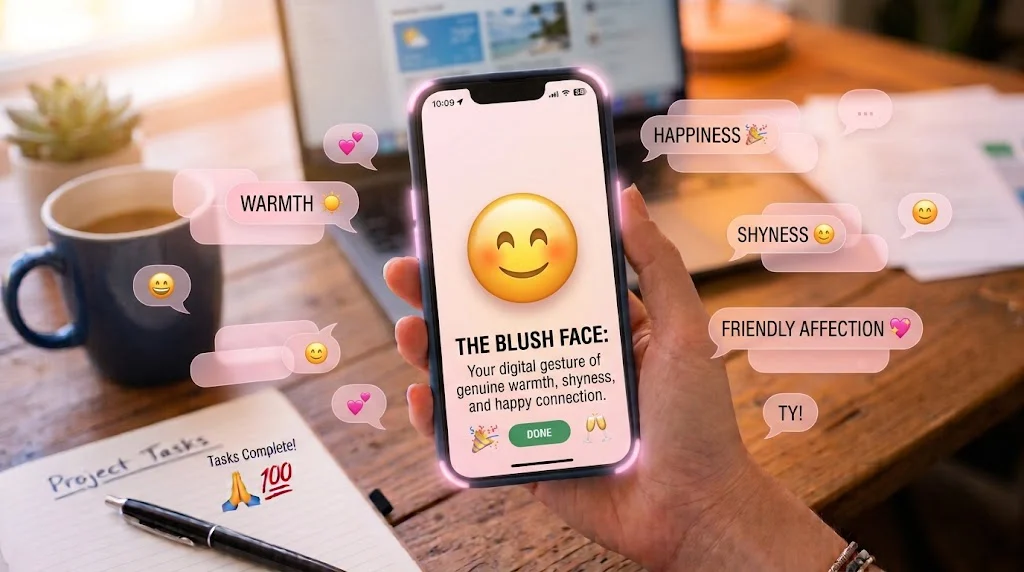
😊 usually means “I’m happy,” “That’s sweet,” or “I appreciate it.” It conveys a gentle, friendly warmth and can suggest shyness or flirting when the surrounding conversation supports that interpretation.
The blush emoji 😊 usually expresses warmth, happiness, friendliness, gratitude, or gentle affection. Officially called Smiling Face with Smiling Eyes, it features a soft smile, closed smiling eyes, and rosy cheeks. People often use it to make a message feel kind, appreciative, or a little shy. Depending on the conversation, it can also suggest that someone feels flattered or is being subtly flirtatious.
For example, “Thank you for helping me today 😊” sounds warm and appreciative, while “You remembered that about me? 😊” may suggest pleasant surprise or affection. The emoji is generally positive, but it does not automatically mean romantic interest.
The key is to consider the words, relationship, and tone of the conversation rather than assuming the rosy cheeks have one fixed meaning.
What Does 😊 Mean in Text Messages?
In texting, 😊 adds a gentle, positive tone to a message. It can make a reply feel warmer than plain text, especially when the words are brief or could otherwise sound formal.
Here are four common ways people use it.
1. Happiness and Contentment
The emoji often expresses quiet happiness rather than loud excitement.
Example: “Finally finished my exams. Time to relax 😊”
Likely meaning: “I’m happy and feeling good about this.”
2. Gratitude and Appreciation
People use 😊 to make a thank-you message feel sincere and friendly.
Example: “Thanks for checking in on me 😊”
Likely meaning: “I appreciate your kindness.”
3. Shyness or Feeling Flattered
When someone receives a compliment, the emoji can convey a pleased, slightly bashful reaction.
Example: “You always know how to make me smile 😊”
Likely meaning: “That was sweet, and it made me happy.”
4. Politeness and Friendliness
The emoji can soften a short reply, a greeting, or a friendly sign-off.
Example: “Sounds good, see you tomorrow 😊”
Likely meaning: “I’m happy with the plan, and I’m responding warmly.”
One useful distinction: 😊 usually feels gentle and reassuring, while 😁 or 😄 often communicates a bigger, more energetic smile.
Does the Blush Emoji Mean Someone Likes You?
The blush emoji can suggest affection, shyness, or feeling flattered, but it does not automatically mean someone has a crush on you.
Consider these examples:
| Message | Possible Meaning |
|---|---|
| “Thank you, you’re so thoughtful 😊” | Appreciation and warmth |
| “You look really nice today 😊” | A friendly compliment or possible affection |
| “I was thinking about our conversation 😊” | Pleasant feelings or interest |
| “Good morning 😊” | A warm, friendly greeting |
The same emoji can be used by friends, family members, coworkers, and romantic partners. Look for a broader pattern of communication rather than treating one emoji as proof of someone’s feelings.
Is 😊 Flirty or Just Friendly?
It can be either.
- Friendly: “Thanks for helping me out 😊”
- Affectionate: “I’m glad I got to see you today 😊”
- Potentially flirty: “You always make my day better 😊”
The emoji adds warmth, but the words carry much of the meaning. If you are unsure, respond naturally instead of assuming romantic interest.
😊 vs. 😳: What’s the Difference?
These two emojis are often associated with blushing, but their expressions communicate different things.
- 😊 Smiling Face with Smiling Eyes: A warm, relaxed smile that often suggests happiness, friendliness, or gratitude.
- 😳 Flushed Face: Wide eyes, raised eyebrows, a small mouth, and blushing cheeks. It often conveys embarrassment, surprise, or feeling flustered.
For example, “Thanks for the compliment 😊” sounds warmly appreciative. “You said that in front of everyone? 😳” sounds more surprised or embarrassed.
The blush emoji is generally the better choice for a gentle, positive message. The flushed face works better when you want to emphasize surprise or a stronger feeling of embarrassment. Meaning, Copy And Paste+1
Other Emojis Similar to 😊
The following comparison helps you choose the right expression for the feeling you want to convey.
| Emoji | Official Name | Common Meaning | Tone | Where or When It Is Used |
|---|---|---|---|---|
| 😊 | Smiling Face with Smiling Eyes | Warmth, happiness, gratitude | Gentle, friendly | Thank-you messages and kind replies |
| ☺️ | Smiling Face | Warmth, contentment, affection | Soft, gentle | Sweet messages and friendly sign-offs |
| 😁 | Beaming Face with Smiling Eyes | Strong happiness or excitement | Cheerful, enthusiastic | Celebrating good news |
| 😄 | Grinning Face with Smiling Eyes | Happiness and amusement | Upbeat, joyful | Sharing something funny or exciting |
| 🥰 | Smiling Face with Hearts | Affection, love, feeling cared for | Loving, tender | Sweet messages and affectionate replies |
| 😳 | Flushed Face | Embarrassment, surprise, feeling flustered | Startled, bashful | Unexpected compliments or awkward moments |
| 😅 | Grinning Face with Sweat | Nervous laughter or relief | Awkward, relieved | Recovering from a mistake |
| 😌 | Relieved Face | Calm, relief, peaceful satisfaction | Relaxed, content | Expressing comfort after a stressful moment |
| 😏 | Smirking Face | Sly humor, confidence, or suggestiveness | Teasing, knowing | Cheeky jokes or potentially flirty messages |
Which Emoji Should You Choose?
- Choose 😊 when you want to sound warm and friendly without making the message too intense.
- Choose ☺️ for a simple, gentle smile.
- Choose 🥰 when affection or feeling loved is central to the message.
- Choose 😳 when surprise or embarrassment is stronger than happiness.
- Choose 😅 when you are laughing nervously or feel relieved after an awkward moment.
- Choose 😏 when you want a knowing or teasing expression, keeping in mind that it may sound suggestive.
The main difference is emotional intensity. 😊 is a balanced choice for everyday warmth, while 🥰 is more openly affectionate and 😳 communicates a stronger sense of surprise or embarrassment.
How to Respond to 😊
Usually, you can respond in the same friendly tone. The best reply depends on what the other person said, not just which emoji they used.
😊
For a friendly greeting
“Hey! Hope you’re having a good day too 😊”
Keeps the conversation warm and natural.
🫶
For a thoughtful message
“That means a lot to me. Thank you!”
Shows appreciation without overdoing it.
😄
For exciting or happy news
“That’s awesome! I’m happy for you 😄”
Matches the positive mood with more energy.
🥰
For an affectionate message
“That is so sweet of you 🥰”
Adds affection when it genuinely matches your relationship.
You do not have to send an emoji back. A sincere sentence can be just as effective, particularly in a serious or professional conversation.
Copy and Paste the Blush Emoji
😊
Smiling Face with Smiling Eyes Copy 😊
You can use it in texts, captions, comments, emails, or friendly replies.
Thank you so much 😊That made my day 😊I'm happy for you 😊See you soon 😊You're so kind 😊
Official Name and Unicode Details
Although many people call 😊 the blush emoji or the smiling blush emoji, its official Unicode name is Smiling Face with Smiling Eyes.
| Detail | Information |
|---|---|
| Emoji | 😊 |
| Official name | Smiling Face with Smiling Eyes |
| Unicode code point | U+1F60A |
| Unicode version | Unicode 6.0 |
| Year approved | 2010 |
| Added to Emoji 1.0 | 2015 |
The character has a broad, closed smile, smiling eyes, and rosy cheeks. Its appearance may vary slightly across Apple, Google, Samsung, and other platforms, but the underlying Unicode character remains the same. Meaning, Copy And Paste+1
The Unicode name identifies the emoji; its meaning in a conversation depends on how the sender uses it.
FAQs
Is 😊 the same as the blush emoji?
Yes. People commonly call 😊 the blush emoji because of its rosy cheeks. Its official Unicode name is Smiling Face with Smiling Eyes.
Does 😊 mean shy?
It can suggest shyness or feeling flattered, particularly after a compliment. However, it often expresses simple happiness, friendliness, or gratitude without any embarrassment.
Is 😊 better than 🙂?
Neither is universally better. 😊 often feels warmer because of its smiling eyes and broad smile, while 🙂 has a simpler expression that can feel neutral, polite, or occasionally restrained depending on context.
Does 😊 mean love?
Not necessarily. It can express affection, but it is not specifically a love emoji. If someone uses it in a loving conversation, the context may give it a more affectionate meaning.
Can I use 😊 in a professional email?
Yes, in many informal workplace exchanges, such as thanking a colleague or confirming a friendly plan. In formal business communication or sensitive situations, consider an emoji fits the tone and expectations of the recipient.
Conclusion
The 😊 blush emoji is a simple way to make a message feel warmer, kinder, and more personal. It usually conveys happiness, gratitude, friendliness, or gentle affection, while its meaning can shift toward shyness or flirting in the right context. Read the message as a whole before interpreting the emoji as a sign of romantic interest.
Discover More Related Articles:
- Pray Emoji Mean | Prayer, Gratitude & More In 2026
- Purple Heart Emoji | What It Says About Love, Loyalty & Friendship In 2026
- Celebrate Emoji | The Perfect Way to Share Excitement & Joy In 2026

Sophia Martinez is a content writer at EmojisPeace.com, where she creates fun, engaging, and easy-to-read emoji guides, meanings and digital communication content. She enjoys helping readers express themselves better with the perfect emojis for every mood and moment.