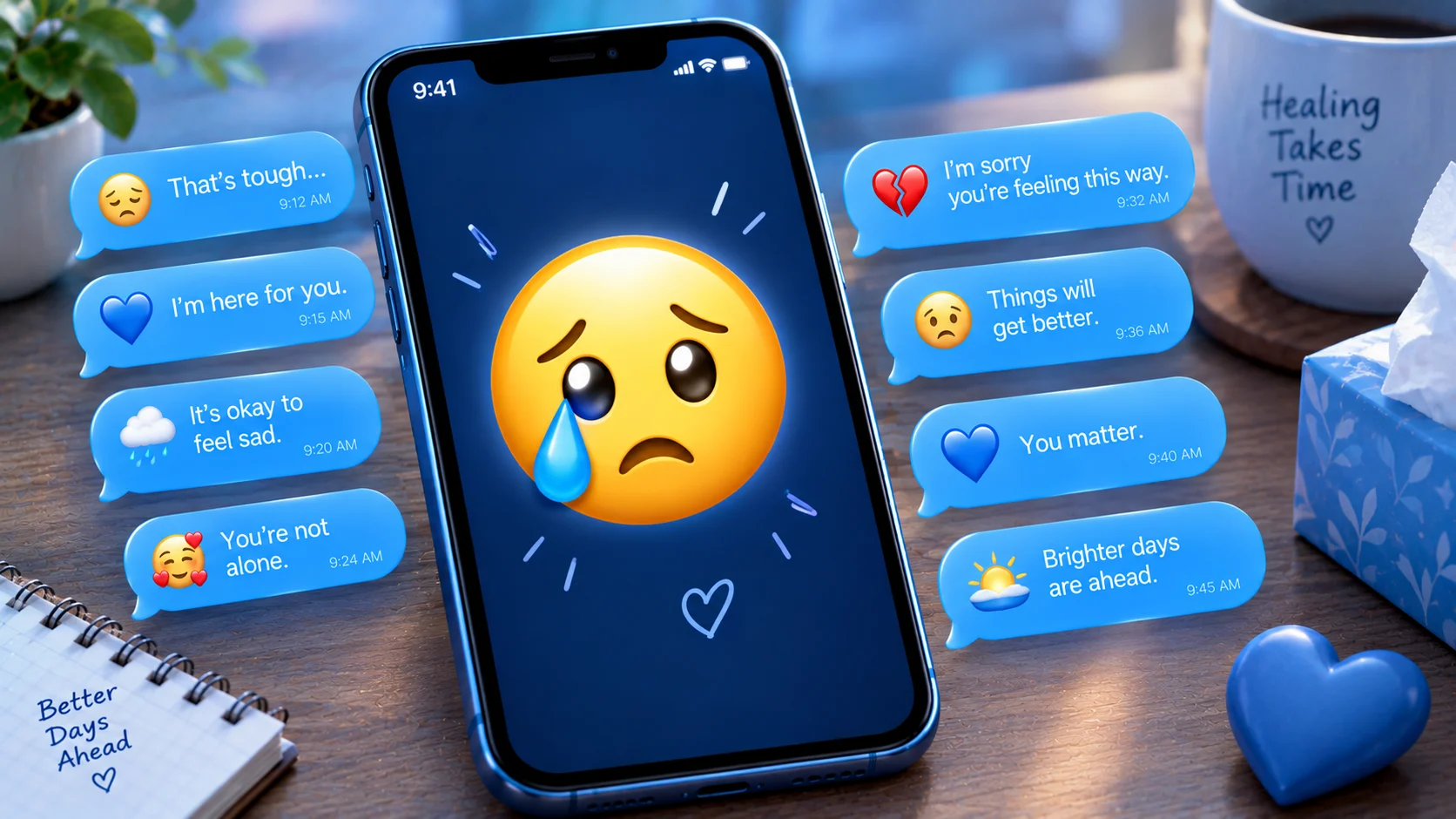
😢 usually means “I’m sad,” “That hurts,” or “I feel sorry for you.” It can express personal sadness, disappointment, or sympathy, and the surrounding message helps show which meaning fits.
The sad face emoji 😢, officially called Crying Face, usually expresses sadness, disappointment, hurt feelings, or sympathy. Its single tear makes it useful for showing that something is upsetting without suggesting the intense crying represented by 😭. In text messages, it can communicate genuine sadness, feeling let down, missing someone, or caring about another person’s difficult experience.
For example, “I really wanted to go, but I can’t make it 😢” expresses disappointment, while “I’m sorry you’re going through this 😢” conveys sympathy. Friends may also use it playfully when a small disappointment feels dramatic, such as missing their favorite dessert.
The sad face emoji does not always signal deep distress. The situation, the words that accompany it, and the sender’s usual texting style help determine the emotion is serious, gentle, or exaggerated for effect.
What Does 😢 Mean in Text Messages?
The 😢 emoji is a simple way to show an emotional response when words alone feel too plain. Although sadness is its main association, it can communicate different feelings depending on the conversation.
1. Sadness or Hurt Feelings
Use 😢 when something makes you feel unhappy, hurt, or emotionally affected.
Example: “I thought we would get to spend the weekend together 😢”
Likely meaning: The person feels sad that their plans did not work out.
The emoji adds emotional warmth to the message and makes the disappointment more visible.
2. Disappointment
The sad face can express a smaller setback, too. It may show that someone is disappointed without being deeply upset.
Example: “The concert sold out before I could get tickets 😢”
Likely meaning: “I’m disappointed because I really wanted to go.”
When the situation is relatively minor, the emoji may be a gentle reaction rather than a sign of serious sadness.
3. Sympathy and Compassion
Sometimes 😢 expresses sadness for someone else, rather than sadness about the sender’s own situation.
Example: “I’m so sorry about your dog 😢”
Likely meaning: “I feel for you, and I’m sorry you’re going through this.”
In this context, the emoji can make a supportive message feel more caring. If someone shares a serious loss, though, thoughtful words are usually more helpful than relying on an emoji alone.
4. Missing Someone
The emoji can also show that someone feels sad about being apart from a friend, family member, or romantic partner.
Example: “Wish you were here with us 😢”
Likely meaning: “I miss you, and I wish you could be here.”
It may express affection, but it does not automatically carry a romantic meaning.
5. Playful Sadness
People sometimes use 😢 for humorous disappointment or to exaggerate a minor problem.
Example: “You ate the last cookie without saving me one 😢”
Likely meaning: “I’m pretending to be heartbroken because I wanted that cookie.”
The lighthearted subject makes the reaction playful. The same emoji in a message about a serious personal problem would likely feel much more sincere.
What Does 😢 Mean When Someone Sends It to You?
When someone sends you the sad face emoji, they may be sharing their own feelings, reacting to your news, or showing concern for you. The message surrounding it usually provides the best clue.
- After disappointing news: They may be expressing sadness or regret.
- After you share a problem: They may be showing sympathy.
- After you say goodbye: They may be sad about parting or missing you.
- After a joke: They may be pretending to be upset for comic effect.
- After a personal disagreement: They may be hurt or disappointed, although the emoji alone cannot confirm that.
Does 😢 Mean Someone Is Crying?
Not necessarily. The emoji depicts a tearful face, but people also use it to express sadness without literally crying. It can represent a feeling, a reaction to a story, or an exaggerated response to a minor inconvenience.
If someone sends 😢 after telling you something serious, take their words into account rather than assuming the emoji shows the full depth of their feelings.
Sad Face Emoji 😢 vs. Other Emotional Emojis
The closest alternatives are other faces that communicate sadness, tears, disappointment, or sympathy. Their expressions help convey different emotional shades.
| Emoji | Official Name | Common Meaning | Tone | Where or When It Is Used |
|---|---|---|---|---|
| 😢 | Crying Face | Sadness, hurt, sympathy | Gentle, sad | Disappointing news or supportive messages |
| 😭 | Loudly Crying Face | Intense sadness or dramatic emotion | Strong, emotional | Heartbreak, grief, or exaggerated reactions |
| 🥹 | Face Holding Back Tears | Being moved, gratitude, or tender emotion | Warm, emotional | Heartwarming news or meaningful gestures |
| 😥 | Sad but Relieved Face | Worry, sadness, or relief after stress | Uneasy, relieved | Difficult situations that turn out okay |
| 😞 | Disappointed Face | Disappointment or discouragement | Downcast, subdued | Failed plans or unwanted outcomes |
| 😔 | Pensive Face | Sadness, regret, or reflection | Quiet, thoughtful | Personal setbacks or reflective messages |
| 🙁 | Slightly Frowning Face | Mild sadness or concern | Subdued, concerned | Small disappointments or gentle disapproval |
| ☹️ | Frowning Face | Unhappiness or displeasure | More openly negative | Expressing dissatisfaction or sadness |
| 🥺 | Pleading Face | A request, vulnerability, or seeking comfort | Tender, pleading | Asking for help or expressing hurt feelings |
The official names in this table follow the Unicode emoji character reference.
😢 vs. 😭: One Tear or Intense Crying?
The biggest difference is emotional intensity.
- 😢 usually conveys sadness with a single tear. It can feel quiet, gentle, or restrained.
- 😭 depicts loud crying and often communicates stronger distress. It can also be used for exaggerated happiness, laughter, or dramatic reactions.
For a message such as “I’ll miss you 😢,” the single-tear face may fit a softer tone. “I’m going to miss you so much 😭” feels more intense, though individual usage varies.
😢 vs. 🥹: Sadness or Being Moved?
These emojis can both appear in emotional conversations, but their expressions suggest different feelings.
- Use 😢 when the main emotion is sadness, disappointment, or sympathy.
- Use 🥹 when you feel touched, grateful, proud, or close to tears because something is meaningful.
For example, “I didn’t get the job 😢” expresses disappointment. “You remembered that little thing I told you 🥹” may express being touched by someone’s thoughtfulness.
😢 vs. 😔: Crying or Quiet Reflection?
The pensive face 😔 has no visible tear and often suggests regret, reflection, or quiet sadness. The crying face 😢 makes the emotional response more visible.
Choose 😔 when you want to convey a thoughtful or subdued mood. Choose 😢 when you want to emphasize sadness or sympathy.
😢 vs. 🥺: Sadness or a Plea for Comfort?
The pleading face 🥺 has large, watery eyes and often suggests vulnerability or a request for reassurance. The crying face 😢 is more directly associated with sadness.
For instance, “I had a rough day 😢” shares a feeling, while “Can you stay a little longer? 🥺” may sound like a tender request.
How to Respond to 😢 in a Text
A good response depends on why the person sent it. If they seem genuinely upset, acknowledge their feelings. If they are joking about a small disappointment, a playful reply may fit better.
💙
If they are sad
“I’m sorry. Want to talk about it?”
Shows that you care and gives them room to share.
🫂
If they need comfort
“Sending you a big hug. I’m here for you.”
Offers warmth and emotional support.
😂
If they are joking
“Not the last cookie! 😂”
Matches a playful reaction to a minor disappointment.
❤️
If they miss you
“I wish I could be there with you, too ❤️”
Expresses affection when it fits your relationship.
If you are unsure what caused the sadness, a simple “What’s wrong?” or “Are you okay?” can help you understand before responding.
Copy and Paste the Sad Face Emoji
😢
Crying Face Copy 😢
Here are a few natural combinations for different situations:
I miss you 😢— Missing someoneThat's really sad 😢— SympathyI didn't get the job 😢— DisappointmentAww, I'm sorry 😢❤️— Compassion and careYou finished the snacks without me 😢😂— Playful sadness
Adding words or another emoji can make your intended tone clearer, especially when the situation could be interpreted in more than one way.
Official Name and Unicode Details
The sad face emoji is officially named Crying Face in the Unicode emoji reference.
- Emoji: 😢
- Official name: Crying Face
- Unicode code point: U+1F622
- Unicode version: Unicode 6.0
- Year introduced: 2010
The Unicode Consortium maintains the standard that identifies emoji characters. The official name describes the character, while meanings such as sympathy, disappointment, and missing someone come from how people use it in messages.
Does 😢 Look the Same on Every Device?
No. Apple, Google, Samsung, and other vendors may display slightly different versions of the face, including differences in the tear, eyes, and mouth. These small design changes can affect how expressive the emoji appears, but the underlying Unicode character remains the same.
FAQs
Is 😢 a sad or crying emoji?
It is both commonly described as a sad face and officially named Crying Face. It usually expresses sadness or a tearful reaction, but it does not necessarily mean the sender is literally crying.
Does 😢 mean sympathy?
Yes, it can. When someone shares upsetting news, replying with 😢 may communicate that you feel sorry for them or understand that the situation is painful. A few supportive words can make that meaning clearer.
Is 😢 different from a broken heart 💔?
Yes. 😢 expresses sadness more generally, while 💔 often represents heartbreak, emotional pain, or a painful separation. The broken heart is more specific when the context involves a damaged relationship or a deep emotional loss.
Can 😢 be used sarcastically?
Yes. Someone might use it to exaggerate disappointment about a small inconvenience, such as missing a sale or losing a game. However, sarcasm depends on the situation and wording rather than the emoji alone.
What does 😢 mean from a friend or partner?
It may show sadness, disappointment, sympathy, or missing someone. In a relationship, it can accompany an affectionate or emotional message, but it does not automatically mean romantic distress. Read the complete message before deciding what the sender intends.
Conclusion
The 😢 sad face emoji is a simple way to express sadness, disappointment, or sympathy. Its single tear gives it a softer feel than 😭, while the surrounding words help show the sender is genuinely upset, offering support, or reacting playfully to a minor setback.
Discover More Related Articles:
- Pray Emoji Mean | Prayer, Gratitude & More In 2026
- Purple Heart Emoji | What It Says About Love, Loyalty & Friendship In 2026
- Celebrate Emoji | The Perfect Way to Share Excitement & Joy In 2026

Sophia Martinez is a content writer at EmojisPeace.com, where she creates fun, engaging, and easy-to-read emoji guides, meanings and digital communication content. She enjoys helping readers express themselves better with the perfect emojis for every mood and moment.