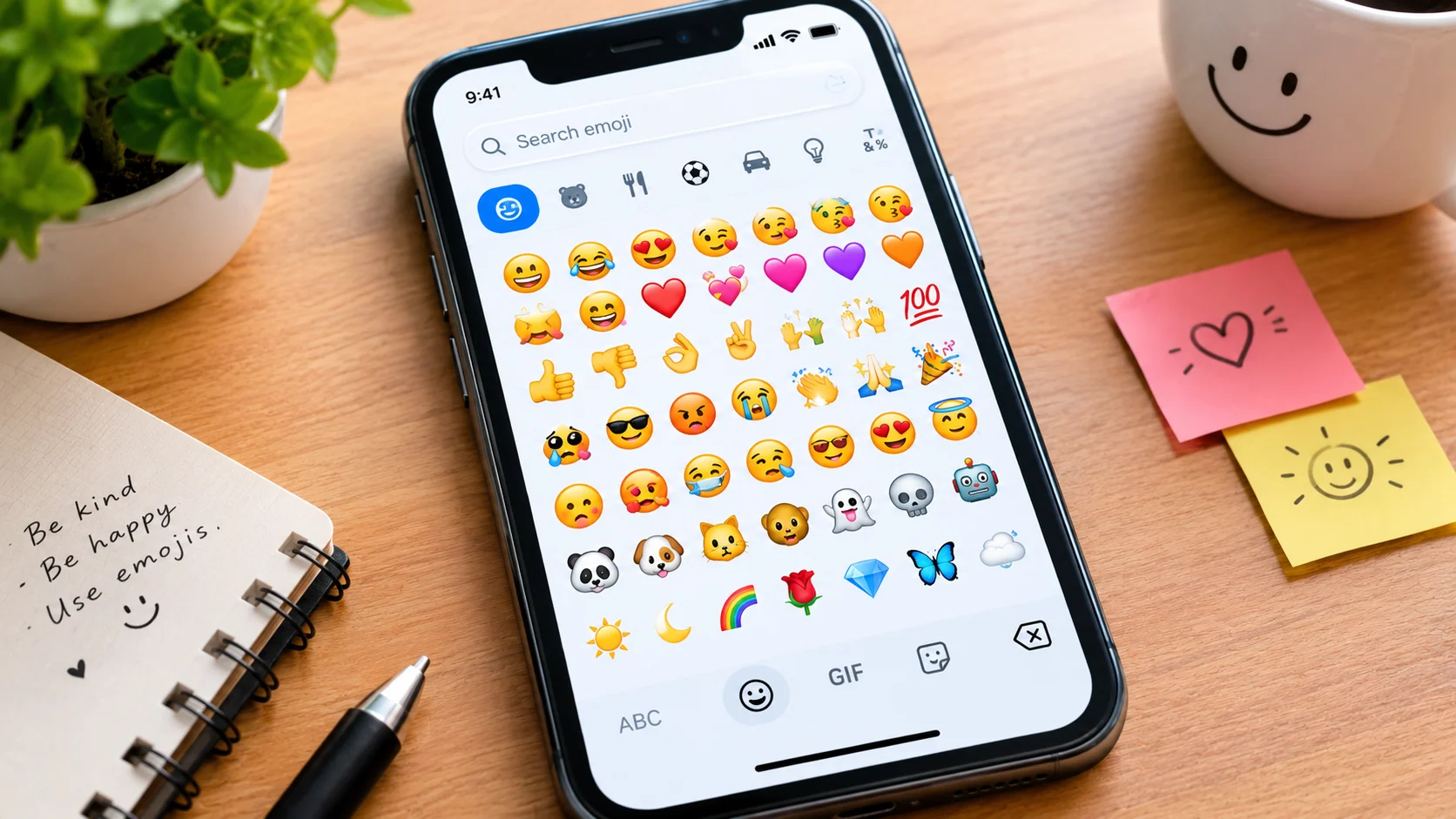
Emoji meanings are the feelings, ideas, or reactions people communicate with small digital symbols. The same emoji can express affection, humor, sarcasm, support, or frustration depending on context.
Emoji meanings help explain the emotions, reactions, and ideas people express in texts, social media posts, and online conversations. A ❤️ red heart often conveys love or affection, 😂 Face with Tears of Joy usually expresses laughter, and 🤔 Thinking Face can show curiosity or uncertainty. However, an emoji does not always have one fixed meaning. The words around it, the relationship between the people messaging, and the situation can change how it comes across.
This guide explains how to interpret common emojis, recognize subtle differences between similar symbols, and avoid misunderstandings in everyday conversations. You want to understand an emoji someone sent you or choose the right one for your own message, the key is to consider both the symbol and the words accompanying it.
How to Understand Emoji Meanings in Text Messages
An emoji can reinforce a sentence, soften a reply, or change the tone of a message. To interpret it correctly, look at three things:
- The words: “Great 😂” may express genuine amusement, while “Great 🙄” may suggest annoyance or sarcasm.
- The conversation: A heart sent after a kind message may show appreciation, while the same heart in a romantic conversation may feel more affectionate.
- The sender’s style: Some people use emojis in nearly every message. Others use them only when they want to express a particular reaction.
Unicode gives each emoji a standardized character identity and name, but it does not assign one universal meaning to every conversation. Meanings can vary by culture, context, and personal use.
Common Emoji Meanings at a Glance
Here are some widely recognized emojis, their official names, and the ways people commonly use them.
| Emoji | Official Name | Common Meaning | Tone | Where or When It Is Used |
|---|---|---|---|---|
| 😂 | Face with Tears of Joy | Laughter, amusement | Funny, playful | Jokes, funny stories, and reactions |
| ❤️ | Red Heart | Love, affection, care | Warm, affectionate | Romantic messages, family, and friendship |
| 🥹 | Face Holding Back Tears | Feeling touched, gratitude, emotion | Tender, heartfelt | Kind gestures, emotional moments, and appreciation |
| 🤔 | Thinking Face | Thinking, doubt, curiosity | Thoughtful, questioning | Questions, decisions, and uncertain reactions |
| 🙄 | Face with Rolling Eyes | Annoyance, disbelief, exasperation | Sarcastic, dismissive | Frustrating comments or repeated excuses |
| 🫠 | Melting Face | Embarrassment, heat, overwhelm | Awkward, ironic | Stressful days, awkward moments, or hot weather |
| 🥰 | Smiling Face with Hearts | Affection, warmth, adoration | Loving, sweet | Compliments, affectionate replies, and gratitude |
| 🔥 | Fire | Fire, excitement, praise, intensity | Energetic, enthusiastic | Celebrating an achievement or complimenting something impressive |
These are common interpretations, not guaranteed definitions. For example, 😂 can sometimes represent nervous laughter, while 🔥 can refer to literal fire or heat rather than praise.
Emoji Meanings by Category
Browsing by category can make it easier to find the right emoji and understand how similar symbols differ.

1. Smileys and emotions
These emojis communicate happiness, sadness, surprise, confusion, embarrassment, and other feelings.
- 😀 Grinning Face — happiness or friendliness
- 🥹 Face Holding Back Tears — feeling touched or grateful
- 😭 Loudly Crying Face — intense sadness or exaggerated emotion
- 😬 Grimacing Face — tension or awkwardness
- 🤩 Star-Struck — amazement or excitement

2. Heart and love emojis
Heart emojis can express romantic love, friendship, appreciation, support, or different emotional tones.
- ❤️ Red Heart — love or affection
- 🩷 Pink Heart — warmth, care, or affection
- 💛 Yellow Heart — friendship, warmth, or happiness
- 💔 Broken Heart — heartbreak or emotional pain
- 💕 Two Hearts — affection or shared love

3. Hand gesture emojis
Hand gestures can signal agreement, greeting, thanks, celebration, or support.
- 👍 Thumbs Up — approval or agreement
- 👋 Waving Hand — hello or goodbye
- 🙏 Folded Hands — prayer, thanks, or a request
- 👏 Clapping Hands — applause or praise
- 🤝 Handshake — agreement or cooperation

4. Celebration and reaction emojis
These symbols can emphasize excitement, achievement, beauty, or an important moment.
- 🔥 Fire — intensity, excitement, or praise
- ✨ Sparkles — shine, emphasis, or a magical feeling
- 🎉 Party Popper — celebration
- ⭐ Star — achievement, quality, or recognition
- 💯 Hundred Points — strong approval or complete agreement

5. Sarcasm, irony, and internet humor
Some emojis are used to make a reaction sound exaggerated, ironic, or deliberately dramatic.
- 🙃 Upside-Down Face — irony or playful frustration
- 💀 Skull — often signals that something is extremely funny or shocking
- 🤡 Clown Face — foolish behavior or self-deprecating humor
- 🫠 Melting Face — awkwardness or feeling overwhelmed
- 😏 Smirking Face — sly humor, confidence, or suggestiveness
These categories overlap. A heart can be supportive or romantic, and a skull can have a literal meaning as well as a humorous one. Use the category as a starting point, not a substitute for context.
Emoji Meanings That Are Easy to Confuse
Some emojis look similar or communicate related feelings, but small differences can change the message.
| Emoji Pair | Main Difference | Best Use |
|---|---|---|
| 😂 vs. 🤣 | Both express laughter; 🤣 often suggests more intense laughter. | Choose 😂 for general amusement and 🤣 for an exaggerated reaction. |
| ❤️ vs. 🩷 | Both express affection; the pink heart may feel softer or more playful. | Use either for care or affection, depending on your style. |
| 🤔 vs. 🤨 | 🤔 suggests thinking; 🤨 often suggests skepticism. | Choose 🤔 when considering something and 🤨 when questioning it. |
| 😭 vs. 🥹 | 😭 conveys intense crying or exaggerated emotion; 🥹 often suggests holding back tears. | Use 😭 for a dramatic reaction and 🥹 for a tender moment. |
| 🙃 vs. 🙄 | 🙃 can suggest irony; 🙄 more directly conveys annoyance or exasperation. | Use 🙃 for wry humor and 🙄 for frustration. |
| 🥵 vs. 🫠 | 🥵 depicts overheating; 🫠 can suggest heat, awkwardness, or emotional overwhelm. | Choose 🥵 for intense heat and 🫠 for a broader feeling of melting down. |
The most important distinction is the emotion you want to communicate. When two emojis seem interchangeable, choose the one that most closely matches your intended tone.
How to Choose the Right Emoji for Your Message
Before sending an emoji, consider what you want the other person to understand.
- To show appreciation: ❤️, 🫶, or 🙏 may fit, depending on you mean affection, support, or thanks.
- To make a joke: 😂 or 🤣 usually makes laughter clear.
- To express uncertainty: 🤔 works for thoughtful hesitation, while 🤨 can sound more doubtful.
- To comfort someone: ❤️ or 🫶 can express care, especially alongside supportive words.
- To celebrate: 🎉, 🥳, or 🏆 can highlight an achievement or special event.
- To express frustration humorously: 🙃 or 🫠 may fit when the situation is not too serious.
Remember that an emoji can soften a message, but it can also make a serious statement seem less sincere. For important conversations, use clear words rather than relying on a symbol alone.
Copy and Paste Common Emojis
Use this selection when you need a quick way to add an emoji to a message.
Smileys
😀
😂
🥹
😭
🤔
🤨
🫠
🙄
Hearts
❤️
🩷
🧡
💛
💚
💙
💜
🤍
Gestures
👍
👎
👋
🙏
👏
🤝
🫶
👌
Reactions
🔥
✨
🎉
💯
🥳
⭐
💀
😏
Select an emoji to copy it. You can then paste it into your message.
FAQs
Do emojis have official meanings?
Unicode assigns standardized names and character identities to emojis, but those names do not define every possible interpretation. People may use the same emoji differently depending on context, language, and culture.
Can one emoji have more than one meaning?
Yes. ❤️ can express romantic love, family affection, friendship, or support. 💀 can refer to a skull literally or be used as a humorous reaction. The surrounding message helps clarify the intended meaning.
Do emoji meanings change over time?
Yes. People develop new ways to use existing emojis, and meanings can shift with cultural and online communication habits. An emoji’s official name may remain unchanged even as informal uses expand.
Do emojis look the same on iPhone and Android?
Not always. Apple, Google, Samsung, and other vendors create their own artwork for many standardized emoji characters. Differences in facial expressions, colors, or details can affect how a symbol feels, even when the underlying character is the same.
How can I tell an emoji is sarcastic or sincere?
Consider the words, the conversation’s history, and the sender’s usual communication style. A smile or heart can be sincere, ironic, or playful. If the distinction matters, ask the sender rather than assuming.
Where can I find the meaning of a specific emoji?
You can search for an emoji by its character, official name, or description in the Emojipedia emoji meanings directory. The Unicode emoji charts are useful for checking standardized names and character information.
Conclusion
Understanding emoji meanings is less about memorizing a definition for every symbol and more about recognizing how people use them. Start with the emoji’s common interpretation, then consider the words and situation around it. That approach helps you choose clearer reactions, understand messages more accurately, and avoid unnecessary misunderstandings.
Discover More Related Articles:
- Sad Emoji Meanings | Find the Right Face for Every Feeling In 2026
- Heart Emoji Meaning | What Different Hearts Really Say In 2026
- Hello Emoji Meaning | What the Waving Hand Really Says In 2026

Sophia Martinez is a content writer at EmojisPeace.com, where she creates fun, engaging, and easy-to-read emoji guides, meanings and digital communication content. She enjoys helping readers express themselves better with the perfect emojis for every mood and moment.