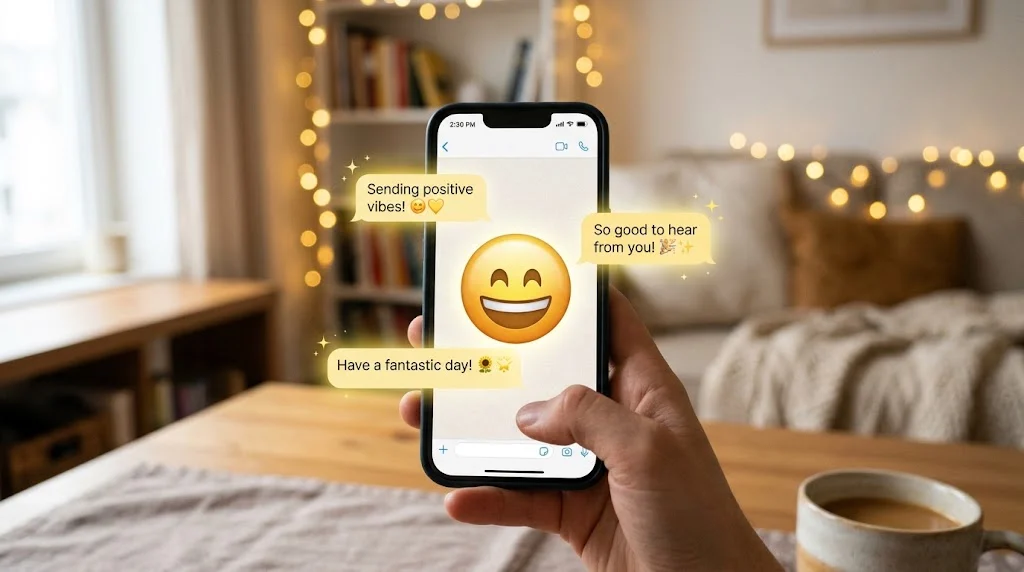
😊 usually means “I’m happy,” “That’s lovely,” or “I appreciate it.” Its tone is warm and friendly, but depending on the conversation, it can also suggest affection, politeness, or gentle flirting.
The happy face emoji 😊, officially named Smiling Face with Smiling Eyes, usually expresses happiness, warmth, friendliness, gratitude, or quiet excitement. It is a gentle way to show that a message is positive without making the reaction feel overly dramatic. People use it in everyday texts, friendly conversations, compliments, thank-you messages, and sometimes romantic exchanges.
Unlike 😀, which has a wider, more energetic grin, 😊 has a softer expression that can feel warm, polite, or affectionate. For example, replying “That was so sweet of you 😊” communicates appreciation, while “I’m really happy for you 😊” adds genuine warmth to the message.
The meaning is not always exactly the same. The sender’s words, relationship with the recipient, and usual texting style help determine the smile feels casual, caring, shy, or romantic.
What Does 😊 Mean in Text Messages?
In everyday texting, 😊 is a friendly way to add warmth to a message. It can make a short reply feel more personal and help show that the sender is happy with what they are saying.
Here are its main conversational meanings.
1. Genuine Happiness
The emoji often expresses simple happiness, satisfaction, or a positive reaction to good news.
Example: “I finally got the job! 😊”
Likely meaning: The sender feels happy and excited about the achievement.
2. Kindness and Appreciation
People use 😊 to make thank-you messages, compliments, and friendly replies feel warmer.
Example: “Thank you for helping me yesterday 😊”
Likely meaning: The sender appreciates your help and wants to sound friendly.
3. Affection and Care
In personal conversations, this smile can communicate warmth, fondness, or appreciation without using a heart or kiss emoji.
Example: “Hope you have a wonderful day 😊”
Likely meaning: The sender is expressing kindness and wishing you well.
It can be affectionate, but it does not automatically indicate romantic feelings.
4. Shyness or Quiet Excitement
Sometimes a gentle smile suggests that someone feels pleased, shy, or slightly nervous about something positive.
Example: “You remembered my favorite song 😊”
Likely meaning: The sender feels touched or pleasantly surprised.
5. Politeness and Friendly Conversation
A simple reply can sometimes sound too direct. Adding 😊 makes it feel softer.
Example: “Sure, I’d be happy to help 😊”
Likely meaning: The sender is responding positively and politely.
Is 😊 Friendly, Flirty, or Romantic?
The happy face emoji is generally friendly, but it can take on a more affectionate or flirtatious tone in the right conversation.
| Conversation Context | Example Message | Possible Meaning |
|---|---|---|
| Friendship | “Had a great time today 😊” | Enjoyment and appreciation |
| Family | “Love you, take care 😊” | Warmth and affection |
| Workplace | “Thanks for the update 😊” | Professional friendliness |
| Flirting | “I always enjoy talking to you 😊” | Gentle affection or interest |
| Romantic relationship | “Can’t wait to see you 😊” | Happiness and closeness |
| Casual conversation | “Sounds good 😊” | Agreement and friendliness |
The important distinction is that the emoji adds emotional warmth, but it cannot confirm someone’s intentions. Look at the conversation as a whole rather than assuming that a smile means flirting.
😊 vs. Other Happy Face Emojis: Which One Should You Use?
Not every smiling emoji communicates the same level of happiness. Some express excitement, others show affection, and a few can feel more reserved.
| Emoji | Official Name | Common Meaning | Tone | Where or When It Is Used |
|---|---|---|---|---|
| 😊 | Smiling Face with Smiling Eyes | Warmth, happiness, appreciation | Gentle, friendly | Thank-you messages and kind replies |
| 😀 | Grinning Face | Happiness, enthusiasm | Cheerful, energetic | Good news and excited reactions |
| 😃 | Grinning Face with Big Eyes | Excitement and joy | Bright, enthusiastic | Celebrations and positive news |
| 😄 | Grinning Face with Smiling Eyes | Genuine happiness and laughter | Joyful, upbeat | Funny conversations and happy moments |
| 😁 | Beaming Face with Smiling Eyes | Big smile, excitement, satisfaction | Playful, enthusiastic | Achievements and proud reactions |
| 🙂 | Slightly Smiling Face | Mild happiness or polite friendliness | Subtle, reserved | Short replies and casual conversations |
| ☺️ | Smiling Face | Contentment, warmth, friendliness | Soft, gentle | Sweet messages and appreciative replies |
| 🥰 | Smiling Face with Hearts | Love, affection, being touched | Loving, affectionate | Romantic messages and heartfelt moments |
| 😍 | Smiling Face with Heart-Eyes | Strong admiration or adoration | Excited, romantic | Compliments and reactions to something attractive |
The Most Important Differences
- 😊 vs. 😀: 😊 feels softer and more personal, while 😀 communicates a bigger, more energetic smile.
- 😊 vs. 🙂: 😊 has smiling eyes and often feels warmer. 🙂 can be more neutral or reserved, depending on context.
- 😊 vs. 😄: 😄 expresses stronger visible excitement or laughter, while 😊 is suitable for gentle happiness.
- 😊 vs. 🥰: 🥰 adds a stronger feeling of affection and tenderness.
- 😊 vs. 😍: 😍 communicates more intense admiration or adoration, while 😊 is a more general friendly smile.
If you want to sound kind without appearing overly excited, 😊 is a good choice. Use 😀 or 😃 for enthusiasm and 🥰 when you want to express more affection.
What Does It Mean When Someone Sends You 😊?
If someone sends you this emoji without much text, they may simply be expressing friendliness or responding positively. The exact meaning depends on what happened before the message.
Consider these examples:
| Message | Possible Interpretation |
|---|---|
| “Good morning 😊” | A warm and friendly greeting |
| “That’s really nice of you 😊” | Appreciation or gratitude |
| “See you tomorrow 😊” | Happiness about meeting again |
| “You’re so sweet 😊” | A warm or affectionate compliment |
| “Okay, thank you 😊” | Polite acknowledgment |
| “I’m glad you told me 😊” | Happiness and emotional warmth |
A useful tip: Pay attention to the person normally uses smiley emojis. If they regularly add 😊 to ordinary messages, it may simply be part of their texting style.
When Should You Use the Happy Face Emoji?
The smiling face works well when you want to make a message sound positive, welcoming, or appreciative.
| Situation | Suggested Message |
|---|---|
| Saying thank you | “Thanks for everything 😊” |
| Congratulating someone | “Congratulations! You deserve it 😊” |
| Greeting a friend | “Hey! Hope you’re doing well 😊” |
| Giving a compliment | “You did a wonderful job 😊” |
| Sharing good news | “I finally finished my exams 😊” |
| Showing appreciation | “That means a lot to me 😊” |
Avoid relying on it alone when discussing something serious, delivering bad news, or communicating a concern. A smile can sometimes make a serious message seem less sincere.
Copy and Paste the Happy Face Emoji
😊
Smiling Face with Smiling Eyes Copy Happy Face 😊
You can paste it into text messages, emails, captions, comments, and social media posts.
Other happy face options include:
😀
😃
😄
😁
🙂
🥰
😍
Official Name and Unicode Information
The emoji 😊 has an official Unicode name: Smiling Face with Smiling Eyes. Its facial expression features a gentle smile and curved, smiling eyes.
| Technical Detail | Information |
|---|---|
| Emoji | 😊 |
| Official Unicode name | Smiling Face with Smiling Eyes |
| Code point | U+1F60A |
| Unicode version | Unicode 6.0 |
| Original Unicode release | 2010 |
| Emoji 1.0 inclusion | 2015 |
| Category | Smileys & Emotion |
The Unicode Consortium maintains the standard that allows this character to work across different devices and platforms. Apple, Google, Samsung, and other vendors create their own visual designs, so small differences in color, shape, and facial details may appear. Unicode+1
One important distinction: 😊 is not the only emoji people may call a happy face. The term can also refer to 😀, 😃, 😄, or 🙂. If someone searches for the specific character 😊, its correct official name is Smiling Face with Smiling Eyes.
FAQs
What is the difference between a happy face and a smiling face emoji?
A happy face is a general description of a positive facial expression. A smiling face emoji is a specific character. For example, 😊 is officially called Smiling Face with Smiling Eyes, while 😀 is called Grinning Face.
Does 😊 mean happy or just being polite?
It can mean either. A message about good news may express genuine happiness, while a short reply such as “Thank you 😊” may simply communicate politeness and appreciation.
Is 😊 a good emoji to send to someone you like?
Yes. It is a gentle way to show warmth and friendliness. It can also feel affectionate in a personal conversation, but it does not automatically communicate romantic interest.
Can 😊 have a sarcastic meaning?
It can sometimes be used sarcastically, especially when the words express frustration or disagreement.
For example: “Great, another Monday meeting 😊”
The contrast between the positive smile and the negative situation may create an ironic tone. However, sarcasm depends on context rather than the emoji alone.
Is 😊 better than 🙂?
Neither is universally better. 😊 generally feels warmer and more expressive, while 🙂 can feel more subtle or restrained. Choose according to the tone you want to communicate.
What does 😊 mean from a girl or a guy?
The basic interpretation is the same regardless of gender. It may express happiness, kindness, appreciation, or affection. The relationship and surrounding conversation are more useful clues than the sender’s gender.
Conclusion
The 😊 emoji is a simple way to add warmth, happiness, and friendliness to everyday conversations. It works particularly well for thank-you messages, positive replies, compliments, and affectionate exchanges. Although it can sometimes suggest romantic interest or sarcasm, its meaning depends on the conversation rather than the smile alone.
Discover More Related Articles:
- Dog Emoji Mean | From Puppy Love to Everyday Texts In 2026
- Waxing Gibbous Emoji Meaning | What This Moon Really Represents In 2026
- Pumpkin Emoji Mean | Halloween, Fall & Everyday Uses In 2026

Jessica Miller is a content writer at EmojisPeace.com, where she creates fun and easy-to-follow guides about emojis, their meanings and creative ways to use them. She loves helping readers express themselves with the perfect emoji for every moment.